
Upwork Earnings & Fee Calculator
Input Your Project Details
Earnings Breakdown
Effective Rate: $0.00 / hour
This is what you actually earn per hour after all deductions.
Let’s be honest: the promise of working from anywhere while charging premium rates sounds too good to be true. For web developers, Upwork is a global freelancing platform that connects businesses with remote talent. Launched in 2015 through the merger of Elance and oDesk, it has become the default starting point for many new freelancers. But does that promise hold up in 2026? The reality is more complex than a simple yes or no. Upwork can be a powerful launchpad, but it can also be a time sink if you approach it without a strategy. Whether it is worth your time depends entirely on your current skill level, your niche, and how much you are willing to invest in building your profile.
If you are sitting there wondering if you should create an account today, you need to look past the marketing hype. You need to understand the economics, the competition, and the specific mechanics of how clients hire on this platform. This guide breaks down the real costs, the hidden pitfalls, and the strategies that actually work for web developers who want to turn their code into consistent income.
The Economics: Understanding Upwork Fees and Costs
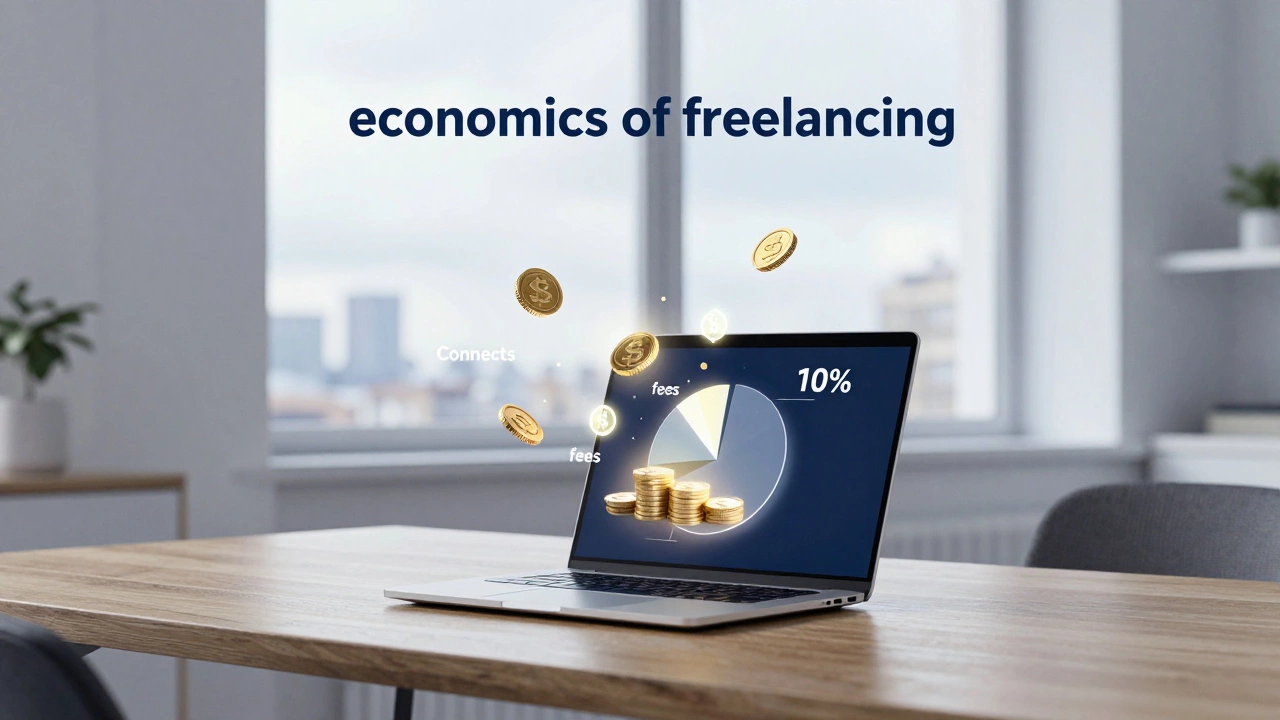
Before you write a single line of code or send a proposal, you have to talk money. Many developers skip this part because they are eager to start, but ignoring the fee structure is the fastest way to end up earning less than minimum wage. Upwork operates on a sliding scale for service fees charged to freelancers. Currently, the fee is 10% for all contracts. In the past, this used to be 20% for the first $500 earned with a client, then dropping to 10%, and eventually 5%. The simplification to a flat 10% makes budgeting easier, but it means you lose a significant chunk of every invoice immediately.
On top of that, you have the cost of entry. To send proposals, you use Connects are virtual currency units required to submit job proposals on Upwork. New accounts get a small monthly allowance, often around 10-40 Connects, which refreshes monthly. However, once those run out, you have to buy them. At roughly $0.15 per Connect, sending 10 high-quality proposals costs you $1.50. It doesn’t sound like much, but if you are applying to 50 jobs a week without getting interviews, you are spending $7.50 just on applications. That is overhead before you earn a dime.
You also need to consider payment processing fees. If you withdraw funds via direct deposit to a UK bank account (since I am writing this from Leeds), the fees vary by method. Direct deposit usually has a fixed fee per transaction, while PayPal might take a percentage. These micro-costs add up quickly when you are doing smaller projects. Always factor in that 10% service fee plus withdrawal costs when quoting your prices. If you charge £500 for a website, you aren’t taking home £500. You are taking home significantly less after the platform takes its cut.
The Competition: Who Are You Up Against?
When you search for "web developer" on Upwork, you will see thousands of profiles. This is where many beginners panic. They assume the market is saturated and give up before they start. But here is the secret: most of those profiles are not active, not skilled, or not serious. The real competition isn’t everyone; it’s the top 1% of performers in your specific niche.
Upwork has evolved heavily towards quality over quantity. Features like Top Rated is a badge awarded to freelancers who maintain a high success score, complete a certain amount of earnings, and have positive feedback. act as a gatekeeper. Clients filter for these badges. Without one, you are invisible to many serious buyers. Getting that badge requires history. It’s a chicken-and-egg problem: you need jobs to get the badge, but you need the badge to get the jobs.
To break through, you cannot compete on price alone. There will always be someone in another country willing to do the job for less. Instead, you must compete on specialization. A generic "Full Stack Developer" profile gets lost. A "Shopify Liquid Expert for High-Ticket Fashion Brands" stands out. By narrowing your focus, you reduce the number of competitors and increase your perceived value. Clients pay for certainty, not just code. If your profile screams expertise in a specific pain point, you win.
| Platform | Service Fee | Client Quality | Best For |
|---|---|---|---|
| Upwork | 10% | Mixed (High variance) | Long-term relationships, diverse niches |
| Toptal | 20% | Very High (Enterprise) | Senior devs, high hourly rates |
| Fiverr | 20% | Low to Medium | Small, defined gigs, quick fixes |
| 0% (Direct) | Medium to High | Networking, inbound leads |
Building a Profile That Converts
Your profile is your storefront. If it looks messy, clients bounce. Most developers make the mistake of listing every technology they have ever touched. "I know HTML, CSS, JavaScript, React, Vue, Angular, Node, Python, PHP, SQL..." This signals that you are a jack-of-all-trades and master of none. Clients don’t want a generalist; they want a specialist who can solve their specific problem.
Start with a clear headline. Avoid "Web Developer." Try something like "React Developer | Building Fast, Scalable SPAs." Your overview should tell a story. Start with the client’s problem, not your biography. "Struggling with slow page load times? I optimize React applications to achieve 90+ Lighthouse scores." Then, back it up with evidence. Include links to live projects, GitHub repositories, or case studies. Show, don’t just tell.
Photos matter more than you think. Use a professional headshot. No selfies, no cropped group photos, no cartoon avatars. You are selling trust. A clean, friendly photo builds immediate rapport. Also, fill out every section of your profile. Skills tests are less relevant now, but your employment history and education still add credibility. Even if your previous roles were full-time jobs, frame them as relevant experience. Did you build internal tools? Mention that. Did you fix bugs for a major e-commerce site? Highlight that.
The Proposal Game: How to Win Interviews
Writing proposals is the hardest part of freelancing on Upwork. You have seconds to grab attention. Copy-pasting generic templates is the quickest way to fail. Clients can smell a bot-generated proposal from a mile away. If you start with "Dear Sir/Madam," you’ve already lost. Address the client by name if possible. Reference their project details specifically. Show that you read the brief.
A winning proposal follows a simple structure:
- The Hook: Acknowledge their specific challenge. "I see you need to integrate Stripe payments into your existing Laravel app."
- The Solution: Briefly explain how you would solve it. "I would use Stripe Elements for secure input handling and implement webhook listeners for order confirmation."
- The Proof: Link to a similar project you’ve done. "Here is a similar integration I completed for a SaaS startup last month."
- The Call to Action: Ask a question to start a conversation. "Do you currently have a staging environment set up for testing?"
Keep it short. Three to five paragraphs max. Clients are busy. They skim. Make it easy for them to say yes. Also, respond quickly. When a client messages you, reply within an hour if possible. Speed signals reliability. On Upwork, response time is a metric that affects your ranking. Being fast helps you stay visible.

Red Flags: Clients to Avoid
Not all clients are created equal. Some are nightmares waiting to happen. Learning to spot red flags early saves you weeks of wasted effort. Here are the biggest warning signs:
- Vague Job Descriptions: If a client says "I need a website like Facebook" with no details, run. They don’t know what they want, and you will end up doing endless revisions.
- Payment Outside Upwork: Never, ever agree to move communication or payment off-platform. Upwork’s Terms of Service prohibit this, and if you do it, you risk being banned permanently. More importantly, you lose all protection. If they don’t pay, you have no recourse.
- Unrealistic Timelines: "Can you build this entire CRM in three days for $500?" No. Respect your time. If a timeline is impossible, decline politely. Taking bad jobs hurts your reputation and your mental health.
- No Budget Listed: While some clients hide budgets, asking "What is your budget?" early is crucial. If they refuse to share any numbers, it’s a sign they expect cheap labor.
Trust your gut. If something feels off during the interview, it probably is. You have the power to choose your clients. Don’t settle for disrespectful or unclear engagements just because you need the money. One bad client can sour your view of freelancing entirely.
From Upwork to Independence: The Exit Strategy
Upwork is a tool, not a destination. The goal shouldn’t be to live on Upwork forever. The goal is to use it to build a portfolio, gain testimonials, and establish cash flow. Once you have a few solid reviews and a steady stream of referrals, you should start diversifying. Build your own website. Network on LinkedIn. Reach out directly to agencies. The fees on Upwork will always eat into your margins. Direct clients mean 100% profit.
Use your Upwork success as social proof. When you pitch a direct client, you can say, "I’m a Top Rated developer on Upwork with a 100% Job Success Score." That carries weight. It validates your skills without you having to prove yourself from scratch. Treat Upwork as your training ground. Learn how to communicate professionally, how to scope projects, how to handle difficult feedback. These soft skills are just as important as your coding ability.
In 2026, the freelance landscape is more competitive than ever, but the opportunities are also greater. Remote work is normalized. Clients are comfortable hiring globally. If you treat Upwork as a business, not a lottery ticket, it can absolutely be worth it. Focus on quality, specialize deeply, and protect your time. The code is only half the job; the other half is managing expectations and delivering value consistently.
How long does it take to get the first job on Upwork?
It varies widely, but most new freelancers report landing their first job within 2 to 8 weeks. This depends on your niche, the quality of your proposals, and your luck. Sending 5-10 tailored proposals a day increases your chances significantly. Patience and persistence are key during this initial phase.
Is Upwork safe for web developers?
Yes, Upwork provides robust payment protection through its escrow system. Clients fund the project upfront, and the money is held securely until milestones are approved. As long as you keep all communication and payments on the platform, your earnings are protected. Never accept offers to work outside the system.
What is the best tech stack to learn for Upwork in 2026?
While full-stack JavaScript (React/Node.js) remains highly popular, specialized skills often command higher rates. WordPress customization with modern stacks (Gutenberg blocks, Headless WP), Shopify Plus development, and Python/Django for backend services are in high demand. Choose a stack that aligns with your interests and market needs.
Should I offer fixed-price or hourly contracts?
For beginners, fixed-price contracts for well-defined tasks can be easier to win. However, hourly contracts are safer for ongoing work or vague scopes. As you gain experience, you can negotiate hybrid models. Always ensure the scope is crystal clear before accepting a fixed-price job to avoid scope creep.
How do I stand out among thousands of developers?
Specialization is your best friend. Instead of being a general web developer, become an expert in a specific framework, industry, or problem type. Customize every proposal, show genuine interest in the client's business, and provide valuable insights even before getting hired. Your personality and communication style differentiate you as much as your code.