
AI Prompt Quality Checker
Test your AI prompt quality based on the article's key insights. A strong prompt should specify frameworks, security requirements, testing needs, and edge cases to maximize your productivity.
Prompt Analysis Results
Strengths
Areas to Improve
Ask any full stack developer if they’re worried about AI taking their job, and you’ll get a mix of laughter, sighs, and honest fear. The truth? AI isn’t coming for your job-it’s changing what your job looks like. If you’re still thinking of your role as just writing code from start to finish, you’re already behind. The real question isn’t whether AI will replace full stack developers. It’s whether you’ll adapt fast enough to work with AI-or get left behind by those who do.
What AI Can Actually Do Today
Let’s get real about what AI tools like GitHub Copilot, Amazon CodeWhisperer, and Google’s Gemini for Developers can do right now. They don’t build apps from scratch. They don’t decide what features users need. They don’t debug complex state management issues in React with Redux Toolkit.
What they do do is generate boilerplate code. They turn your rough comment-“create a login form with email validation and JWT token storage”-into working JavaScript and backend routes in seconds. They auto-complete functions you’ve written a hundred times before. They fix syntax errors you missed because you were tired.
A 2024 study by Harvard’s Software Engineering Lab found that developers using AI pair-programming tools completed tasks 30-55% faster. But here’s the catch: the best results came from developers who knew exactly what they wanted to build. The ones who couldn’t explain their logic? Their AI-generated code was full of security holes, broken dependencies, and spaghetti logic.
Why Full Stack Skills Still Matter More Than Ever
AI can write a React component. It can scaffold a Node.js API. But can it explain why the frontend is loading slow because the backend is returning 50MB of unoptimized JSON? Can it convince a client to drop a flashy animation that makes the site unusable on low-end phones? Can it negotiate timelines when the design team keeps changing requirements?
Full stack developers are the glue. They connect design to infrastructure. They translate business needs into technical specs. They know how a change in the database schema affects the mobile app’s performance. AI doesn’t understand context. It doesn’t care about user experience. It doesn’t feel the pressure of a deadline.
Take a real example: a startup needed a custom dashboard for tracking customer onboarding. The founder wanted real-time graphs, user filters, and export to PDF. AI generated the code for the charts and API endpoints-but the data was inconsistent because the backend wasn’t handling time zones correctly. The frontend rendered fine on desktop but crashed on iOS Safari. The full stack developer spotted all three issues in 20 minutes. The AI? It just kept generating more code that looked right but didn’t work.
The New Full Stack Developer: AI Whisperer
The future isn’t about knowing every framework. It’s about knowing how to guide AI effectively. The top performers in 2025 aren’t the ones who code the fastest. They’re the ones who ask the best questions.
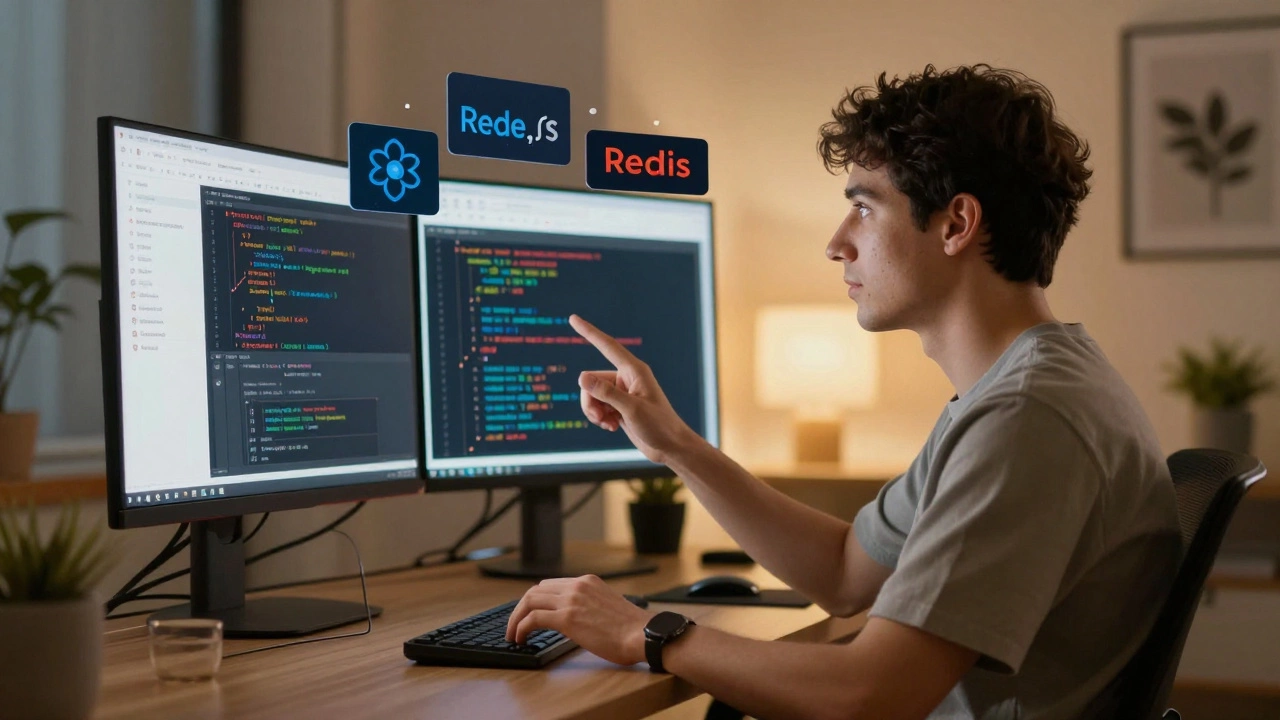
Instead of typing “build a login system,” they say: “Generate a secure login flow using Next.js 15, Supabase Auth, and rate limiting with Redis. Handle 2FA via email, not SMS. Return 429 status on failed attempts. Include unit tests with Vitest.” That level of precision? That’s expertise.
It’s like having a super-powered assistant who can type 10,000 words a minute-but only if you tell them exactly what to write. If you give vague instructions, you get garbage. If you give clear ones, you get 80% of the work done in minutes.
Learning to prompt AI well is now a core skill. So is reviewing its output. You still need to understand authentication flows, database indexing, CORS headers, and caching strategies. AI can write the code, but you’re still responsible for making sure it’s secure, scalable, and maintainable.
What’s Getting Replaced (and What’s Not)
Some tasks are vanishing. Writing basic CRUD APIs? AI does it faster. Building simple landing pages with Tailwind? AI can spin them up in under a minute. Copy-pasting Stack Overflow snippets? Gone.
But these are the low-value, repetitive tasks. The ones that didn’t require deep thinking anyway.
What’s not being replaced?
- Designing system architecture for high traffic
- Debugging race conditions in multi-threaded services
- Optimizing database queries that slow down a 500k-user app
- Deciding between monolith and microservices based on team size
- Leading a team through a migration from MongoDB to PostgreSQL
- Explaining technical debt to non-technical stakeholders
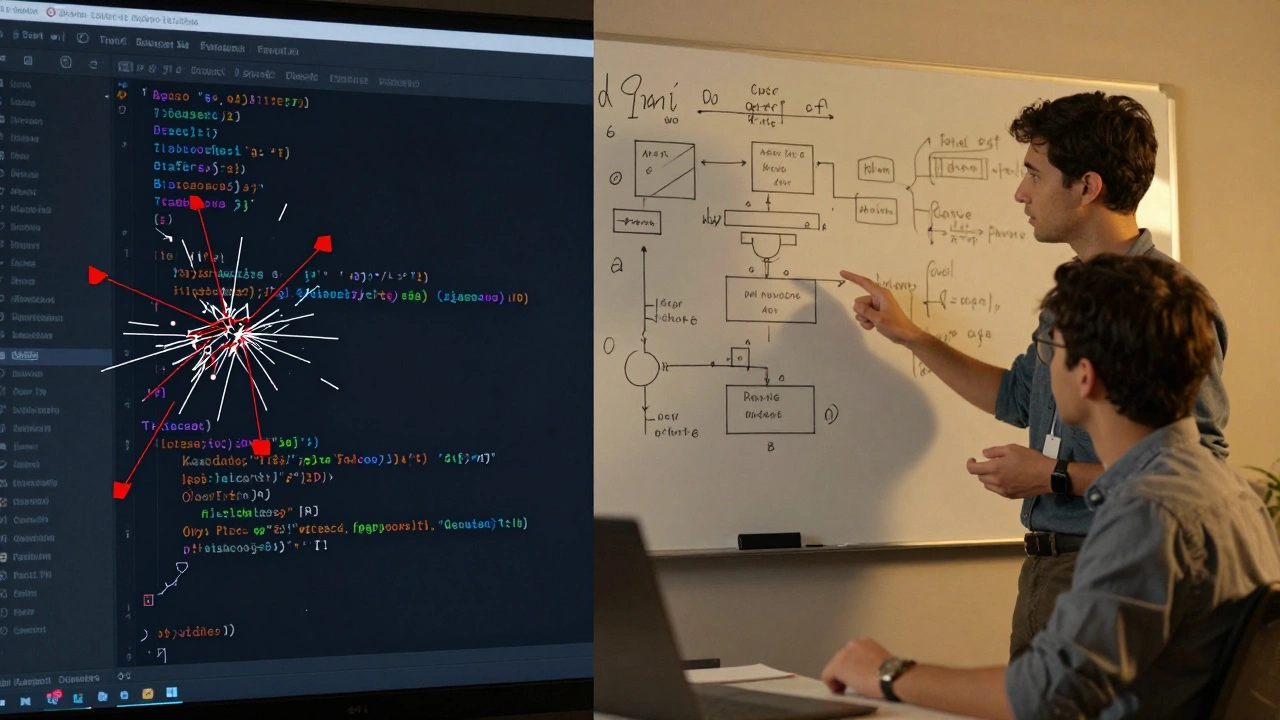
These aren’t tasks AI can handle. They require judgment, experience, and human intuition. AI can suggest a solution. But only a full stack developer can weigh the trade-offs: cost vs. speed vs. scalability vs. team skill level.
How to Stay Irreplaceable in 2025
You don’t need to fear AI. You need to master it. Here’s how:
- Learn to prompt like a pro. Don’t just ask for code. Specify frameworks, edge cases, performance limits, and testing requirements.
- Review every line AI generates. Treat it like a junior dev’s pull request. Look for security flaws, memory leaks, and poor patterns.
- Deepen your systems knowledge. Know how HTTP headers work under the hood. Understand how DNS propagation affects your CDN. Learn how Kubernetes handles pod scheduling.
- Focus on problem-solving, not coding. Your value isn’t in typing. It’s in identifying the real problem behind the request.
- Build communication skills. The best developers aren’t the ones who write the cleanest code. They’re the ones who make everyone else’s job easier.
Companies aren’t hiring AI. They’re hiring people who can use AI to deliver better products, faster. If you’re still coding everything manually, you’re working harder than you need to. But if you’re learning to steer AI, you’re becoming more valuable than ever.

Real Stories: Developers Who Adapted
One developer in Berlin used to spend 12 hours a week writing repetitive form validations. After learning to use AI tools, he cut that to 90 minutes. He used the extra time to learn Docker and deploy his team’s apps with zero downtime. His salary went up 30% in six months.
A freelance dev in Mexico City started using AI to generate WordPress plugins. Instead of charging $50/hour for custom coding, she now charges $150/hour for consulting on architecture and security. Her clients don’t care how the code was written. They care that it works, scales, and doesn’t get hacked.
These aren’t outliers. They’re the new normal.
The Bottom Line
AI won’t replace full stack developers. But full stack developers who use AI will replace those who don’t.
The tools are here. The change is real. The question isn’t whether AI is powerful enough. It’s whether you’re willing to evolve.
If you’re still writing code the way you did in 2020, you’re already outdated. But if you’re learning to collaborate with AI, you’re not just safe-you’re ahead of the curve.
Will AI completely replace full stack developers by 2030?
No. AI will automate repetitive coding tasks, but it can’t replace human judgment in system design, user experience decisions, security audits, or team leadership. Full stack developers who use AI as a tool will thrive. Those who ignore it will struggle to stay relevant.
Do I need to learn AI tools if I’m already a full stack developer?
Yes. If you’re not using AI tools like GitHub Copilot or CodeWhisperer daily, you’re working slower than your peers. These tools aren’t optional anymore-they’re like using a keyboard instead of typing with one finger. Learning to prompt AI effectively is now part of the job.
What skills should I focus on to stay competitive?
Focus on architecture, debugging complex systems, security, performance optimization, and communication. AI can write code, but it can’t design a scalable backend or explain technical trade-offs to a CEO. These are the skills that keep you employed.
Can AI build a full app from a single prompt?
Not reliably. AI can generate components, routes, or even a basic CRUD app. But real apps need authentication, error handling, testing, deployment pipelines, and user feedback loops. AI doesn’t understand business context or edge cases. A human still needs to review, fix, and polish everything.
Is it worth learning AI if I’m just starting as a developer?
Absolutely. The next generation of developers won’t be judged on how much code they write, but on how well they use AI to solve problems. Start by using Copilot to help you learn. Ask it to explain the code it generates. Use it to build small projects faster. You’ll learn faster and stand out from others who still code manually.