

UI/UX vs. Dev Role Matcher
Answer the questions below to see which role fits your natural strengths and daily preferences.
Select your preferences and click "Find My Role Match" to see where you fit in the product team.
Quick Reference: The Core Distinction
| Aspect | UI/UX Designer | Frontend Developer |
|---|---|---|
| Primary Goal | User satisfaction & usability | Functionality & performance |
| Core Tools | Figma, Adobe XD, Sketch | VS Code, Git, Chrome DevTools |
| Key Languages | Design principles, Psychology | HTML, CSS, JavaScript, TypeScript |
| Mindset | Empathetic, Creative, User-centric | Logical, Analytical, System-centric |
You have probably heard someone say, "I'm a UI/UX developer," and wondered if that is even a real job title. It is a confusing mess of buzzwords that trips up everyone from hiring managers to students just starting out. The short answer? No. UI/UX design is not a developer role. They are two distinct disciplines within product creation, each requiring different skills, tools, and mindsets. But here is the twist: the line between them is getting blurrier every year. If you are trying to figure out your career path or how to build a team, understanding this distinction saves you months of frustration and wasted budget.
The Core Distinction: Thinking vs. Building
Think of building a house. The architect (UX designer) decides where the doors go so you do not bump into walls, and the interior decorator (UI designer) picks the paint colors and handles. The builder (developer) actually pours the concrete and installs the wiring. You cannot be the architect and the builder at the same time without splitting your focus, though some people try.
User Experience (UX) design focuses on the logic and flow of a product. It answers questions like: Is this button easy to find? Does the checkout process make sense? It is about empathy, research, and problem-solving. On the other hand, User Interface (UI) design deals with the visual layer-typography, spacing, color theory, and interactive elements. Developers, specifically Frontend Developers, take these designs and translate them into code using languages like HTML, CSS, and JavaScript. They worry about performance, browser compatibility, and responsive behavior.
While designers use tools like Figma or Sketch to create static prototypes, developers use Integrated Development Environments (IDEs) like VS Code to write functional code. A designer asks, "Does this look right and feel intuitive?" A developer asks, "Will this load quickly and work on Safari?" These are fundamentally different questions.
Why the Confusion Exists
If they are so different, why do people mix them up? Mostly because of small startups and freelance markets. In early-stage companies, one person often wears multiple hats. A "designer" might tweak CSS files directly in the browser. A "developer" might drag-and-drop components in a no-code tool. This hybrid approach creates the illusion that the roles are interchangeable.
Additionally, the rise of No-Code platforms like Webflow and Framer has empowered designers to publish websites without writing traditional code. When a designer clicks "Publish" in Webflow, it feels like development. But technically, they are configuring visual properties that the platform translates into code behind the scenes. They are not debugging JavaScript errors or optimizing server-side rendering. This nuance matters when you are hiring for complex applications versus simple marketing sites.
Skills Breakdown: What Each Role Actually Needs
To see if you are cut out for one side of the fence or the other, look at the daily tasks. Here is a quick comparison to clear the fog.
| Aspect | UI/UX Designer | Frontend Developer |
|---|---|---|
| Primary Goal | User satisfaction and usability | Functionality and performance |
| Core Tools | Figma, Adobe XD, Sketch | VS Code, Git, Chrome DevTools |
| Key Languages | Design principles, Psychology | HTML, CSS, JavaScript, TypeScript |
| Output | Prototypes, Wireframes, Style Guides | Live Website, Mobile App, API Integration |
| Mindset | Empathetic, Creative, User-centric | Logical, Analytical, System-centric |
Notice the gap in "Key Languages." A designer needs to understand basic HTML/CSS to know what is possible, but they don't need to master closures or asynchronous programming. Conversely, a developer benefits from knowing color contrast ratios, but they don't need to conduct user interviews.
The Rise of the Hybrid: UI Engineers and Design Technologists
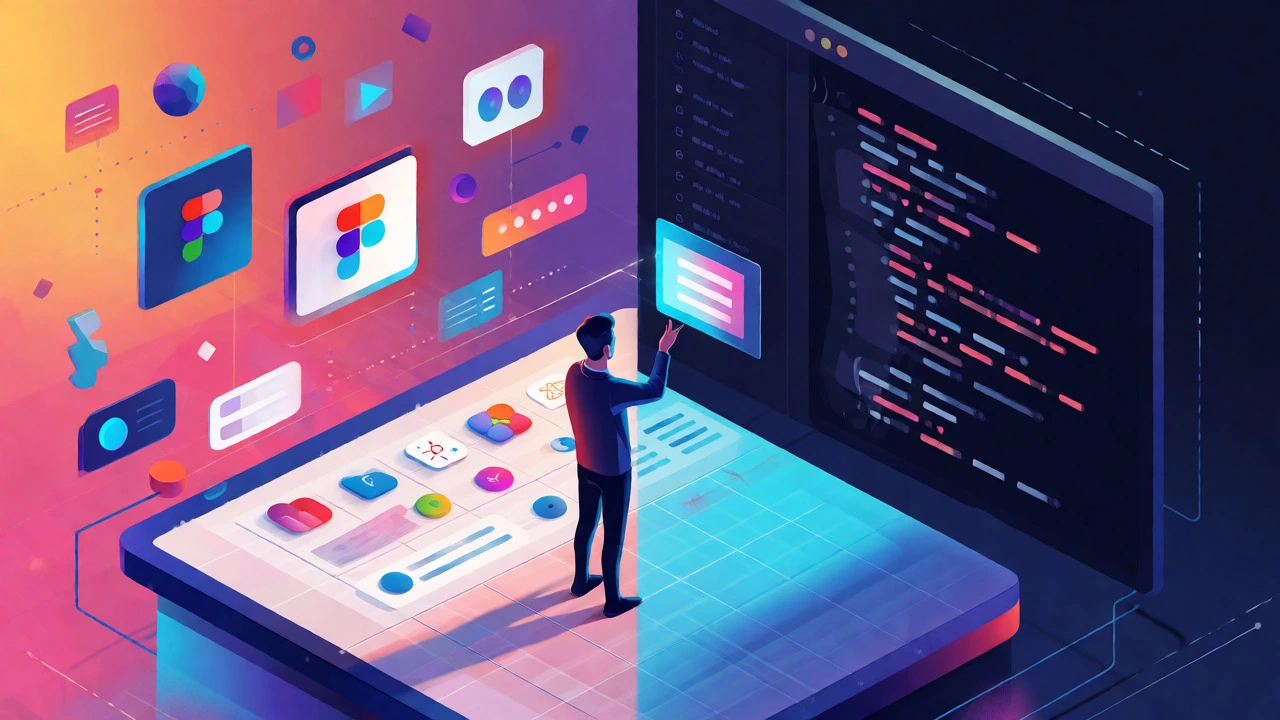
So, is there a middle ground? Yes, and it is growing fast. Roles like UI Engineer or Design Technologist bridge the gap. These professionals write production-ready code but specialize in the visual layer. They care deeply about pixel-perfect implementation and animation smoothness, areas where generalist backend developers might struggle.
A UI Engineer might spend their day creating reusable React components that match Figma designs exactly. They understand both the aesthetic intent of the designer and the technical constraints of the system. This role is particularly valuable in large tech companies where consistency across thousands of screens is critical. However, calling them "developers" is accurate, while calling them "designers" is misleading. They are engineers who speak the language of design.
Career Path: Should You Switch?
If you are a designer wondering if you should learn to code, ask yourself why. Do you want to control the final output? Or do you want to get hired faster? Learning basic HTML and CSS will make you a better collaborator. You will know why a certain shadow effect is expensive to render or why a specific layout breaks on mobile. That knowledge earns respect from developers.
But becoming a full-stack developer requires a significant time investment. You need to understand state management, API requests, database interactions, and security protocols. If you hate debugging syntax errors, stick to design. If you love solving logical puzzles and seeing immediate results from your code, consider the switch. Many successful Product Managers come from either background, using their combined knowledge to guide teams effectively.

Hiring Mistakes to Avoid
Startups often post jobs for a "UI/UX Developer" expecting one person to handle research, wireframing, high-fidelity mockups, AND coding the frontend. This is a recipe for burnout. One person rarely excels at all three. Research requires deep listening and patience. Coding requires intense focus and logical rigor. Trying to do both simultaneously leads to half-baked designs and buggy code.
Instead, hire a designer for the experience and a developer for the execution. For smaller projects, look for a freelancer who specializes in one area but understands the other. Or, use a template-based approach where the design is predefined, reducing the custom coding burden. Clear role definition prevents scope creep and ensures higher quality output.
Final Thoughts on Team Dynamics
The best products come from tight collaboration, not role merging. Designers should sit next to developers (virtually or physically). Developers should attend user testing sessions. When both sides respect the complexity of the other's work, friction disappears. Don't try to force one person to be everything. Recognize that UI/UX is a creative discipline focused on human behavior, while development is an engineering discipline focused on machine efficiency. Both are essential, but they are not the same thing.
Can a UI/UX designer become a developer?
Yes, many designers successfully transition into frontend development. It requires learning programming languages like HTML, CSS, and JavaScript, along with frameworks such as React or Vue. The transition is easier for designers who already understand layout grids and component systems, as these concepts map directly to code structures. However, it typically takes 6-12 months of dedicated study to reach a junior developer level.
Do developers need to know UI/UX design?
Developers do not need to be expert designers, but they benefit greatly from understanding basic design principles. Knowledge of typography, spacing, color contrast, and accessibility standards helps developers implement designs more accurately and independently. This reduces back-and-forth communication with designers and results in a more polished final product.
What is the difference between UI and UX?
UX (User Experience) refers to the overall journey and usability of a product, focusing on how users solve problems and whether the flow makes sense. UI (User Interface) refers to the visual touchpoints, including buttons, icons, typography, and color schemes. UX is about functionality and logic; UI is about aesthetics and interaction.
Is learning to code necessary for UI/UX careers?
It is not strictly necessary for most UI/UX roles, especially in larger companies with dedicated development teams. However, having a basic understanding of HTML and CSS is highly valued. It allows designers to create feasible designs and communicate more effectively with engineers. For those working in small teams or freelancing, coding skills can significantly increase employability and project control.
Which pays more, UI/UX design or web development?
Salaries vary by location and experience, but generally, senior developers earn slightly more than senior designers due to the technical complexity and supply/demand dynamics. However, top-tier UX researchers and Product Designers can command salaries equal to or higher than developers. The gap narrows significantly at leadership levels, such as Head of Design versus CTO.