
Frontend Developer Future-Proofing Calculator
Select the areas where you have strong proficiency or actively work. This tool evaluates your readiness for the modern "Full-Stack Lite" era.
Performance Engineering
Core Web Vitals, lazy loading, bundle optimization.
Type Safety (TypeScript)
Strong typing, interfaces, compile-time error catching.
Complex State Management
Redux, Zustand, TanStack Query, global data flow.
Accessibility (a11y)
Screen readers, keyboard nav, legal compliance.
Full-Stack Lite
Next.js/Remix, server actions, API design basics.
AI Integration & Review
Using Copilot/Cursor effectively, code auditing.
Soft Skills & Architecture
Business translation, technical debt advocacy.
Emerging Tech
WebAssembly, WebGL, Edge computing awareness.
Your Score
Select skills to begin
It’s easy to feel the ground shifting beneath your feet if you work with code. Every few months, someone declares that frontend development is dead. First, it was mobile apps killing websites. Then, it was React making jQuery obsolete. Now, it’s artificial intelligence writing HTML and CSS faster than you can type. If you’re staring at your IDE wondering if you should pivot to data science or learn how to fix HVAC systems, you aren’t alone. But here is the truth: the job isn’t disappearing; it is evolving into something harder, more strategic, and ultimately more valuable.
We are not talking about the days when a frontend developer’s main job was centering divs and tweaking margins. That era is over. In 2026, the "future" of frontend isn't about whether computers can write code-they absolutely can. It is about whether humans can curate, architect, and optimize what those machines produce. The role has shifted from manual labor to creative direction. You are less like a bricklayer and more like an architect who oversees automated construction crews.
Is frontend development still a good career choice?
Yes, but the definition of the role has changed. You need to focus on architecture, performance optimization, and complex state management rather than just UI implementation.
The AI Illusion: Why Code Generation Isn’t the End
Let’s address the elephant in the room: AI tools like GitHub Copilot, Cursor, and various LLM-based IDEs are incredible. They can generate a responsive navbar in seconds. They can debug syntax errors before you even realize they exist. For many junior developers, this feels like a threat. If a machine can do the basics, why hire a human?
The problem with relying solely on AI-generated code is context. AI is great at local patterns but terrible at global architecture. It doesn’t know your business logic. It doesn’t understand why the checkout flow needs to handle three different tax jurisdictions or why the animation needs to pause for accessibility reasons. AI produces code that *looks* right but often breaks under edge cases or scales poorly.
In my experience working with teams in Leeds and beyond, the most productive developers aren’t those who fight AI; they are those who use it as a force multiplier. Instead of spending four hours writing boilerplate components, you spend twenty minutes reviewing AI-generated drafts and fixing the subtle logical flaws. This shifts your value proposition. You are no longer paid for keystrokes; you are paid for judgment. You are the editor-in-chief of a newspaper where the reporters are robots.
From Pixels to Performance: The New Core Skills
If typing code is becoming commoditized, what skills remain premium? The answer lies in complexity. Simple websites are now built by marketing teams using no-code platforms like Webflow or Framer. These tools are fantastic for brochure sites and simple blogs. But they hit a wall quickly when you need custom integrations, real-time data updates, or highly specific user interactions.
This is where professional frontend developers come in. The future belongs to those who understand the entire stack, even if they only touch the top layer. Here is what matters now:
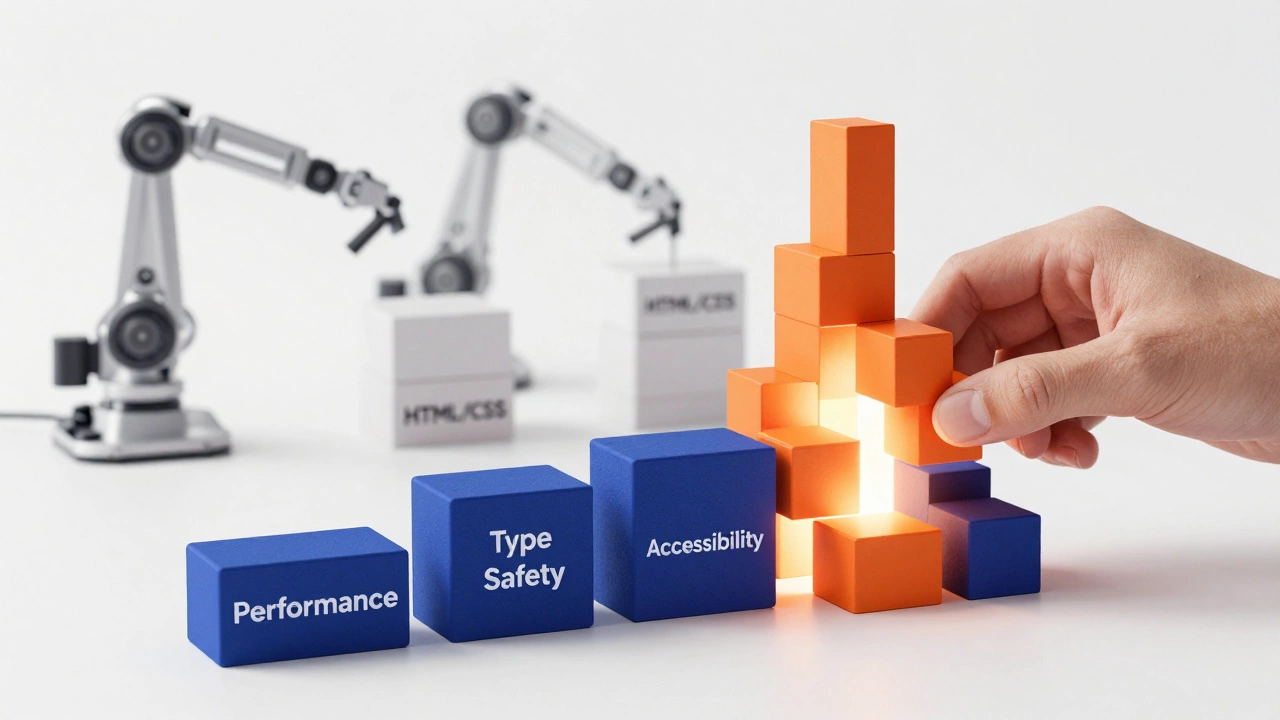
- Performance Engineering: With Core Web Vitals affecting SEO rankings, understanding how to lazy-load assets, minimize JavaScript bundles, and optimize render paths is critical. A pretty site that loads in five seconds is a failed product.
- Type Safety: TypeScript has moved from optional to mandatory in most serious projects. As applications grow, the ability to catch errors at compile time rather than runtime saves thousands of dollars in debugging.
- State Management: Managing complex data flows across multiple components requires deep knowledge of tools like Redux, Zustand, or server-state libraries like TanStack Query. This is hard to automate because it depends entirely on your app’s unique structure.
- Accessibility (a11y): Legal requirements for digital accessibility are tightening globally. Building inclusive interfaces that work with screen readers and keyboard navigation is a specialized skill that AI often gets wrong.
Think of it this way: anyone can buy a car off the lot. But when that car needs to be modified for off-road racing or converted into an electric vehicle, you need an engineer. Frontend development is moving toward that engineering mindset.
The Rise of Full-Stack Lite
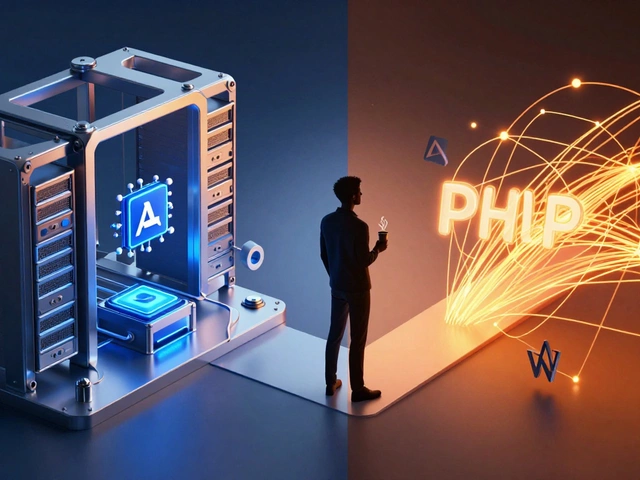
The line between frontend and backend is blurring. Frameworks like Next.js, Remix, and SvelteKit encourage developers to write both client-side and server-side code in the same project. This isn’t about becoming a DevOps expert overnight. It’s about understanding the lifecycle of a request.
When you build a feature today, you need to know how the data is fetched, cached, and mutated. You need to understand API design, database queries, and security implications. A pure "UI person" who throws exceptions whenever they hit an API error is becoming less relevant. The modern frontend developer is a "Full-Stack Lite" engineer-deeply specialized in the browser but fluent enough in the backend to collaborate effectively and make architectural decisions.
| Aspect | Traditional (Pre-2024) | Modern (2026+) |
|---|---|---|
| Primary Output | HTML/CSS/JS Files | Optimized, Accessible Components |
| Tooling | Manual Setup, Gulp/Webpack | Vite, Turbopack, AI Assistants |
| Focus | Visual Fidelity | Performance & User Experience |
| Backend Knowledge | Minimal (Fetch API) | Moderate (Server Actions, APIs) |
No-Code Platforms: Competitors or Allies?
You might worry that no-code tools will replace developers entirely. Look at the market. Tools like Bubble, Webflow, and Shopify empower non-technical founders to launch MVPs. This is actually good news for developers. It filters out the low-end work. No one wants to build a static portfolio site for $500 anymore. That work goes to the templates.
However, these platforms have limits. When a startup succeeds, they outgrow their no-code wrapper. They need custom algorithms, complex permissions, and high-performance rendering. That’s when they hire developers to rebuild or extend the platform. The barrier to entry for launching a product has lowered, which means there are more products needing sophisticated frontend engineering. The volume of high-quality work hasn’t decreased; the nature of the work has simply moved up the value chain.
Soft Skills Become Technical Skills
As technical tasks become easier, communication becomes harder. In a team where everyone can code faster thanks to AI, the differentiator is clarity. Can you explain why a certain architectural decision was made? Can you translate business requirements into technical constraints? Can you advocate for the user when stakeholders push for flashy but broken features?
I’ve seen brilliant coders struggle because they couldn’t articulate the cost of their technical debt. Conversely, I’ve seen average coders thrive because they understood the business impact of their work. The future frontend developer is a translator. You sit between the design vision, the business goals, and the technical reality. You ensure that what is built is not just functional, but viable.
This also means staying curious. The tech landscape changes fast. WebAssembly (Wasm) is bringing near-native performance to the browser. WebGL and Three.js are making 3D experiences standard. Edge computing is changing how we think about latency. You don’t need to master all of these, but you need to know when they apply. Being a lifelong learner is no longer a buzzword; it’s a survival tactic.
Navigating Career Transitions
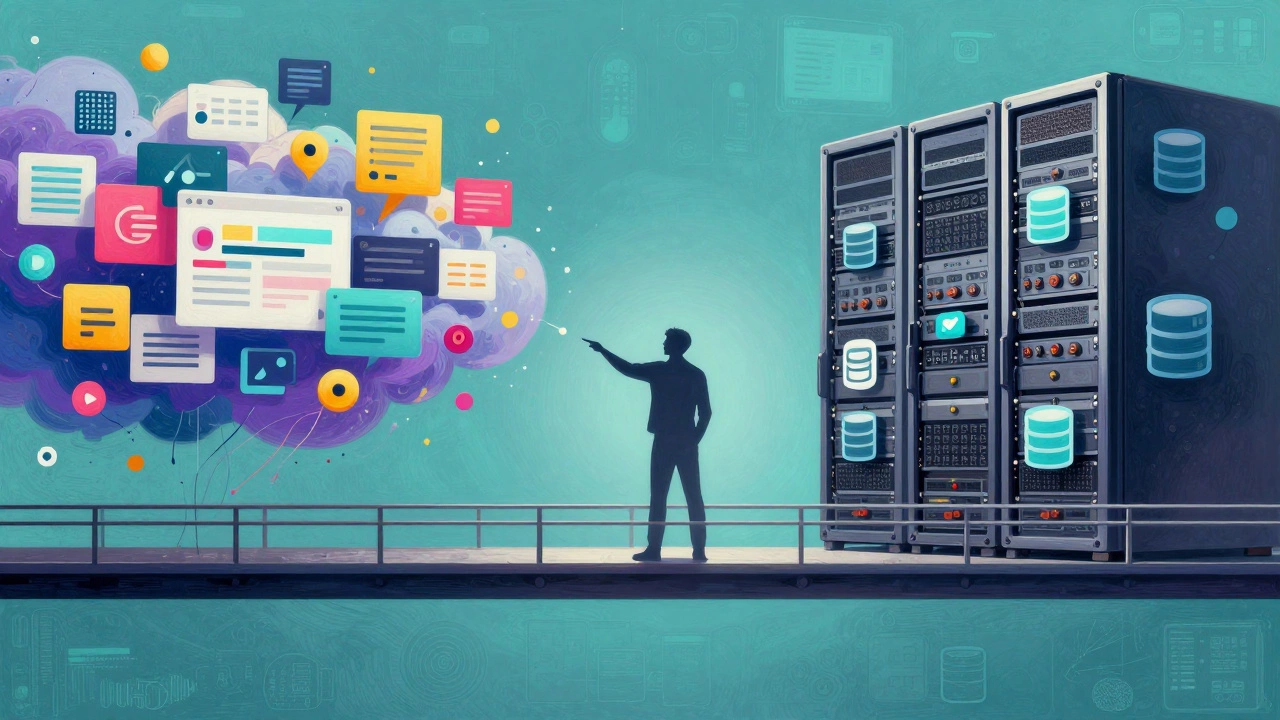
If you are feeling stuck, consider these practical steps. First, audit your current projects. Are you doing repetitive tasks that could be automated? Start using AI tools to speed them up. Use the saved time to learn deeper concepts like browser rendering engines or network protocols. Second, broaden your scope. Learn enough backend to understand how your frontend fits into the larger system. Finally, build things that matter. Don’t just follow tutorials. Build a complex application that solves a real problem. The complexity will teach you more than any course.
There are resources everywhere to help you navigate this shift. Whether you are looking for technical communities or professional networking opportunities, finding the right circle is key. For instance, some professionals find value in exploring diverse directories to understand how different industries operate, such as checking out this directory to see how local businesses structure their online presence, even if the niche is completely unrelated to software. The principle remains: observe how information is organized and presented to users.
The Verdict: A Brighter, Harder Future
So, does frontend have a future? Absolutely. But it’s not the future of endless CSS hacks and jQuery plugins. It’s a future of intelligent, performant, and accessible applications. The bar is higher, yes. But the ceiling is also higher. You have the chance to build experiences that were impossible ten years ago. Real-time collaboration tools, immersive 3D environments, and AI-integrated interfaces are waiting for skilled engineers to bring them to life.
Don’t fear the change. Embrace it. Upgrade your toolkit, deepen your understanding, and focus on the problems that machines can’t solve yet: empathy, strategy, and creativity. The web isn’t going anywhere. And neither are you, as long as you keep building.
Will AI replace frontend developers completely?
No. AI will replace routine coding tasks, but it cannot replace architectural decision-making, complex problem-solving, and user-centric design thinking. Developers will evolve into roles focused on oversight, integration, and high-level logic.
What is the best framework to learn in 2026?
React remains the industry standard due to its ecosystem and job market demand. However, learning Next.js or Remix alongside React is crucial because they handle full-stack capabilities. Vue and Svelte are also strong contenders for specific niches.
Is it too late to start learning frontend development?
It is never too late, but the learning path has changed. Focus on fundamentals like HTML, CSS, and JavaScript first. Then move to a major framework. Prioritize building real projects over consuming endless tutorial content.
How important is TypeScript for new developers?
TypeScript is essential. Most modern enterprise applications use it to manage complexity. Learning it early will make you more employable and help you write more robust, maintainable code.
Should I specialize in UI or move towards full-stack?
A hybrid approach is best. Maintain deep expertise in frontend technologies while gaining sufficient backend knowledge to understand data flow and API interactions. This "T-shaped" skill set is highly valued.