


PHP Career & Market Viability Calculator
Monthly Income Estimate
Based on your hours and typical project availability in the current PHP market.
Enter your details to see how PHP performs in 2026
Discover earning potential and market opportunities
Walk into any tech meetup in London or New York today, and you’ll hear the same buzzwords: Rust, TypeScript, maybe a bit of Go. You won’t hear much about PHPa server-side scripting language designed for web development that can be embedded into HTML. The narrative is simple: PHP is old. It’s messy. It’s dying.
But here’s the twist: if PHP were actually dead, half the internet would have collapsed by now. In 2026, PHP still powers roughly 75% of all websites with a known server-side language. That includes giants like Facebook (Meta), Wikipedia, and Slack. So why does it feel like nobody talks about it anymore? The answer isn’t that PHP failed; it’s that it became invisible infrastructure while newer languages chased the spotlight.
The Hype Cycle Killed the Conversation
To understand why PHP feels unpopular, you have to look at how technology trends work. We live in an era of rapid innovation cycles. Developers are drawn to novelty because it signals career growth and modern competence. JavaScripta high-level, interpreted programming language that conforms to the ECMAScript specification took over not just the browser but the server side too, thanks to Node.jsa cross-platform, open-source JavaScript runtime environment. This created a unified stack where one language ruled both front and back ends. For startups and agencies, this was a massive efficiency win.
PHP, on the other hand, stuck to its lane. It didn’t try to run in the browser. It didn’t try to be everything to everyone. While Python captured the AI and data science wave, and Java held onto enterprise banking systems, PHP quietly optimized itself. The release of PHP 8.0 in 2020 and subsequent versions brought significant performance improvements, including Just-In-Time (JIT) compilation support and strict typing features. Yet, these updates rarely made headlines. The marketing machine for new frameworks is loud; the steady evolution of a mature language is quiet.
| Metric | Common Perception | Actual Data (2026) |
|---|---|---|
| Market Share | Declining rapidly | Stable at ~75% of tracked websites |
| Hiring Demand | Few jobs available | High demand for maintenance & WordPress experts |
| Performance | Slow and inefficient | 3x faster than PHP 7.4 due to opcache & JIT |
| Community Vibe | Toxic or outdated | Mature, focused on stability and standards |
The "Invisible" Monopoly: Content Management Systems
The biggest reason PHP seems irrelevant is that it hides behind successful products. Most developers don’t write raw PHP anymore; they build plugins for WordPressa free and open-source content management system written in PHP. WordPress powers over 40% of the entire web. When a business owner says, "I need a website," they often mean a WordPress site. They aren’t thinking about the underlying language. They’re thinking about themes, plugins, and ease of use.
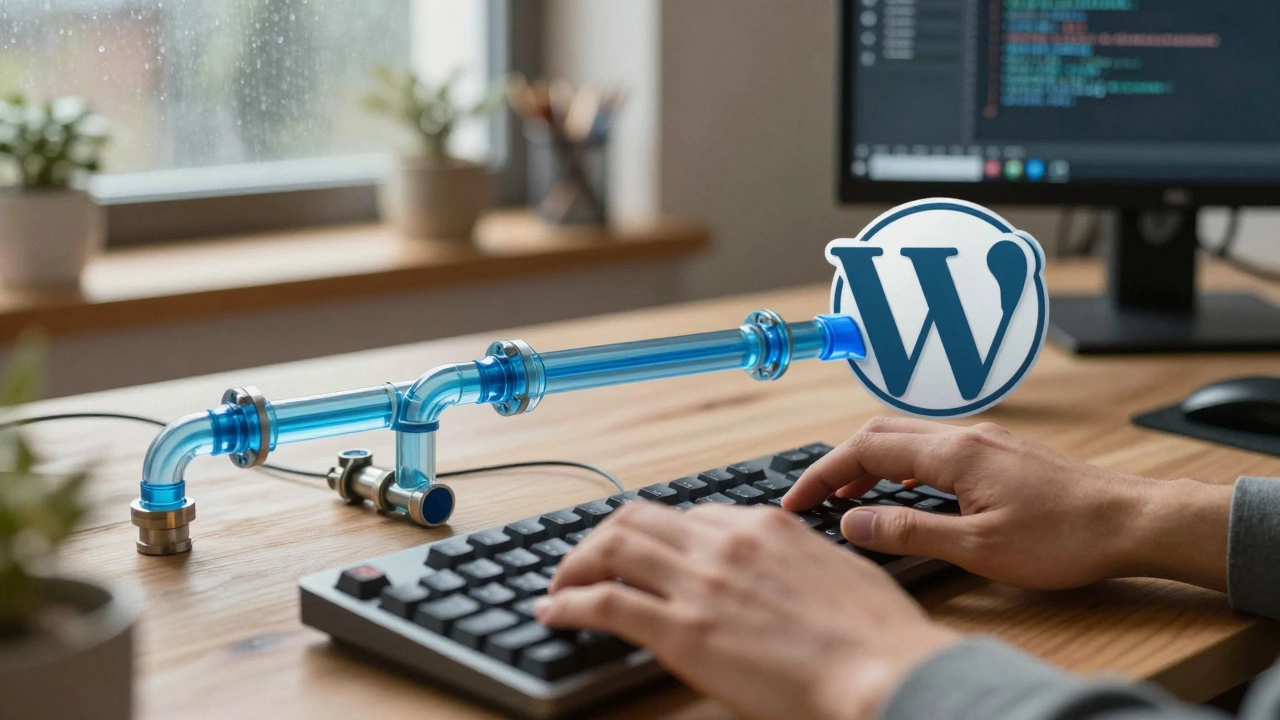
This creates a disconnect. Junior developers learn React or Vue to build flashy portfolios. They see immediate visual results. Learning PHP often means diving into legacy codebases or configuring complex environments for CMS platforms. It’s less glamorous. But consider this: every time you read a news article on a major publisher’s site, check a local restaurant’s menu, or browse an online store built on WooCommerce, you’re interacting with PHP. The language isn’t disappearing; it’s just serving as the plumbing for the digital world.
Why Startups Chose Alternatives
If you’re building a new SaaS product from scratch in 2026, you probably won’t choose PHP. And that’s okay. Different tools serve different purposes. Startups prioritize speed of iteration, talent availability, and ecosystem cohesion. Ruby on Rails popularized the "convention over configuration" approach, which later influenced Laravel, the most popular PHP framework. However, by the time Laravel rose to prominence, the startup market had already shifted toward full-stack JavaScript solutions.
Using Next.js or Nuxt allows teams to share types, logic, and even components between client and server. This reduces context switching for developers. PHP requires a separate frontend build process anyway, so the advantage of a unified language diminishes. Additionally, venture capital firms often prefer technologies perceived as "cutting-edge." Investing in a PHP-based startup might signal conservatism to investors who associate the language with small businesses rather than scalable unicorns.
The Legacy Code Burden
A significant portion of PHP’s reputation damage comes from its history. In the early 2000s, PHP was easy to misuse. Developers wrote spaghetti code mixed directly with HTML. Security vulnerabilities like SQL injection were common because best practices weren’t standardized. Today, millions of lines of this legacy code still run critical infrastructure.
Maintaining old PHP applications is expensive and tedious. Companies spend more resources keeping their existing systems alive than building new ones with PHP. This gives the impression that PHP is only useful for patching up old projects. In reality, modern PHP (version 8.1 and above) enforces strict type declarations, supports named arguments, and integrates seamlessly with modern DevOps pipelines. But convincing a CTO to rewrite a stable, revenue-generating application in a "newer" language is a hard sell. Thus, PHP remains trapped in the maintenance cycle, reinforcing the myth that it’s obsolete.
Performance Myths Debunked
Let’s address the elephant in the room: speed. Critics argue that PHP is slow compared to compiled languages like C++ or even interpreted ones like Python. This was true in 2010. It is not true in 2026.
Modern PHP engines, particularly Zend Engine, have undergone massive optimizations. Features like OPcache store precompiled script bytecode in shared memory, eliminating the need for PHP to load and parse scripts on each request. Benchmarks show that modern PHP can handle thousands of requests per second with minimal resource usage. For typical web applications-where database queries and network latency are the real bottlenecks-the difference between PHP and Node.js is negligible. What matters more is how well you structure your database indexes and cache strategies.

Where PHP Is Still Winning
Despite the noise, PHP thrives in specific niches. Freelancers and small agencies love it because deployment is trivial. You don’t need Docker containers or Kubernetes clusters to host a basic PHP app. A standard LAMP stack (Linux, Apache, MySQL, PHP) works out of the box on almost any shared hosting provider. This lowers the barrier to entry for non-technical clients who want a quick, affordable solution.
Additionally, the job market for PHP hasn’t vanished; it has specialized. There is a high demand for senior developers who can refactor legacy systems, optimize WordPress multisite networks, and secure e-commerce platforms. These roles pay well because few junior developers want to tackle them. If you position yourself as an expert in modernizing PHP infrastructure, you’ll find plenty of opportunities.
Should You Learn PHP in 2026?
It depends on your goals. If you want to work at a cutting-edge AI startup or build mobile apps, focus on Python or Kotlin. If you aim to freelance, start your own agency, or maintain large-scale content platforms, PHP is an invaluable skill. Understanding PHP gives you insight into how the majority of the web operates. It teaches you about stateless protocols, session management, and database interaction in a way that abstracted frameworks sometimes hide.
Moreover, learning PHP doesn’t prevent you from learning other languages. Many successful developers are polyglot. Knowing PHP alongside JavaScript makes you a versatile full-stack candidate capable of handling both legacy migrations and modern greenfield projects.
Is PHP really dead in 2026?
No, PHP is not dead. It powers approximately 75% of all websites with a known server-side language. While it may not be the trendiest choice for new startups, it remains the backbone of content management systems like WordPress and many enterprise applications.
Why do people say PHP is unpopular?
PHP is perceived as unpopular because it lacks the hype surrounding newer languages like Rust or Go. Its success is often hidden behind user-friendly platforms like WordPress, making the underlying language less visible to casual observers and junior developers chasing trends.
Is it worth learning PHP if I'm a beginner?
Yes, if you plan to freelance, work with small businesses, or specialize in CMS development. PHP has a low barrier to entry and abundant hosting options. However, if your goal is big-tech employment in AI or cloud infrastructure, Python or Java might offer better alignment with current hiring trends.
How does modern PHP compare to older versions?
Modern PHP (versions 8.0+) is significantly faster and safer than older iterations. It introduces strict typing, JIT compilation, and improved error handling. The language has evolved from a loose scripting tool into a robust, object-oriented platform suitable for large-scale applications.
What are the best alternatives to PHP for web development?
Popular alternatives include Node.js (JavaScript), Python (with Django or Flask), and Ruby (with Rails). Each has strengths: Node.js excels in real-time applications and unified stacks, Python dominates in data-heavy backends, and Ruby offers rapid prototyping capabilities.