
1. What is the primary goal of your project?
2. What is your priority for development?
PHP
Based on your needs, PHP is the best choice!
You’ve probably heard it a thousand times: "PHP is dead." People have been saying this for over a decade, usually while they're switching to the latest trendy JavaScript framework. But if you look at the actual web, the story is different. A massive chunk of the internet still runs on this language, and it isn't just because of old legacy code. The real question isn't whether PHP is alive, but whether PHP development is still the right choice for your specific project in 2026.
To get the facts straight, PHP is a general-purpose scripting language that executes on the server side, specifically designed for web development. It allows you to embed code directly into HTML, making it one of the most accessible entry points for anyone wanting to build a dynamic website. While it started as a simple tool for personal homepages, it has evolved into a sophisticated engine powering everything from small blogs to global enterprises.
Quick Takeaways
- PHP is far from dead; it powers a huge percentage of the web via CMS platforms.
- Modern PHP (8.x+) is significantly faster and more type-safe than the versions from ten years ago.
- The ecosystem, especially Laravel, offers a developer experience that rivals any modern framework.
- It is the gold standard for freelance work and rapid prototyping of content-heavy sites.
- It might not be the best choice for real-time apps (like chat) or heavy AI/ML integration.
The "PHP is Dead" Myth vs. Reality
Why do people keep saying it's dead? Mostly because PHP's early days were... messy. Back in the PHP 4 and 5 eras, the language was inconsistent. You had functions named randomly, and security holes were common if you didn't know exactly what you were doing. Developers who left during that time often remember PHP as a chaotic mess of spaghetti code.
But if you haven't touched the language since 2015, you're in for a shock. The shift to PHP 7 and then PHP 8 changed everything. The introduction of the JIT (Just-In-Time) compiler in PHP 8 drastically improved execution speed. We aren't talking about a 5% bump; some operations are significantly faster, bringing it closer to the performance of compiled languages in specific web scenarios.
Moreover, the community moved toward strong typing. You can now define exactly what a function should return and what arguments it should take. This kills the "undefined variable" bugs that used to haunt developers and makes large codebases much easier to maintain. If you're coming from a background in Java or C#, the modern version of this language will actually feel familiar.
Where PHP Absolutely Wins
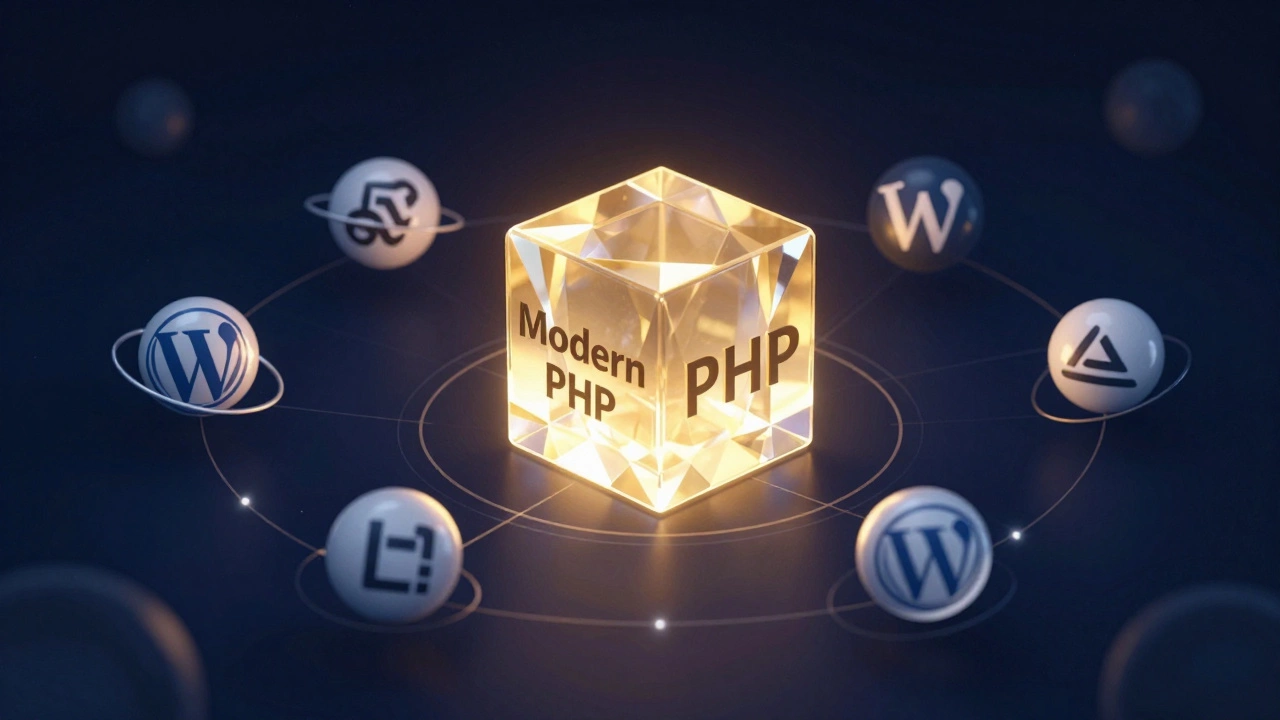
There are a few areas where PHP isn't just "okay," but actually the best tool for the job. The first is the Content Management System (CMS) market. WordPress is the elephant in the room. It powers over 40% of all websites. If you want to build a site that a non-technical client can manage without calling you every five minutes to change a paragraph, WordPress is the path of least resistance.
Then there is Laravel. If you're building a custom web application, Laravel is a masterpiece of developer experience. It takes the best ideas from Ruby on Rails and implements them with a level of polish that is hard to find elsewhere. It provides an elegant syntax for database migrations, routing, and authentication. You can go from an empty folder to a fully functioning API with user login and database relationships in an afternoon.
Freelancing is another huge win. Because so many businesses rely on PHP, the demand for maintenance and new feature development is constant. You aren't fighting for a few spots at a big tech firm in Silicon Valley; you're helping thousands of small and medium businesses grow their online presence.
Comparing PHP to the Modern Alternatives
It helps to see how it stacks up against the usual suspects: Node.js, Python, and Go. Each has its place, but the trade-offs are specific.
| Feature | PHP (Modern) | Node.js | Python (FastAPI/Django) | Go (Golang) |
|---|---|---|---|---|
| Deployment Ease | Extremely Easy | Moderate | Moderate | Easy (Binary) |
| Execution Speed | High (with JIT) | Very High | Moderate | Ultra High |
| Dev Speed | Very Fast | Fast | Fast | Moderate |
| Ecosystem Focus | Web/CMS | Real-time/APIs | AI/Data Science | Infrastructure/Cloud |
The Trade-offs: When to Avoid PHP
I won't tell you it's perfect because it isn't. There are scenarios where choosing PHP is actually a mistake. If you are building a real-time application-think a collaborative whiteboard or a high-frequency trading dashboard-PHP's request-response model can be a bottleneck. While tools like Swoole or RoadRunner help by allowing PHP to stay in memory, Node.js is natively built for this kind of asynchronous event loop.
Similarly, if your project is centered around Artificial Intelligence or Machine Learning, look elsewhere. Python owns this space. The libraries available for data manipulation and neural networks in Python are light-years ahead of anything in the PHP ecosystem. Trying to do heavy data science in PHP is like trying to eat soup with a fork-it's technically possible, but you're making it way harder than it needs to be.
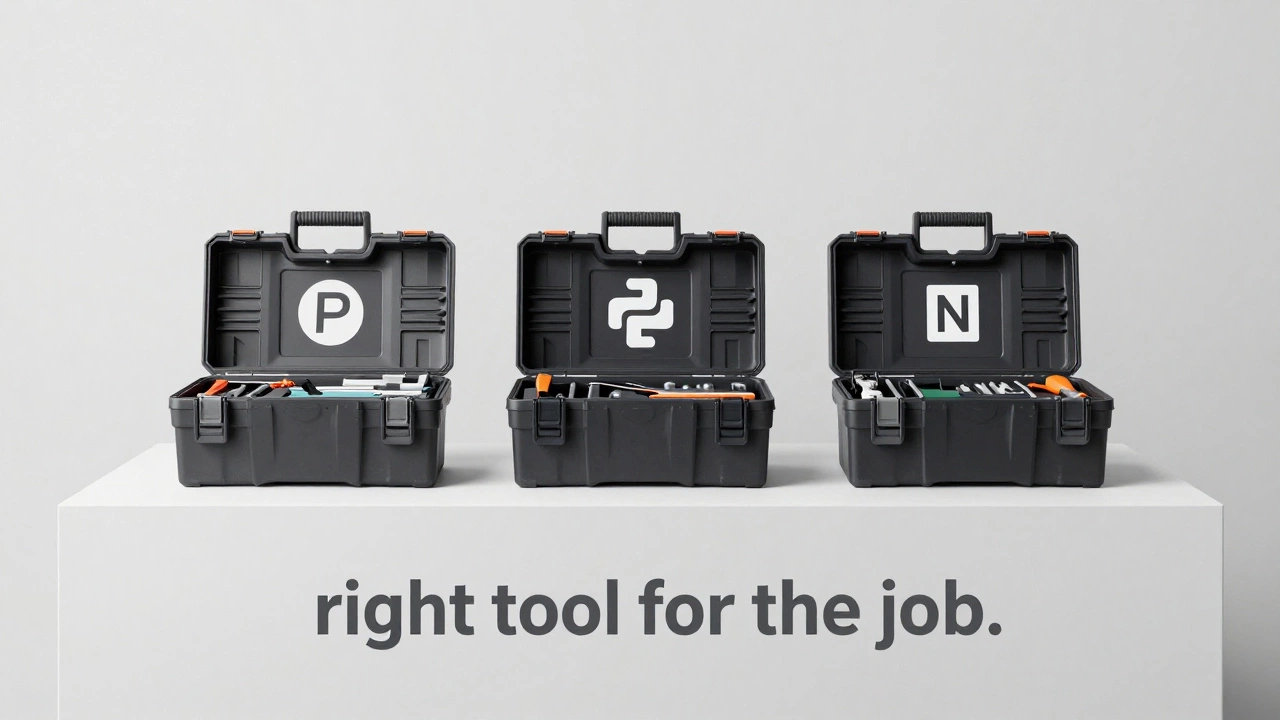
How to Start (or Restart) with PHP in 2026
If you're diving back in, don't start with the old tutorials. Avoid anything that mentions "mysql_query" (those functions were removed years ago). Instead, focus on these three pillars:
- Composer: This is the dependency manager for PHP. If you aren't using Composer, you aren't doing modern development. It's how you pull in libraries and manage your project's requirements.
- PSR Standards: The PHP Standard Recommendations (PSR) ensure that code looks the same regardless of who wrote it. Following PSR-12 makes your code professional and readable.
- Static Analysis: Use tools like PHPStan or Psalm. These tools scan your code for bugs before you even run it, catching those annoying null-pointer exceptions before they hit production.
For your environment, forget the old XAMPP setups if you want to feel like a pro. Use Docker or Laravel Sail. It allows you to spin up a containerized environment that exactly matches your production server, meaning no more "it worked on my machine" excuses when you deploy to the cloud.
The Verdict: Is it still viable?
If you are a beginner, PHP is still one of the fastest ways to see your code actually doing something on a screen. If you are a business owner, it's a safe, scalable bet with a massive talent pool of developers available. If you are an experienced engineer, it's a powerful tool for building robust, boring (in a good way) applications that just work.
The "death" of PHP is a cycle of hype. Every time a new language gains traction, the old ones are declared dead. But in the real world, stability and a proven track record matter more than GitHub stars. PHP has survived by adapting, and in 2026, it remains a pragmatic choice for the vast majority of web projects.
Is PHP still used by big companies?
Yes. While many companies migrate parts of their stack, giants like Facebook (who created HHVM and Hack, a derivative of PHP) and Slack still rely heavily on PHP for their core logic. Many high-traffic e-commerce sites also use it because of the maturity of its payment and database integrations.
Is PHP harder to learn than JavaScript or Python?
Actually, for web development, it's often easier. PHP was built specifically for the web, whereas Python and JS are general-purpose. This means you don't have to set up a complex server environment just to print "Hello World" to a browser; you just put the file on a server and it runs.
Which PHP framework should I choose in 2026?
For 90% of people, Laravel is the right answer. It has the best documentation and the most comprehensive ecosystem. However, if you're building a very lightweight API or a microservice, Symfony is a great alternative, and Slim is excellent for those who want something minimal without the "magic" of a full-stack framework.
Does PHP have a good future compared to TypeScript?
They serve different primary purposes. TypeScript is dominant on the frontend and in the Node.js ecosystem. However, PHP's stronghold is in server-side rendering and content management. It's less about one "winning" and more about picking the tool that fits the project's architecture.
Is PHP secure?
Any language can be insecure if the developer writes bad code. PHP has a reputation for being insecure because it allowed beginners to write very dangerous code easily in the early 2000s. Today, using modern frameworks like Laravel and following OWASP guidelines makes PHP applications just as secure as those written in any other modern language.