
E-commerce Profit & Risk Calculator
Enter your expected selling price and costs to see which business model offers the best return on investment for your situation.
Cost Assumptions by Model
Print on Demand
Cost per unit (production + shipping):
Digital Products
Cost per unit (transaction fees ~10%):
Dropshipping
Cost per unit (product + shipping):
Print on Demand
CreativeDigital Products
ExpertDropshipping
MarketerStarting a business from home usually means one thing: keeping overheads down. But in the world of e-commerce is online retail where you sell goods or services directly to consumers via the internet., the "easiest" path isn't always the most profitable, and it's rarely the one with zero work. You want a model that minimizes inventory risk, reduces shipping headaches, and lets you leverage existing infrastructure. For many people living in places like Leeds, the barrier to entry has never been lower thanks to cloud-based tools and global logistics networks.
The core problem you're trying to solve is this: How do you generate revenue without tying up your savings in stock that might not sell? The answer lies in decoupling the product from the physical handling. This article breaks down the three most accessible models for 2026, compares their real-world costs, and gives you a clear roadmap to launch within two weeks.
Key Takeaways
- Print on Demand (POD) is the lowest-risk option because you pay for products only after a customer buys them.
- Digital Products offer the highest profit margins but require more upfront time to create assets.
- Dropshipping allows for wider catalog variety but demands stricter supplier vetting to avoid slow shipping times.
- Platform choice matters: Shopify handles complex catalogs better, while WooCommerce offers more control if you already have a WordPress site.
- Your first goal shouldn't be perfection; it should be validating that someone will actually pay for your specific niche.
Why Physical Inventory Is the Biggest Hurdle
Most traditional brick-and-mortar businesses fail because they buy stock before they know if customers want it. In a home-based setup, your garage or spare room becomes your warehouse. If you order 50 units of a t-shirt design and only sell 10, you're left with 40 unsold shirts and cash tied up in fabric. This is why Inventory Management is the process of ordering, storing, and using an organization's raw materials or finished goods. is often cited as the number one reason small online stores stall out.
To bypass this, you need a fulfillment method where the third party holds the stock. This shifts the burden from "Will I sell this?" to "Can I find a good supplier?" It’s a simpler question to answer, and much cheaper to get wrong. If a supplier fails, you lose a few dollars in samples, not thousands in bulk orders.
Model 1: Print on Demand (The Lowest Risk Entry Point)
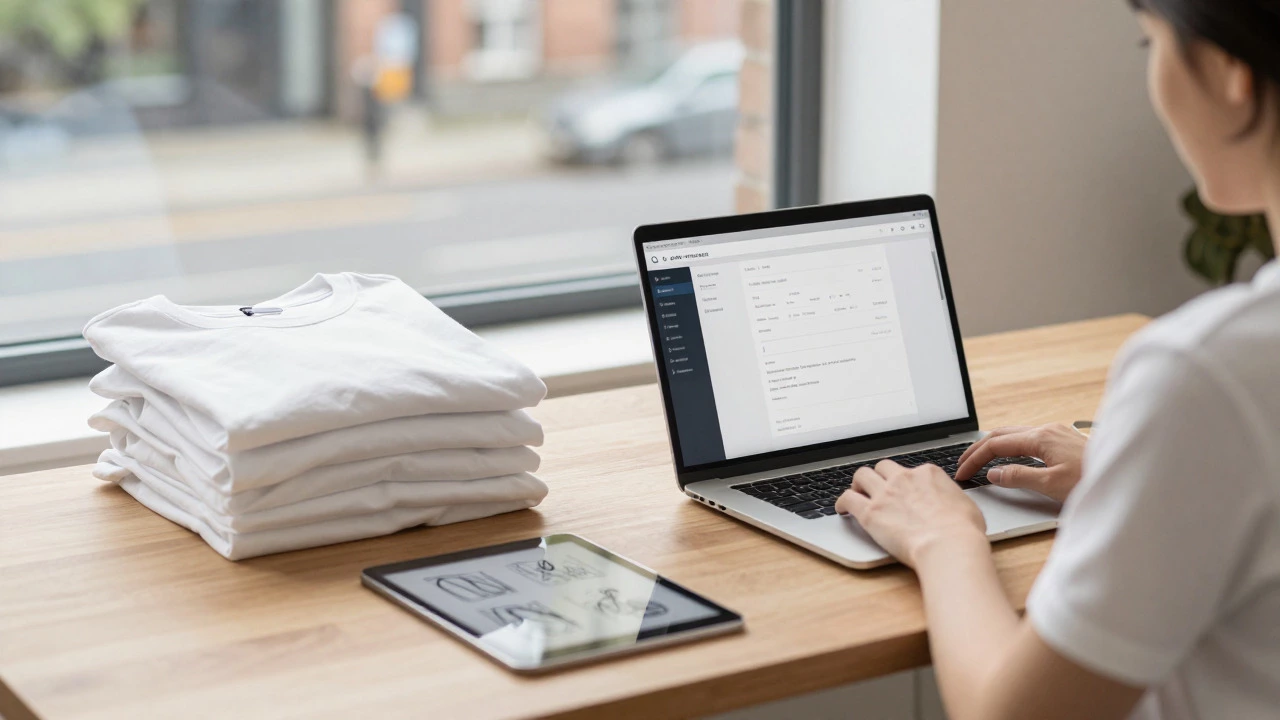
Print on Demand is a production technique that prints designs onto products only when an order is placed. This is arguably the easiest starting point for beginners. Here’s how it works: You upload a graphic design to a platform like Merch by Amazon or integrate a service like Printful with your store. When a customer buys a hoodie, the provider prints your design, packs it, and ships it. You never touch the product.
The appeal here is the near-zero financial risk. Your upfront costs are just your domain name and maybe a subscription to a design tool like Canva. However, the trade-off is margin. A t-shirt that sells for £25 might cost you £12 to produce and ship, leaving you with roughly £13 gross profit before marketing costs. It’s not huge, but it’s consistent.
For this to work, you need a niche. Selling generic "World's Best Dad" shirts is a race to the bottom. Instead, focus on hyper-specific communities. Think about hobbies, professions, or local pride (like Leeds United fans who aren't into football kits). The more specific the audience, the easier it is to market to them through social media ads or organic content.
Model 2: Digital Products (Highest Margins, No Shipping)
If you hate dealing with physical logistics entirely, consider selling Digital Products is intangible goods such as software, ebooks, courses, or templates delivered electronically.. This could be a Notion template for freelancers, a Lightroom preset pack for photographers, or an ebook guide on pet care. Once you create the file, you can sell it infinitely without manufacturing costs.
The economics here are starkly different. A £30 digital planner has almost zero marginal cost per sale. After paying transaction fees, you keep nearly everything. The challenge isn't logistics; it's creation and distribution. You have to build something valuable enough that people will pay for it. This requires a bit more expertise than uploading a meme to a t-shirt, but the payoff is significantly higher per unit sold.
Tools like Gumroad or Sellfy make this incredibly easy to set up. They handle the file delivery, license keys, and payment processing. You just need to drive traffic to your landing page. This model is particularly strong if you already have a following on LinkedIn, Instagram, or YouTube.
Model 3: Dropshipping (Wider Catalog, Higher Complexity)
Dropshipping is a retail fulfillment method where a store doesn't keep the products it sells in stock. Unlike POD, which focuses on customizable items, dropshipping allows you to sell off-the-shelf products. You list a product from a supplier (often based in China or Europe) on your store. When a customer buys, you forward the order to the supplier, who ships it directly to the buyer.
This model offers the widest range of products. You can sell phone accessories, kitchen gadgets, or pet supplies without holding a single box. However, it comes with higher operational risk. Shipping times from overseas suppliers can be 7-15 days, which leads to customer complaints. To mitigate this, look for European-based suppliers if you're targeting UK customers. Faster shipping equals fewer refunds and happier reviews.
The key to success in dropshipping is curation. Don't import 1,000 products. Pick 10-15 high-quality items that solve a specific problem. Use video demos to show exactly what the product does. Transparency builds trust, and trust drives sales.
Comparing the Three Models
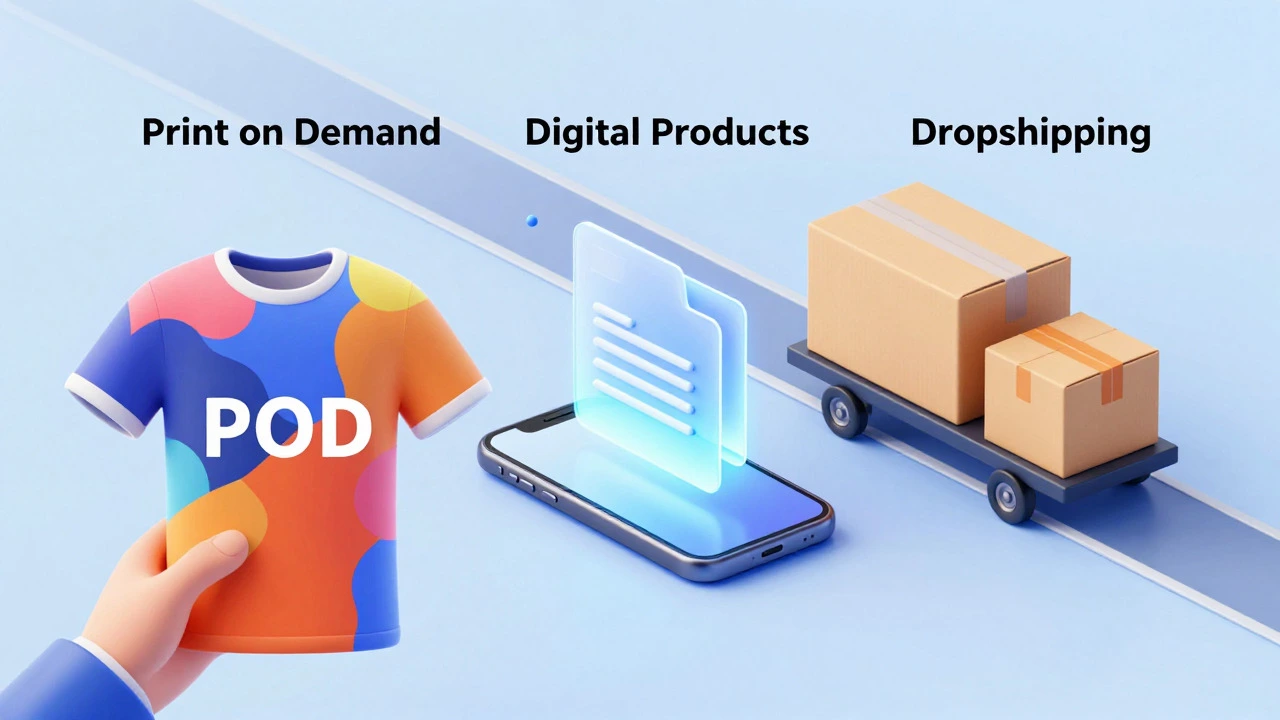
Choosing the right model depends on your skills, budget, and patience. Here is a direct comparison of the three main approaches:
| Feature | Print on Demand | Digital Products | Dropshipping |
|---|---|---|---|
| Startup Cost | Low (£50-£100) | Very Low (£0-£50) | Low-Medium (£100-£300) |
| Profit Margin | Medium (30-50%) | High (80-90%) | Variable (15-40%) |
| Logistics Effort | None (Supplier handles) | None (Auto-delivery) | Low (Order forwarding) |
| Risk Level | Very Low | Low (Time investment) | Medium (Quality control) |
| Best For | Creatives & Designers | Experts & Educators | Marketers & Researchers |
Choosing Your Platform: Shopify vs. WooCommerce
Once you've picked a model, you need a storefront. The two dominant choices are Shopify and WooCommerce. Shopify is a cloud-based commerce platform that provides merchants with an ecommerce solution to sell across multiple channels. It’s a closed ecosystem. You pay a monthly fee (starting around £25/month), and they handle hosting, security, and updates. It’s faster to set up and less technical, making it ideal for beginners who want to start selling immediately.
WooCommerce is an open-source plugin for WordPress that turns websites into online stores. It’s free software, but you pay for hosting and themes. It offers more flexibility and control over data, but it requires more technical maintenance. If you’re comfortable managing a WordPress site, WooCommerce is the long-term cost-effective choice. If you want to focus solely on marketing and sales, Shopify saves you headaches.

Step-by-Step Launch Plan
You don’t need months to prepare. You can go live in two weeks if you stay focused. Here is a realistic timeline:
- Week 1, Days 1-3: Niche Research. Identify a specific audience. Look at Facebook groups, Reddit threads, and TikTok trends. What problems are people complaining about? What aesthetic are they buying?
- Week 1, Days 4-7: Product Sourcing. If doing POD, create 3-5 designs. If doing digital, outline your product structure. If dropshipping, contact 3-5 suppliers and request samples.
- Week 2, Days 8-10: Store Setup. Register your domain. Set up your Shopify or WooCommerce store. Add your products with high-quality images and clear descriptions.
- Week 2, Days 11-14: Soft Launch. Send links to friends, family, and your social media followers. Ask for feedback. Fix any broken links or confusing pages. Then, turn on paid ads or start posting daily content.
Common Pitfalls to Avoid
Even with the easiest models, mistakes happen. Here are the three most common traps that kill new home-based stores:
- Ignoring Customer Service. Even if the supplier ships the item, the customer sees *you* as the brand. Respond to emails within 24 hours. Fast communication reduces chargebacks.
- Overcomplicating the Brand. You don’t need a logo contest or a custom website theme. Keep it clean. Focus energy on getting the first 10 sales, not the perfect branding.
- Waiting for Perfection. Your first product listing won’t be perfect. That’s fine. Launch, learn, and iterate. The market will tell you what works better than any amount of planning.
Frequently Asked Questions
Do I need a business license to start an online store from home?
In the UK, you generally need to register as self-employed with HMRC if you expect to earn over £1,000 per year. You may also need VAT registration if your turnover exceeds the threshold (currently £90,000). Check with your local council for any specific trading licenses required for your area, though many home-based digital businesses operate without additional local permits.
Which is better for beginners: Shopify or WooCommerce?
Shopify is generally better for absolute beginners because it handles hosting, security, and updates automatically. You pay a monthly fee but save time on technical maintenance. WooCommerce is better if you already have a WordPress site or want full ownership of your data without monthly platform fees, but it requires more technical upkeep.
How much money do I need to start a print on demand business?
You can start with as little as £50-£100. This covers a domain name (£10-£15) and a month of platform fees (if using Shopify Basic, approx. £25). Since you don't buy inventory upfront, your main ongoing costs are marketing. Many successful POD sellers start with organic social media marketing to minimize initial ad spend.
Is dropshipping still profitable in 2026?
Yes, but the bar is higher. Generic products from distant suppliers face stiff competition. Profitability now comes from finding unique products, using fast-shipping local suppliers, and building a strong brand identity. The model works best when you curate a tight selection of high-quality items rather than flooding your store with thousands of random products.
What is the fastest way to get my first sale?
Leverage your existing network. Share your store link on personal social media, ask friends to share it, and engage in relevant online communities. Often, the first sale comes from word-of-mouth or a targeted Facebook ad campaign aimed at a very specific interest group. Don't wait for organic search traffic, which can take months to build.