Front-End vs. Back-End Tech Identifier
Click on a technology below to reveal where it runs and how it interacts with the user interface.
HTML
Structure & Skeleton
CSS
Style & Layout
JavaScript
Behavior & Interactivity
PHP
Data Processing & Logic
React
UI Library
WordPress
CMS Platform
You’ve probably heard developers argue about this one. Someone says, "I’m building a modern front-end app," and another replies, "But where does the data come from?" The confusion usually lands squarely on PHP. Is it part of the front end? Or is it strictly for the back?
Here’s the short answer: No, PHP does not run in your browser. It doesn’t paint pixels or handle clicks directly. But that doesn’t mean it’s irrelevant to what you see on screen. To understand why people get confused, we need to look at how websites actually work, not just how they’re labeled.
The Core Difference: Client-Side vs. Server-Side
To figure out if PHP belongs in the front end, you have to separate two worlds: the client side and the server side.
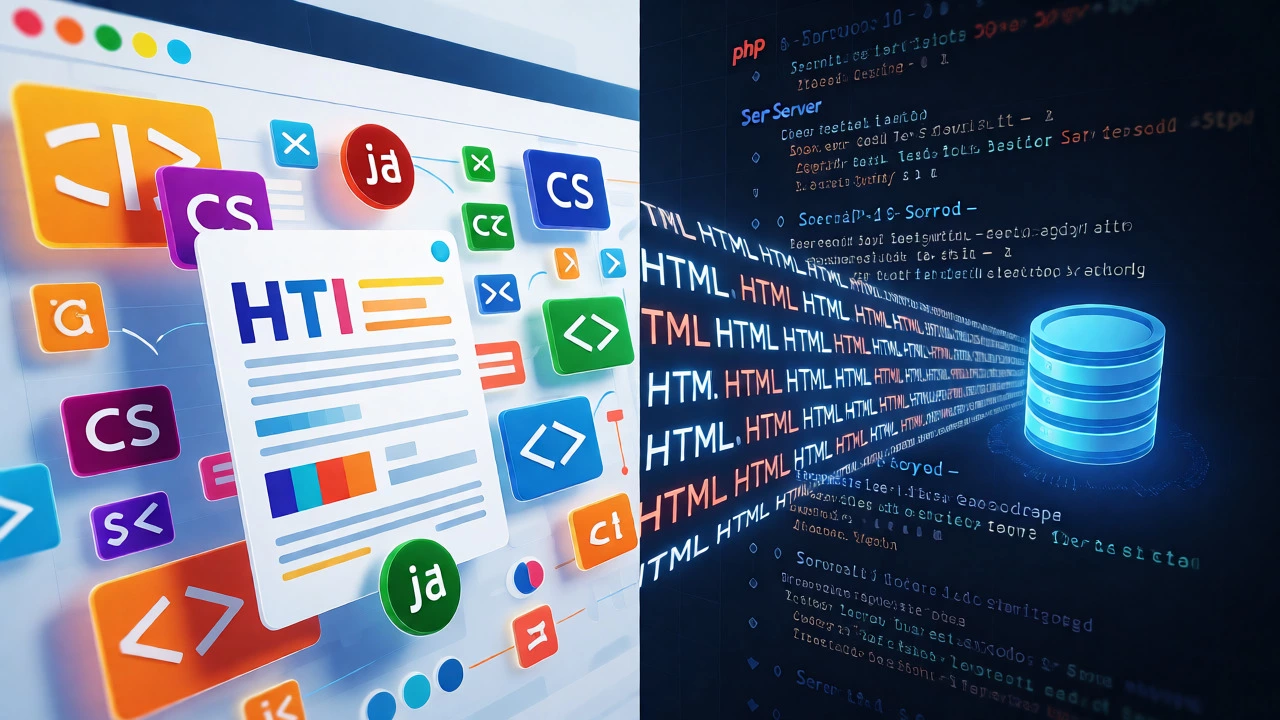
Front-end development happens in the user's browser. This is where HTML, CSS, and JavaScript live. When you click a button, hover over a menu, or watch an animation play, that’s all happening on your device (the client). The code is sent down from the server, but the execution happens locally.
Back-end development happens on the server. This is where PHP, Python, Ruby, or Node.js run. They talk to databases, process forms, check passwords, and generate HTML pages before sending them to the browser.
So, technically, PHP is a back-end language. It never touches the DOM (Document Object Model) directly. It doesn’t know what a "hover state" is. It only knows how to print text.
Why People Think PHP Is Part of the Front End
If PHP is back-end only, why do so many beginners mix them up? Because in the early days of the web, and still today in many content management systems like WordPress, the lines are blurred.
Consider a standard WordPress site. You write a post in the admin panel. PHP fetches that post from the database. Then, PHP injects that text into an HTML template. Finally, it sends the complete HTML file to your browser. From the outside, it looks like one seamless page. But under the hood, PHP did the heavy lifting before the browser even started rendering.
This creates a mental shortcut for developers: "If I change the layout in my theme file, and it shows up on the site, isn’t that front-end work?" Yes, it is design work. But the *technology* doing the assembly is PHP. You’re writing HTML/CSS inside PHP tags. That’s why it feels like front-end coding, even though the engine running it is back-end.
What Actually Runs in the Front End?
If PHP stays on the server, what runs in the browser? Three main technologies dominate the client side:
- HTML: The skeleton. It defines structure-headings, paragraphs, images.
- CSS: The style. It handles colors, fonts, spacing, and responsive layouts.
- JavaScript: The behavior. It makes things interactive without reloading the page.
Modern frameworks like React, Vue.js, and Angular take this further. They build complex interfaces entirely in JavaScript. In these setups, the front end often talks to the back end via APIs (Application Programming Interfaces), not direct PHP scripts.

How PHP Interacts with the Front End
Even though PHP doesn’t run in the browser, it shapes the front end constantly. Here’s how:
| Feature | PHP (Back End) | JavaScript (Front End) |
|---|---|---|
| Execution Location | Server | Browser |
| Main Purpose | Data processing, DB interaction | UI interactivity, validation |
| Visible to User? | No (output only) | Yes (source visible) |
| Common Frameworks | Laravel, Symfony, WordPress | React, Vue, Angular |
| State Management | Sessions, Cookies | Local Storage, Memory |
1. Generating HTML: PHP builds the initial page structure. If you visit a blog, PHP grabs the title, author, and date from the database and slots them into the HTML template.
2. Handling Forms: When you fill out a contact form, the browser sends the data to a PHP script. PHP validates it, saves it, and might redirect you to a "Thank You" page. The front end collects the input; PHP processes it.
3. Dynamic Content Injection: In older architectures, PHP inserts variables directly into JavaScript files. For example, `var userName = 'name; ?>';`. This lets your front-end JS know who is logged in without making an extra API call.
The Modern Shift: Decoupled Architectures
Things are changing. More companies are moving away from mixing PHP and HTML in the same file. They use a "headless" approach.
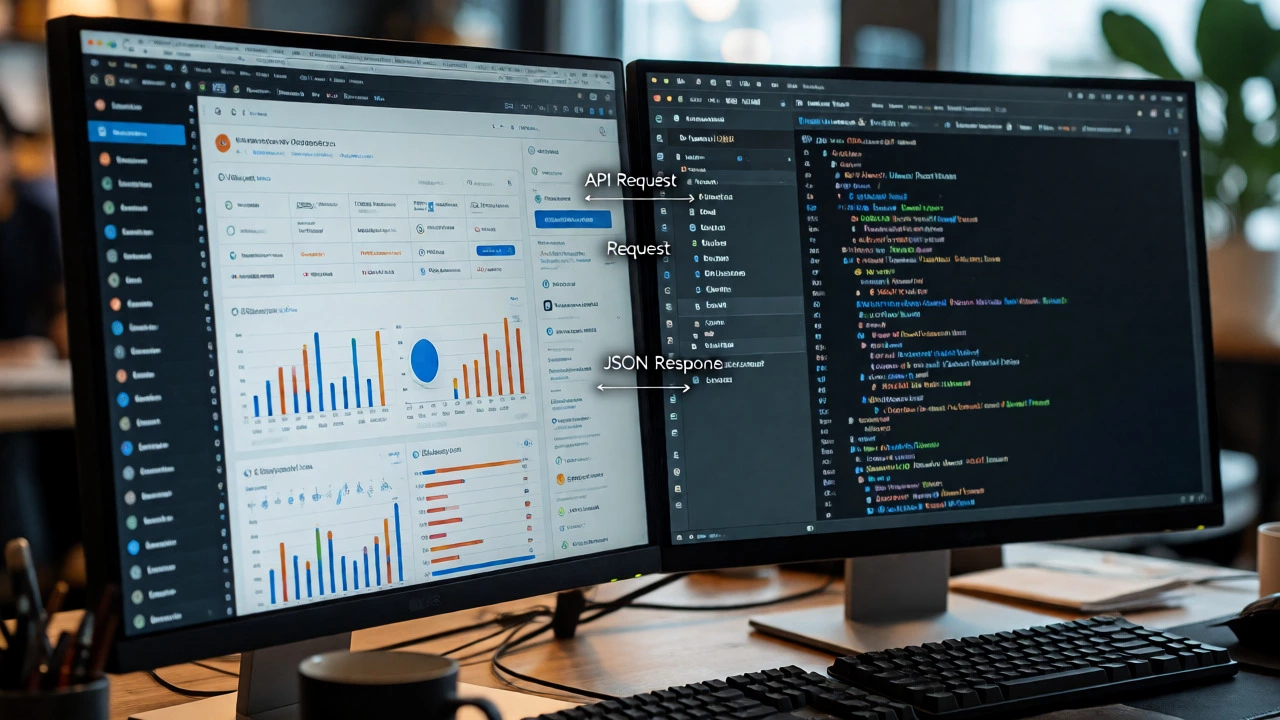
In a headless setup, PHP acts purely as an API provider. It returns JSON data. The front end, built in React or Vue, requests that data and renders the UI itself. In this scenario, PHP has almost zero visual responsibility. It’s just a data pipe.
This separation is cleaner for large teams. Front-end devs can focus on UX and animations using JavaScript tools. Back-end devs focus on security and database speed using PHP. They meet in the middle with API contracts.
However, for smaller projects or marketing sites, this overhead isn’t worth it. Using WordPress or Laravel Blade templates is faster. You write HTML and sprinkle in PHP logic. It’s less modular, but much quicker to ship.
Can You Use PHP for Front-End Tasks?
Technically, no. But there are edge cases where people stretch the definition.
Some tools compile PHP-like syntax into JavaScript. Blade templating engines, for instance, let you write logic that looks like PHP but runs on the server to produce static HTML. Once that HTML hits the browser, the PHP is gone. It left no trace.
Also, remember that AJAX calls allow the front end to ask PHP questions asynchronously. Your JavaScript might say, "Hey PHP, give me the latest posts." PHP responds with data. The front end then updates the page. It feels like real-time interaction, but the brain behind the response is still back-end.
When Should You Learn PHP as a Front-End Dev?
You don’t need to master PHP to be a great front-end developer. But knowing the basics helps immensely.
- Debugging: If a page breaks, you need to know if the error is in your CSS (visual) or in the PHP output (missing data).
- CMS Work: If you work with WordPress, Drupal, or Magento, you’ll edit PHP files. Understanding loops (`foreach`) and conditionals (`if/else`) prevents you from breaking the site.
- Collaboration: Talking to back-end devs becomes easier when you understand their constraints. You’ll stop asking for features that require impossible database queries.
Think of PHP knowledge as a superpower for context, not a core tool for daily UI building.
Common Pitfalls to Avoid
Don’t try to manipulate the DOM with PHP. You can’t write `document.getElementById` in a PHP file. It won’t work. PHP runs before the browser exists.
Don’t hide sensitive logic in JavaScript thinking it’s secure. Since users can view source, any business rule in JS can be tampered with. Always validate critical data in PHP on the server.
Don’t ignore performance. If your PHP generates massive HTML blocks unnecessarily, the browser takes longer to parse it. Keep your templates clean. Offload heavy calculations to JavaScript if possible, or cache the PHP output.
Frequently Asked Questions
Is PHP considered a front-end or back-end language?
PHP is strictly a back-end scripting language. It executes on the server to generate HTML, which is then sent to the browser. It does not run in the client-side environment.
Can PHP interact with JavaScript?
Yes, indirectly. PHP can inject variables into JavaScript files or HTML attributes. Additionally, JavaScript can send requests (via AJAX/Fetch) to PHP scripts, which respond with data (often JSON) that JavaScript uses to update the UI.
Do I need to know PHP to become a front-end developer?
No, it is not required for most pure front-end roles involving React, Vue, or Angular. However, basic literacy in PHP is helpful if you work with CMS platforms like WordPress or collaborate closely with back-end teams.
Why do some tutorials show PHP in front-end courses?
Many full-stack or beginner tutorials teach PHP alongside HTML/CSS because they cover traditional website building (like WordPress themes). In these contexts, PHP is used to dynamically generate the front-end markup, blurring the line between design and logic.
Is PHP being replaced by JavaScript in the front end?
Not exactly. Node.js (JavaScript on the server) competes with PHP in the back end. In the front end, JavaScript dominates naturally. PHP remains strong in back-end services and CMS ecosystems, while JavaScript handles client-side interactivity.