

If you’re asking whether you can learn full stack web development in one year, the answer is yes-but only if you treat it like a full-time job. Not a side hustle. Not something you squeeze in after work. You need structure, discipline, and the right focus. Thousands of people have done it. Many more have tried and quit because they didn’t know where to start or how to measure progress. This isn’t about memorizing syntax. It’s about building real projects, solving real problems, and learning how to connect the dots between frontend, backend, databases, and deployment.
What Does Full Stack Actually Mean?
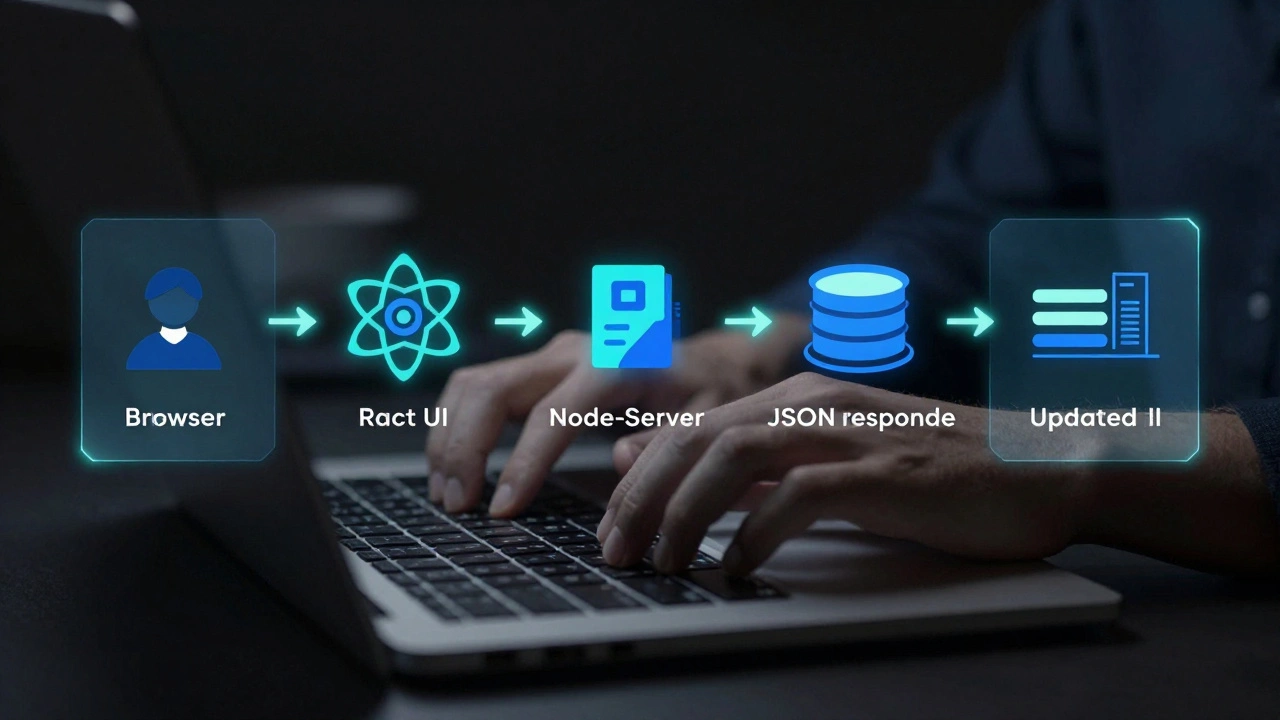
Full stack isn’t just knowing JavaScript and Python. It’s understanding how a request flows from a user’s browser, through a server, into a database, and back again. It’s knowing why you’d pick PostgreSQL over SQLite, when to use React versus plain HTML/CSS, and how to make sure your app loads fast on a slow mobile connection.The modern full stack includes:
- Frontend: HTML, CSS, JavaScript, and at least one framework like React or Vue
- Backend: Node.js, Python (Django/Flask), or Ruby on Rails
- Database: SQL (PostgreSQL, MySQL) or NoSQL (MongoDB)
- APIs: REST and basic GraphQL
- Deployment: GitHub, Netlify, Vercel, or a cloud provider like AWS or Render
- Tools: Terminal, Git, npm/yarn, Postman, Chrome DevTools
You don’t need to master every tool. You need to know enough to build and ship something end-to-end. That’s the goal.
How to Structure Your Year
Think of your year in four quarters. Each quarter has a clear focus. Skip theory. Build something every week-even if it’s small.Months 1-3: Frontend Foundation
Start with HTML and CSS. Not just learning tags, but building layouts from scratch. No Bootstrap at first. Build a responsive portfolio page. Then move to JavaScript. Learn DOM manipulation, event handling, and fetch API calls. After that, pick React. Don’t jump into Next.js yet. Build three small apps: a todo list, a weather widget that pulls data from a public API, and a simple blog with fake data.By month three, you should be able to create a working frontend without copy-pasting code from tutorials. If you can’t, go back and rebuild until you can.
Months 4-6: Backend and Databases
Now switch to the server side. Pick Node.js with Express or Python with Flask. Both are beginner-friendly. Learn how to create an API endpoint that returns JSON. Connect it to a database-start with SQLite, then move to PostgreSQL. Build a backend for your blog from month three. Add user authentication (login/logout). Use JWT tokens. Store user data securely. Don’t skip this part. Authentication is where most beginners give up.Build a second backend project: a task manager with a frontend you made earlier. Connect them. Make the frontend talk to your backend. If you can do that, you’ve crossed the full stack threshold.
Months 7-9: Full Stack Integration
Now combine everything. Build a real app from scratch. Not a tutorial clone. Something you care about. A local food delivery tracker. A book swap platform. A tool that helps students schedule study groups. Use React for the frontend, Node.js or Python for the backend, PostgreSQL for the database, and deploy it on Render or Vercel.This is the make-or-break phase. You’ll hit bugs you’ve never seen. Your API will return 500 errors. Your CSS will break on mobile. That’s normal. Debugging is where real learning happens. Spend time reading error messages. Use Google. Stack Overflow isn’t cheating-it’s part of the job.
Months 10-12: Polish, Deploy, and Show It Off
Your app works? Great. Now make it better. Add tests. Write clean code. Document your setup. Add a README. Put it on GitHub. Write a short case study: what you built, what problems you faced, how you solved them.Start applying for junior roles. Don’t wait until you feel "ready." You’ll never feel ready. Send your project to 10 companies. Apply to internships. Post your work on LinkedIn. Join local dev meetups. Talk to other developers. The more you show your work, the more people will believe you’re a developer-even before you have a job title.
What You’ll Actually Be Able to Do After One Year
By the end of 12 months, you won’t be a senior engineer. But you’ll be able to:- Build a full web app from idea to live deployment
- Fix bugs in existing codebases
- Understand how servers, databases, and browsers talk to each other
- Work with a team using Git and GitHub
- Explain your technical choices in interviews
You’ll be qualified for junior full stack roles. Many companies hire juniors with portfolios-not degrees. In the UK, companies like Monzo, Revolut, and smaller agencies actively look for self-taught developers with real projects.
What Doesn’t Work
Here’s what kills most people trying to learn full stack in a year:- Switching languages every month
- Watching 10-hour YouTube tutorials without coding
- Trying to learn React, Angular, Vue, Svelte, and Next.js all at once
- Waiting to "get good" before building something
- Ignoring deployment and hosting
One of the biggest mistakes is thinking you need to learn everything perfectly. You don’t. You need to learn enough to ship. Then improve as you go.
Resources That Actually Help
Skip the $2000 courses. Use these free or low-cost resources:- Frontend: freeCodeCamp’s Responsive Web Design and JavaScript Algorithms certs
- Backend: The Odin Project (full stack path)
- Databases: SQLZoo and PostgreSQL Tutorial by PostgreSQL.org
- Deployment: Netlify and Vercel documentation
- Practice: Frontend Mentor (real design challenges), Codewars (small coding problems)
Use GitHub to track your progress. Commit daily-even if it’s just a small fix. That habit matters more than any course.

Can You Do It While Working or Studying?
Yes-but it’ll take longer. If you’re working 40 hours a week, aim for 15-20 hours of focused learning on top of that. That’s 3-4 hours a weeknight and 5-6 on weekends. It’s grueling. But doable.People who succeed while working full-time treat learning like a non-negotiable appointment. They block time. They turn off notifications. They say no to distractions. They don’t wait for motivation. They build momentum.
What Comes After Year One?
Getting your first job is just the start. After that, you’ll keep learning. You’ll dive into Docker, CI/CD, testing frameworks, or security. Maybe you’ll specialize in frontend performance or backend scalability. But that’s the next chapter.One year is enough to go from zero to employable. Not from zero to expert. But in tech, employable is the only thing that matters to start.
Do I need a computer science degree to become a full stack developer?
No. Most junior full stack roles in the UK don’t require a degree. Employers care more about your portfolio, problem-solving skills, and ability to communicate. Companies like Google, Amazon, and startups alike hire self-taught developers who can ship code. A degree helps with some corporate roles, but it’s not a barrier.
Which programming language should I learn first for full stack?
Start with JavaScript. It’s the only language that runs in the browser, so you’ll use it for both frontend and backend (with Node.js). This lets you build full projects faster. Python is also a great choice for backend, especially with Django, but JavaScript gives you more flexibility early on.
How many hours per week should I study?
Aim for 15-25 hours per week if you’re doing this full-time. If you’re working or studying, 10-15 hours is still enough if you’re consistent. It’s better to code 2 hours a day, five days a week, than to binge 10 hours on Sunday and forget everything by Tuesday.
Is it too late to start at 30, 40, or older?
Not at all. The average age of a new full stack developer in the UK is 32. Many people switch careers in their 30s and 40s. What matters is your ability to learn, stay curious, and solve problems-not your age. Tech values skills over resumes.
What if I get stuck and can’t solve a bug?
Get stuck? That’s normal. Use Google. Read the error message carefully. Search the exact error on Stack Overflow. If you’re still stuck, post your code on Reddit (r/learnprogramming) or Discord communities. Most developers spend 80% of their time debugging. The sooner you get comfortable with it, the faster you’ll grow.
Can I land a job without a portfolio?
Unlikely. A portfolio is your proof that you can build things. Without it, you’re just saying you’ve watched videos. Employers want to see what you’ve made. Even three solid projects-hosted online with clean code on GitHub-are enough to get your foot in the door.