
WordPress Career Value & Salary Estimator (2026)
Select Your Tech Stack
Check all skills you are proficient in.
Your Profile Analysis

Select your skills and click calculate to see your estimated earning potential and role classification.
It is August 2026, and the rumor mill has been spinning for years. You have likely heard it from every corner of the internet: "WordPress is dead," "Headless is the only future," or "AI will write your code by next year." If you are a WordPress developer looking at the job board today, those headlines can feel like a personal threat. But does the noise match reality?
The short answer is yes. The long answer is much more interesting. The role hasn't disappeared; it has mutated. The days of installing a theme, changing colors, and calling it a day are gone. Today, companies are desperate for developers who understand how to build scalable, secure, and fast systems using modern tools. The demand isn't just alive; it is shifting toward higher-value skills.
The Numbers Don't Lie: Market Share vs. Job Listings
To understand why the demand persists, we have to look at the sheer scale of the ecosystem. WordPress powers over 43% of all websites on the internet. That number has remained stubbornly consistent for a decade. Why? Because it works. It is accessible, flexible, and backed by a massive community.
When you look at job platforms like LinkedIn, Indeed, or specialized boards like We Work Remotely, the keyword "WordPress" appears in thousands of active listings. However, there is a catch. Very few of these jobs are for "WordPress installers." Most are for "Senior PHP Developers," "Full Stack Engineers," or "Headless CMS Specialists" who happen to use WordPress as their backend.
This distinction is crucial. If you define yourself strictly as someone who edits pages in the Gutenberg editor, your market value is shrinking. If you define yourself as an engineer who builds custom solutions using the WordPress REST API or GraphQL, your value is skyrocketing. The platform is the same, but the skill set required to leverage it professionally has evolved significantly.
From Page Builders to Full-Stack Engineering
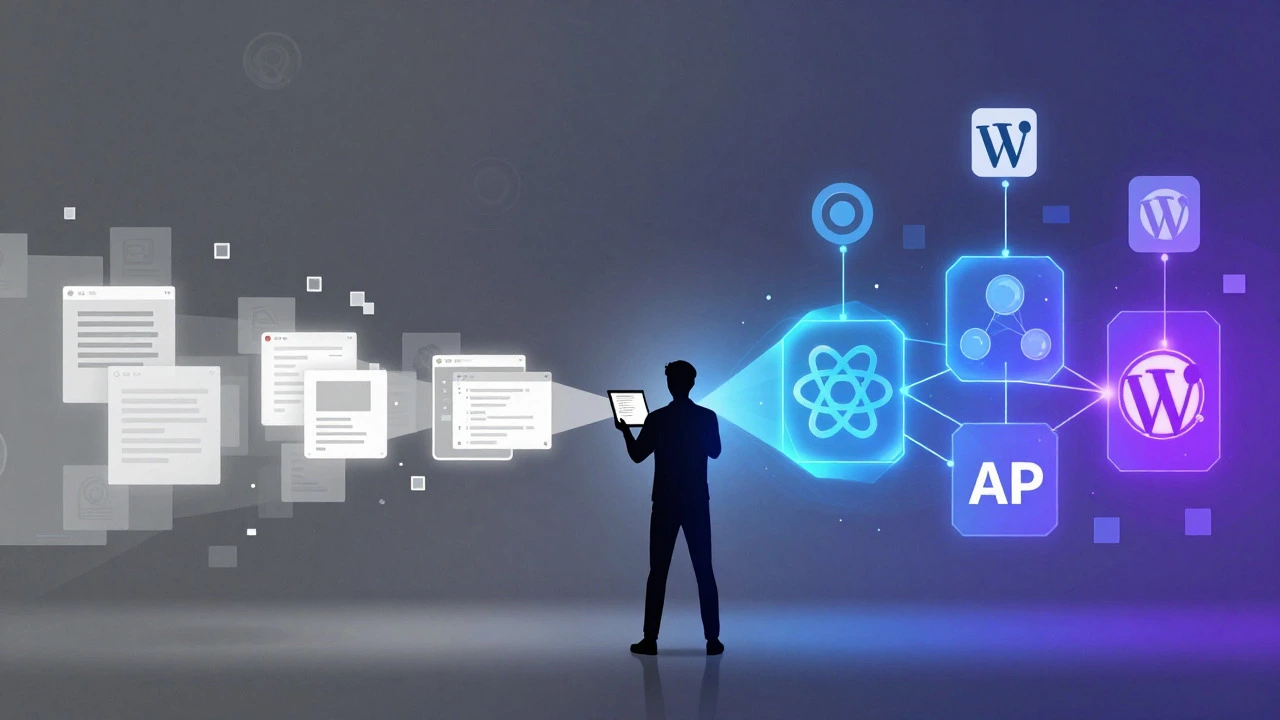
The biggest shift in 2026 is the move away from heavy page builders like Elementor or Divi toward native block development and headless architectures. Companies want speed. They want Core Web Vitals scores that don't tank their SEO rankings. They want security that doesn't rely on patching vulnerabilities in third-party plugins every week.
This has created a new tier of professional: the Modern WordPress Engineer. This person knows PHP, obviously. But they also know JavaScript frameworks like React or Vue.js because they are building custom blocks or connecting WordPress to a Next.js frontend. They understand server-side rendering and caching strategies. They treat WordPress not just as a website builder, but as a robust content management system (CMS) that feeds data to various digital touchpoints.
If you are still relying solely on drag-and-drop interfaces without understanding the underlying code, you are competing with AI tools that can do that faster and cheaper. But if you can architect a multi-site network, optimize database queries, or build a custom headless storefront, you are operating in a space where AI is currently an assistant, not a replacement.
| Aspect | Traditional WP Developer | Modern WP Engineer (2026) |
|---|---|---|
| Primary Tech Stack | PHP, HTML, CSS, jQuery | PHP, React/Vue, Node.js, TypeScript |
| Frontend Approach | Theme editing, Page Builders | Block Development, Headless (Next.js/Nuxt) |
| Data Handling | Direct Database Queries ($wpdb) | REST API, GraphQL, Webhooks |
| Deployment | cPanel, FTP Uploads | Docker, CI/CD Pipelines, AWS/Vercel |
| Market Value | Low to Medium (High Competition) | High (Specialized Skill Gap) |
The Headless Revolution and Its Impact on Jobs
You cannot talk about WordPress in 2026 without addressing headless architecture. A headless setup decouples the WordPress backend (where content is managed) from the frontend (what users see). This allows businesses to deliver content via apps, smart watches, IoT devices, or highly optimized static websites.
Does this kill WordPress jobs? No. It creates a premium niche. Companies need developers who can manage the WordPress core securely while simultaneously building lightning-fast frontends using modern JavaScript frameworks. This requires a dual competency that is rare in the market. You need to understand WordPress hooks and filters deeply enough to customize the admin experience for non-technical editors, and you need to be proficient in React or Svelte to build the public-facing site.
This hybrid skill set commands higher salaries. According to industry reports from late 2025 and early 2026, senior developers with headless expertise earn 20-30% more than traditional theme developers. The barrier to entry is higher, which reduces competition and increases demand for qualified candidates.

Freelance vs. Agency: Where Is the Money?
The employment landscape for WordPress professionals is split between three main buckets: freelancing, agency work, and in-house roles. Each has different dynamics in 2026.
Freelancing: The low-end freelance market is saturated. Platforms like Upwork are flooded with bids from developers offering basic site setups for $500. However, the high-end freelance market is thriving. Agencies and direct clients are willing to pay $100-$150 per hour for experts who can solve complex problems, such as migrating legacy databases, optimizing checkout flows for WooCommerce stores, or implementing advanced security protocols. The key here is specialization. Generalists struggle; specialists thrive.
Agency Work: Digital agencies remain the largest employers of WordPress talent. In 2026, agencies are increasingly adopting productized services. Instead of hourly billing, they sell fixed-price packages for specific outcomes, like "Headless Migration" or "WooCommerce Performance Audit." Developers in these roles need to be efficient and process-oriented. They often work with standardized stacks, which means less reinventing the wheel but potentially less creative freedom.
In-House Roles: Larger enterprises with significant digital presences are hiring in-house WordPress teams. These roles often resemble standard software engineering positions. You will work with version control systems like Git, participate in agile sprints, and collaborate with product managers and UX designers. The stability is higher, and the benefits are better, but the interview process is more rigorous, often involving coding challenges and system design interviews.
The Threat of AI: Assistant or Replacement?
Let's address the elephant in the room. AI coding assistants like GitHub Copilot, Cursor, and specialized WordPress plugins have become incredibly sophisticated. Can they replace a developer?
For simple tasks, yes. If your job is to add a contact form, change a header color, or write a basic shortcode, AI can do it instantly. But development is rarely just about writing syntax. It is about problem-solving, architectural decisions, and understanding business context.
AI struggles with ambiguity. It doesn't know why a client wants a specific feature unless prompted perfectly. It doesn't understand the legacy codebase quirks that have accumulated over five years of updates. It doesn't negotiate requirements with stakeholders. In 2026, the most successful WordPress developers are those who use AI to automate the boring parts-boilerplate code, documentation, testing scripts-so they can focus on high-level architecture and user experience.
Think of AI as a junior developer who never sleeps but needs constant supervision. If you can manage that "junior" effectively, your productivity doubles. If you try to compete with it on raw code output, you will lose.

Skills That Guarantee Employability in 2026
If you want to ensure you stay in demand, you need to audit your current skill set against the modern requirements. Here is what matters right now:
- Advanced PHP: Not just knowing functions, but understanding object-oriented programming, namespaces, and composer dependency management.
- JavaScript Frameworks: Proficiency in React is almost mandatory for block development and headless frontends. Knowledge of Vue.js or Svelte is a strong plus.
- API Integration: Deep understanding of the WordPress REST API and GraphQL. You should be comfortable building custom endpoints and handling authentication securely.
- Performance Optimization: Ability to analyze and improve Core Web Vitals. This includes image optimization, lazy loading, critical CSS extraction, and server-side caching configurations.
- DevOps Basics: Familiarity with Docker, CI/CD pipelines, and cloud hosting providers like AWS, Vercel, or Kinsta. You should be able to deploy code without clicking buttons in cPanel.
- Security Best Practices: Understanding sanitization, escaping, nonces, and how to protect against common vulnerabilities like XSS and SQL injection.
Notice that "knowing how to use Elementor" is not on this list. That is a tool, not a career-defining skill. Tools change; fundamentals endure.
Conclusion: The Future Is Bright for the Right Candidates
So, are WordPress developers still in demand? Absolutely. But the definition of a "WordPress developer" has expanded. The market no longer rewards mediocrity or reliance on black-box tools. It rewards engineers who can build robust, scalable, and secure digital products using WordPress as a powerful foundation.
If you are willing to learn modern JavaScript, embrace headless architectures, and treat your craft with the seriousness of software engineering, you will find plenty of opportunities. The jobs aren't disappearing; they are upgrading. And that is good news for anyone willing to level up with them.
Is it too late to start learning WordPress in 2026?
No, it is not too late. WordPress continues to power over 40% of the web, ensuring a steady stream of projects. However, you should start with modern practices. Learn PHP and JavaScript alongside WordPress. Avoid getting stuck in outdated tutorials that teach deprecated methods. Focus on block development and API integration from day one to remain competitive.
Do I need to know React to be a WordPress developer?
While not strictly mandatory for basic theme customization, knowing React is highly recommended for career growth in 2026. The WordPress block editor (Gutenberg) is built with React. Custom block development, headless frontends, and many modern plugins require JavaScript knowledge. React is the dominant framework in this ecosystem, making it the most valuable JS skill to acquire.
How much do WordPress developers make in 2026?
Salaries vary widely based on location and skill level. In the UK and US, junior developers might earn £25,000-£40,000 or $50,000-$70,000. Senior developers with full-stack skills, especially in headless or enterprise environments, can command £60,000-£90,000 or $100,000-$140,000+. Freelancers charging $100+ per hour are common for specialized niches like WooCommerce performance or complex migrations.
Will AI replace WordPress developers completely?
Unlikely in the near future. AI excels at generating boilerplate code and automating repetitive tasks. However, it lacks the contextual understanding, architectural judgment, and problem-solving abilities required for complex projects. AI will replace developers who refuse to adapt, but it will augment those who use it as a productivity tool. The human element of requirement gathering and strategic planning remains essential.
What is the difference between a WordPress developer and a full-stack developer?
Traditionally, a WordPress developer focused primarily on PHP and theme/plugin customization within the WordPress ecosystem. A full-stack developer works across the entire technology stack, including databases, servers, and multiple frontend/backend languages. In 2026, these roles are converging. Modern WordPress developers are expected to have full-stack capabilities, particularly in JavaScript and API integration, blurring the line between the two titles.