

Developer Role Evolution Simulator
Human Value Add (2035):
Automation Shift Analysis:
Imagine waking up in 2046. You open your laptop to work on a complex full stack application. Instead of writing lines of JavaScript or Python, you type a natural language prompt: "Build a user dashboard with real-time analytics and dark mode support." Ten seconds later, the code is written, tested, and deployed. Is this science fiction? Not really. This scenario highlights the core anxiety behind the question: will artificial intelligence that automates software creation make human programmers obsolete within two decades?
The short answer is no, but the job description will look unrecognizable compared to today. The role of a programmer is shifting from "code writer" to "system architect" and "quality overseer." To understand why, we need to look at what AI actually does well right now versus where it still struggles, and how the software development lifecycle is evolving.
Key Takeaways
- AI will not replace programmers entirely, but it will automate routine coding tasks like boilerplate generation and basic debugging.
- The value of developers will shift toward system design, business logic understanding, and AI oversight.
- Junior roles may shrink, while mid-to-senior roles requiring architectural thinking will grow in importance.
- Learning to collaborate with AI tools is becoming as important as learning a new programming language.
- New roles focused on AI integration and data governance are emerging faster than traditional backend/frontend splits.
What AI Actually Does Today in Coding
To predict the next 20 years, we have to ground ourselves in the present. Tools like GitHub Copilot and Cursor aren't just autocomplete; they are context-aware assistants. They can generate entire functions based on comments, suggest refactoring strategies, and even write unit tests. For a full stack developer, this means less time spent typing repetitive CRUD (Create, Read, Update, Delete) operations and more time thinking about database schema optimization or API security.
However, current AI models still struggle with ambiguity. If a requirement is vague, the AI might produce plausible-looking code that fails in edge cases. It doesn't truly "understand" the business problem; it predicts the next likely token. This distinction is crucial. In 2026, AI is a powerful co-pilot, not an autonomous captain. It accelerates execution but relies on human intent for direction.
The Shifting Role of the Developer
If AI handles the "how" of coding, humans must master the "why" and "what." This shift impacts different parts of the tech stack differently. Frontend development, which often involves styling and UI component libraries, is highly susceptible to AI automation because patterns are repetitive. Backend development, involving complex state management, concurrency, and data integrity, requires deeper logical reasoning that AI currently approximates rather than executes perfectly.
Consider the rise of Low-Code and No-Code platforms. These tools already allow non-developers to build simple applications by dragging and dropping components. As AI improves, these platforms will become smarter, allowing business users to build internal tools without touching code. This doesn't eliminate developers; it pushes them up the value chain. Developers will spend less time building simple internal dashboards and more time designing scalable microservices architectures that those low-code apps depend on.
Impact on Junior vs. Senior Roles
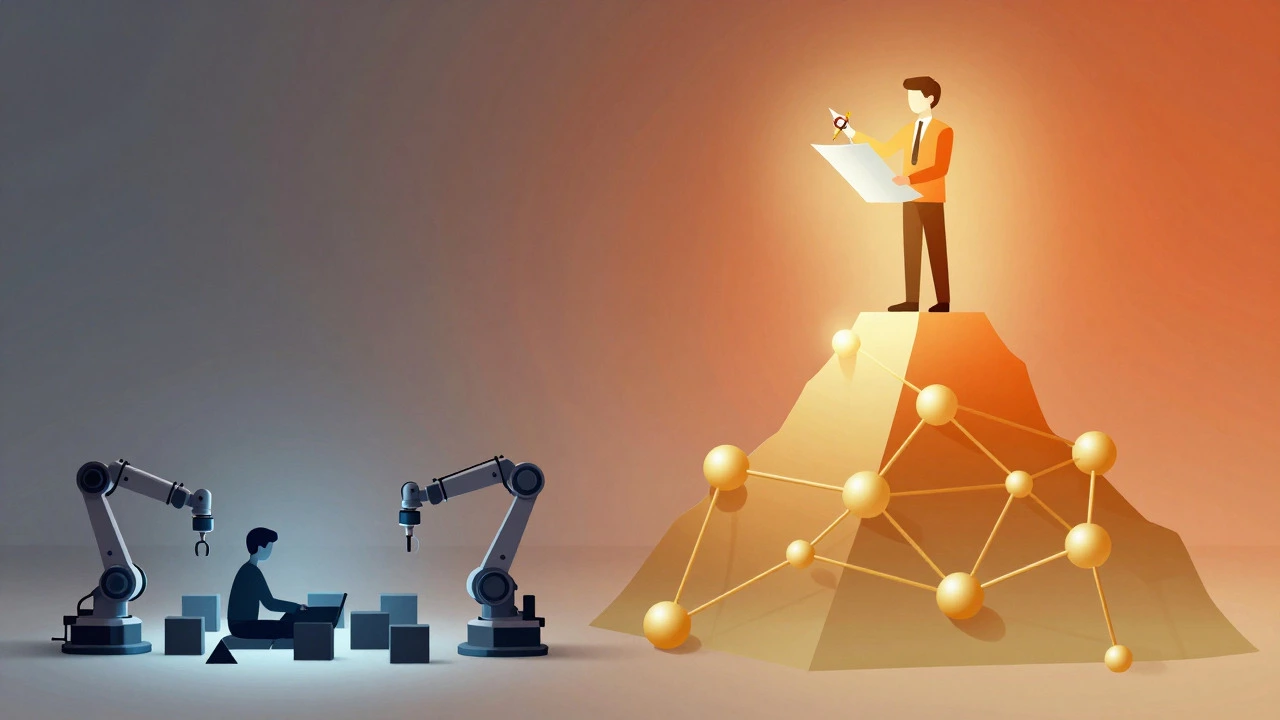
The most significant disruption will hit entry-level positions. Traditionally, junior developers learned by writing boilerplate code, fixing minor bugs, and maintaining legacy systems. If AI can handle 80% of these tasks, companies may hire fewer juniors. This creates a bottleneck in the talent pipeline. Who becomes the senior if there are fewer juniors to promote?
For experienced engineers, the impact is positive. A senior developer who knows how to prompt AI effectively can do the work of three previous employees. This increases individual productivity and makes senior talent more valuable. The skill set required is changing: technical depth remains essential, but "AI literacy"-knowing when to trust AI output and when to verify it manually-is becoming a core competency.
| Task Category | Current Status (2026) | Projected 2035 Status | Human Value Add |
|---|---|---|---|
| Boilerplate Code Generation | 70% AI Assisted | 95% AI Automated | Review & Integration |
| Debugging Simple Errors | 50% AI Suggested | 90% AI Resolved | Complex Root Cause Analysis |
| System Architecture Design | 10% AI Input | 40% AI Simulation | Strategic Decision Making |
| Business Logic Translation | 0% AI Independent | 20% AI Drafting | Requirement Clarification |
| Performance Optimization | 20% AI Profiling | 60% AI Tuning | Bottleneck Identification |
Emerging Skills for the Next Decade
To stay relevant, developers need to adapt their skill sets. Here are the critical areas to focus on:
- Prompt Engineering for Code: Learning how to structure requirements so AI generates accurate, secure, and efficient code. This is similar to how we learned to write clear Jira tickets, but with higher stakes.
- System Thinking: Understanding how different services interact. As AI builds components faster, the complexity of integrating them grows. Humans must manage this complexity.
- Data Governance & Ethics: AI models rely on data. Developers will need to ensure data privacy, bias mitigation, and compliance with regulations like GDPR or CCPA when implementing AI features.
- Cross-Domain Knowledge: Understanding finance, healthcare, or logistics deeply enough to validate AI outputs in specific verticals. A generic coder is replaceable; a domain expert who codes is not.

The Economic Reality of Automation
History shows that technology rarely eliminates jobs entirely; it transforms them. The calculator didn't kill accountants; it made them better auditors. The compiler didn't kill assembly programmers; it allowed them to build larger, more complex systems. Similarly, AI won't kill programming, but it will raise the bar. The cost of software will drop, leading to demand for more sophisticated digital products. This creates a paradox: cheaper software leads to more software being built, potentially increasing the total number of developer roles, even if the nature of those roles changes.
Furthermore, the barrier to entry for creating software is lowering, but the barrier to creating *reliable*, *scalable*, and *secure* software is rising. AI can generate a buggy app in minutes, but ensuring it handles millions of users securely requires human expertise. This gap between "working prototype" and "production-ready system" is where human developers will thrive.
FAQ
Should I stop learning new programming languages?
No. While AI can translate between languages, understanding the underlying paradigms (functional, object-oriented, reactive) helps you choose the right tool for the job. Languages evolve, but core computer science concepts remain stable. Focus on fundamentals over syntax.
Will AI write better code than humans eventually?
In terms of speed and pattern recognition, yes. But "better" is subjective. AI optimizes for metrics like compilation success or test pass rates. Humans optimize for maintainability, team collaboration, and business alignment. The best outcome is a hybrid approach where AI handles execution and humans handle strategy.
How will this affect freelance developers?
Freelancers offering simple website builds or basic app fixes may face pressure as clients use AI tools themselves. However, freelancers who offer end-to-end solutions-including strategy, deployment, and maintenance-will see increased demand. Specialization in niche industries will be key to staying competitive.
Is it too late to start a career in programming?
It is never too late, but the path is different. You don't need to memorize every library function. Focus on problem-solving skills, system design principles, and learning how to leverage AI tools efficiently. Entry-level roles may be harder to find, but the ceiling for skilled professionals is higher than ever.
What is the biggest risk of relying on AI for coding?
The biggest risk is complacency. If developers blindly accept AI suggestions without understanding the underlying logic, they may introduce subtle bugs or security vulnerabilities. Maintaining deep technical knowledge ensures you can audit AI output and make informed decisions when the AI fails.