

People often use e-commerce and e-business as if they mean the same thing. But they don’t. If you’re running an online store, setting up a digital service, or just trying to understand how your business fits into the online world, mixing these up can cost you time, money, and clarity. Let’s cut through the confusion.
E-Commerce Is Just One Part of E-Business
E-commerce is the buying and selling of goods or services over the internet. That’s it. Think Amazon, Etsy, or your local bakery’s online shop where customers click ‘Add to Cart’ and pay with a card. It’s transactional. It ends when the payment goes through and the order ships.
E-business, on the other hand, is everything that keeps a company running online-not just sales. It includes customer service chatbots, supply chain tracking, employee portals, digital marketing campaigns, inventory systems, and even internal accounting software that connects to your bank. E-commerce is a piece of e-business. But e-business? It’s the whole machine.
Real-World Example: A Small Clothing Brand
Imagine a Leeds-based clothing brand called Thread & Co. They sell hoodies and t-shirts through their website. That’s e-commerce. Customers browse, pick sizes, pay, and get shipped their order.
But here’s what else they do behind the scenes: They use a cloud-based tool to track fabric suppliers across Bangladesh and Turkey. Their designers upload new patterns to a shared digital library. Their marketing team runs automated email campaigns based on browsing behaviour. Their warehouse uses barcode scanners linked to a live inventory system. Their accountant pulls monthly sales data into QuickBooks Online.
All of that? That’s e-business. The website where people buy? That’s just the front door.
Scope: What’s Included?
Here’s the breakdown:
- E-commerce includes: product listings, shopping carts, payment gateways, order confirmations, shipping labels, return portals.
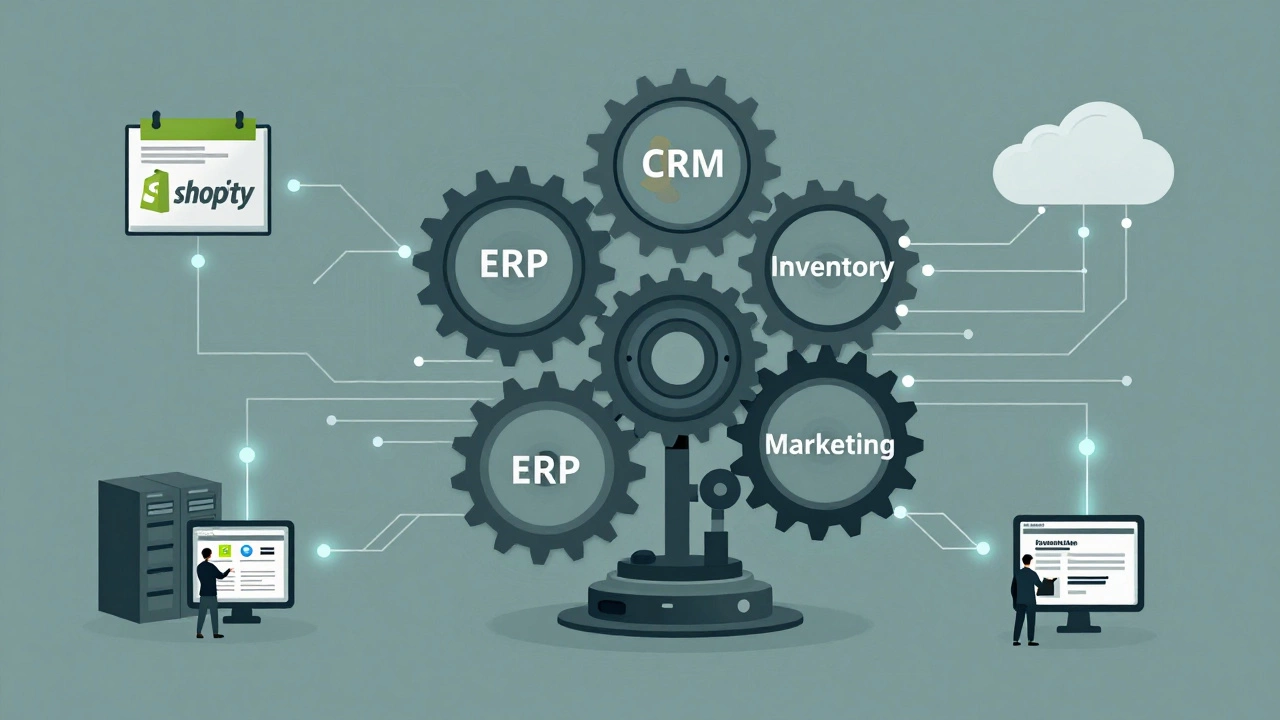
- E-business includes: all of the above, plus CRM systems, ERP software, digital HR platforms, supplier portals, online training for staff, data analytics dashboards, automated invoicing, and even internal wikis or Slack channels used for operations.
So if you’re only focused on making your online store look nice and process payments, you’re thinking e-commerce. If you’re asking how to digitise your entire workflow-from sourcing to payroll-you’re thinking e-business.
Technology Differences
E-commerce platforms like Shopify, WooCommerce, or BigCommerce are built for one main goal: turning visitors into buyers. They’re user-friendly, plug-and-play, and designed for non-tech people. You don’t need a developer to add a product.
E-business tools? They’re deeper. They’re systems like SAP, Oracle NetSuite, or Microsoft Dynamics 365. These aren’t meant for the average store owner. They’re for companies that need to connect sales, logistics, finance, and human resources into one unified system. Setting them up often requires IT teams, custom integrations, and months of training.
Most small businesses start with e-commerce tools. As they grow, they layer in e-business systems. A company with 50 employees and 10,000 monthly orders? They’re probably already using both.
Who Needs What?
If you’re a solopreneur selling handmade candles on Etsy, you only need e-commerce. You don’t need a full ERP system to track your beeswax inventory.
If you’re a mid-sized distributor shipping 200 orders a day to 15 countries, managing 30 suppliers, and paying 12 staff via payroll software? You’re running an e-business. You might use Shopify for sales, but you’re also using Zoho Inventory, Gusto for payroll, and Google Workspace for internal communication. That’s e-business.
Even service-based businesses like web designers or consultants can be e-businesses. If they book clients online, send digital contracts, invoice via PayPal, store files in Dropbox, and track time with Toggl-all connected and automated-that’s e-business. They might not sell physical products, but they’re still operating digitally end-to-end.
Why This Matters for Your Business
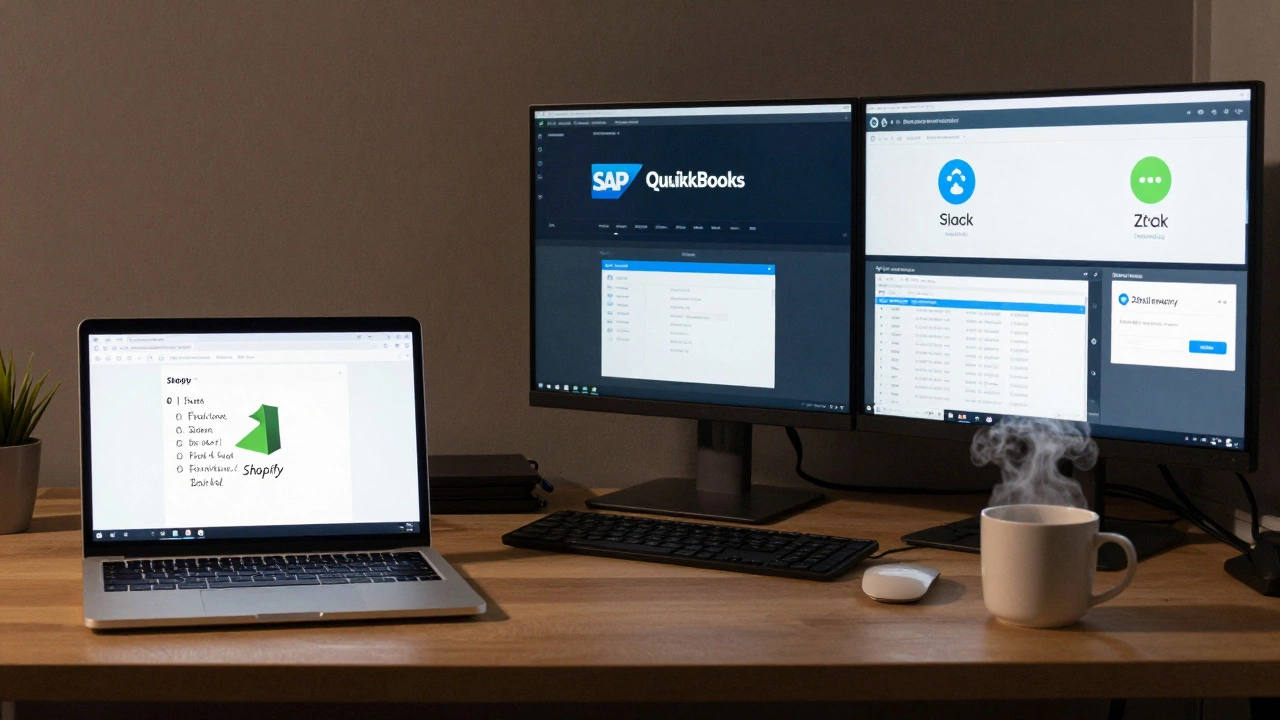
Confusing the two leads to bad decisions. A lot of small business owners think, “I just need a website,” and spend £2,000 on a fancy Shopify store. Then they realise they’re still manually emailing customers for updates, typing orders into Excel, and chasing suppliers over WhatsApp. They’re stuck in a hybrid mess.
On the flip side, some companies buy expensive e-business software too early. They spend £15,000 on a system that automates supply chains they don’t even have yet. That’s like buying a sports car to drive to the corner shop.
The right approach? Start with e-commerce if you’re selling. Then, as your operations grow, identify the manual, repetitive tasks. That’s where e-business tools come in. Ask: Where am I wasting time? Where do errors happen? Where do I lose track of data? Those are your next digital upgrades.
Future Trends
By 2026, the line between e-commerce and e-business is blurring. Tools like Shopify Plus now offer built-in inventory management and multi-channel fulfillment. Klaviyo integrates with accounting software. Even small businesses can connect their store to QuickBooks with one click.
But the core difference remains: e-commerce is about transactions. E-business is about transformation. It’s not just selling online-it’s running your entire company online.
So if you’re building something today, don’t just ask, “How do I sell more?” Ask, “How do I run this business without paper, spreadsheets, or phone calls?” That’s the real shift.
Is e-commerce the same as online shopping?
Yes, online shopping is the most common form of e-commerce. E-commerce covers any commercial transaction over the internet-this includes selling digital products like e-books or software, booking services like hair salons or consultants, and yes, buying physical goods. Online shopping is just one type of e-commerce.
Can a service-based business be an e-business?
Absolutely. If you’re a freelance graphic designer who books clients through Calendly, sends contracts via DocuSign, invoices through QuickBooks, stores files in Google Drive, and communicates with clients over Slack-all digitally and automatically-you’re running an e-business. You don’t need to sell products to be an e-business. You just need to run your operations online.
Do I need to build an e-business if I have a small online store?
Not right away. If you’re selling 20 items a week from your bedroom and managing everything in a notebook and WhatsApp, focus on getting your e-commerce store right first. Once you hit 100+ orders a month, or start hiring help, that’s when you should start thinking about automating inventory, payments, or customer service. Scale your tech with your business-not before.
What’s the biggest mistake people make confusing e-business and e-commerce?
They think buying a fancy website is enough. A beautiful Shopify store doesn’t fix broken workflows. You can have the best-looking online shop in the world, but if you’re still emailing customers their tracking numbers manually or re-typing orders into Excel, you’re not running an e-business. You’re running a digital paper chase.
Can e-business exist without e-commerce?
Yes. Many companies use digital tools internally without selling anything online. For example, a local plumbing company might use a CRM to track customer jobs, schedule technicians via an app, send digital invoices, and store manuals in the cloud. No sales happen on their website-they use it only for contact info. That’s still e-business. E-commerce is optional.