
UI/UX Skill Gap Analyzer
Based on your answers, we'll show how coding knowledge could help you in your design work.
Your UI/UX Skill Gap Analysis
Based on your answers, here's how coding knowledge could benefit your design work:
Key Insight:
How Coding Would Help:
Recommended First Steps:
People often ask if UI/UX is a coding job. The answer isn’t yes or no-it’s more like "it depends." If you’re thinking of becoming a UI/UX designer, you don’t need to write complex code to start. But if you want to move up, work better with developers, or build interactive prototypes, knowing some code changes everything.
What UI/UX Designers Actually Do
UI/UX designers focus on how users feel when they interact with a product. That means sketching wireframes, testing flows, choosing colors, and making buttons easy to click. You’re not writing backend logic or database queries. You’re solving problems like: "Why do users keep dropping off at checkout?" or "Is this menu confusing?"
Tools like Figma, Adobe XD, and Sketch are your main workspace. You create clickable mockups, gather feedback from real users, and tweak designs based on data-not guesses. A 2024 study by the Nielsen Norman Group found that teams with dedicated UX designers saw a 200% improvement in user retention over those without.
Do You Need to Code to Be a UI/UX Designer?
No, you don’t need to code to land your first UI/UX job. Many designers work perfectly fine without writing a single line of HTML. Companies hire them for their eye for layout, understanding of human behavior, and ability to communicate user needs clearly.
But here’s the catch: if you can’t explain to a developer why a button should be 48px tall instead of 32px, or why spacing between form fields matters for mobile thumbs, you’ll hit a wall. That’s where basic coding knowledge helps-not to replace design, but to speak the same language.
The Line Between Design and Development Is Blurry
Think of it like this: a chef doesn’t need to grow their own vegetables, but knowing how soil affects flavor makes them better at creating dishes. Similarly, a UI/UX designer who understands how CSS works can design components that are easier to build.
For example, if you know that flexbox wraps content on small screens, you won’t design a 5-column layout that breaks on phones. If you’ve used JavaScript to toggle a dropdown, you’ll avoid designing animations that take 3 seconds to load. These aren’t coding skills-they’re design constraints you learn by doing.
Many junior designers spend hours making perfect visuals, only to find out the developer says, "That’s not possible without rewriting half the app." That’s avoidable. Spend 10 hours learning HTML and CSS basics. You’ll save weeks later.
What Coding Skills Help UI/UX Designers the Most
You don’t need to become a full-stack developer. But these three things make a huge difference:
- HTML-Understand how structure works. Know what a div, span, or button does. This helps you design with real elements in mind.
- CSS-Learn how margins, padding, and responsive breakpoints affect layout. You don’t need to write it, but you need to predict how it behaves.
- Basic JavaScript-Know how clicks, hovers, and form validation work. This lets you design interactions that feel natural, not forced.
Most UI/UX designers who learn these skills pick them up through free platforms like freeCodeCamp or Codecademy in under 20 hours. You don’t need a degree. Just curiosity.
UI/UX Developers vs UI/UX Designers
Some companies hire "UI/UX Developers"-people who do both design and front-end coding. They’re rare, and they usually earn more. But they’re not the norm. Most teams have separate roles:
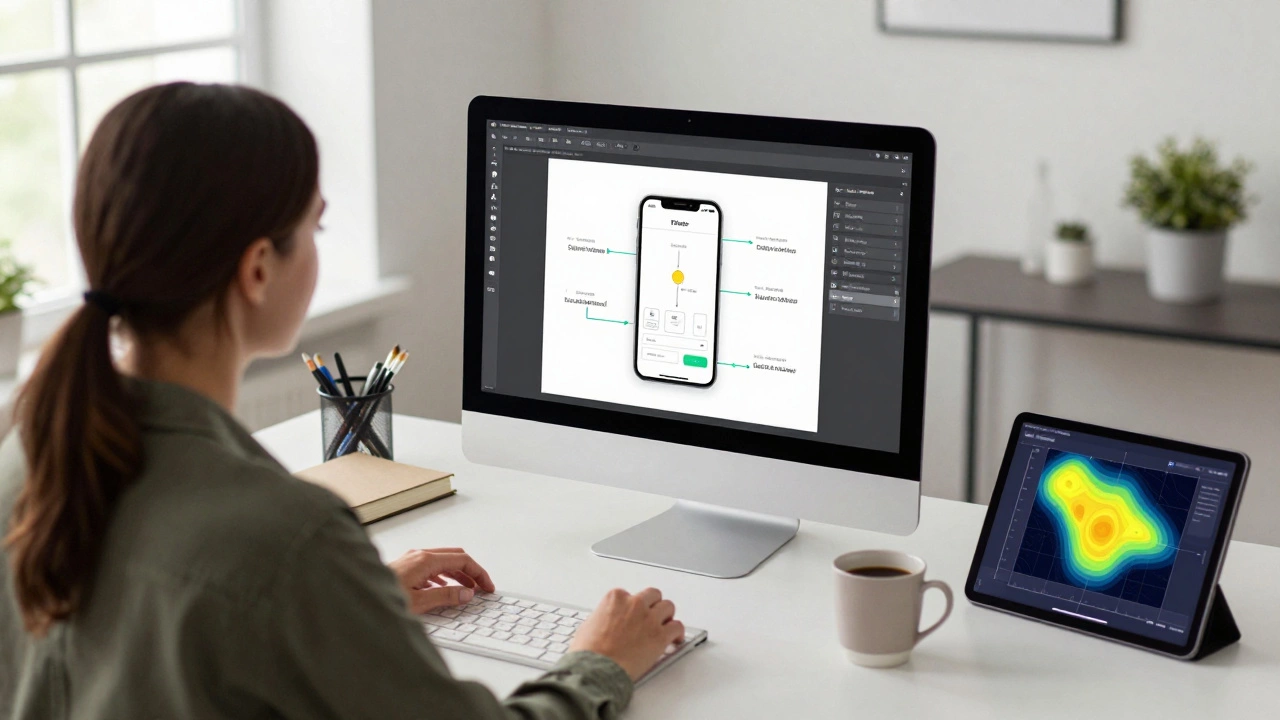
- UI/UX Designer: Focuses on research, wireframes, prototypes, user testing. Uses Figma, runs surveys, analyzes heatmaps.
- Frontend Developer: Takes the design and turns it into live code. Writes HTML, CSS, JavaScript. Uses React, Vue, or Angular.
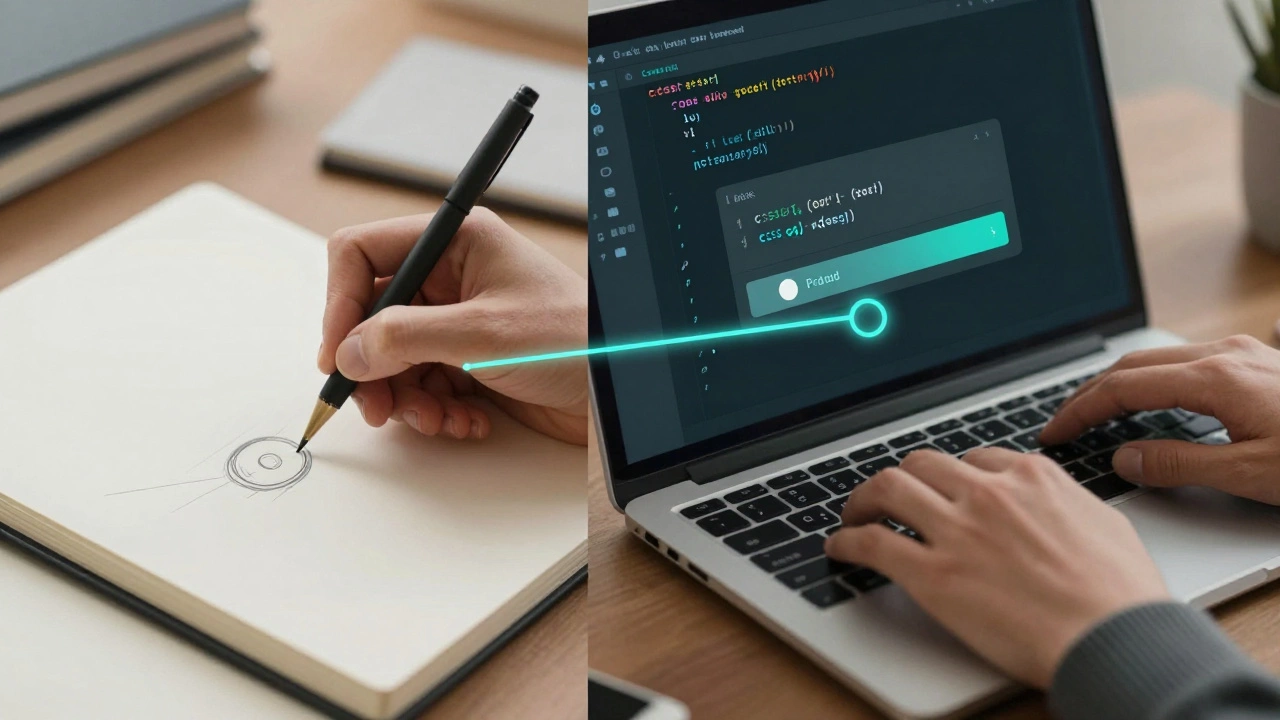
The designer hands off a clickable prototype. The developer builds it. If the designer understands the developer’s tools, handoffs go smoother. No more back-and-forth emails like, "Why didn’t you make the button round?"
Real-World Example: A Mobile App Redesign
Imagine a food delivery app. Users say they hate the checkout process. The designer notices people tap the "Add to Cart" button too many times-like they’re not sure it worked.
Without coding knowledge, the designer might just make the button bigger and change the color.
With basic CSS knowledge, they realize the button’s padding is too tight on Android phones. The tap target is only 36px, but Apple’s guidelines say 44px. They adjust the design to meet accessibility standards-and the developer doesn’t have to rewrite the button component.
That’s the power of knowing a little code. It turns guesswork into precision.
When Coding Becomes Necessary
There are times when UI/UX designers need to code. If you’re working at a startup with no developers, you might have to build your own prototype. Or if you’re applying to a company that wants "designers who can code," you’ll need to show a working demo.
But here’s the truth: most companies don’t require it. They care more about your portfolio, user research skills, and how well you explain your decisions. A clean Figma file with annotated user flows beats a messy React component any day.
Still, if you’re serious about growth, learning to code gives you leverage. You can build your own prototypes. You can test ideas faster. You can argue smarter with engineers. You become the bridge between users and technology-not just the person who makes things look pretty.

What Employers Really Look For
Job listings for UI/UX roles often say "familiarity with HTML/CSS" as a bonus. That’s code for: "We’ve had too many designers who don’t understand how hard it is to build what they design."
Top companies like Google, Spotify, and Airbnb don’t expect designers to write production code. But they do expect them to understand how their designs translate into reality. One designer at Spotify told me they got promoted faster because they could say, "I can build this in 2 hours if you give me a few days," instead of "I don’t know if that’s possible."
That’s the difference between being a designer and being a trusted partner.
Where to Start If You Want to Learn
If you’re curious, here’s a simple 3-step path:
- Watch a 1-hour YouTube tutorial on "HTML and CSS for designers" (search for "Figma to code").
- Take a free 5-hour course on freeCodeCamp’s "Responsive Web Design" certification.
- Redesign one screen from your favorite app, then code it in CodePen. No need to publish it-just do it for yourself.
You’ll be surprised how much more confident you feel when you understand the tools your team uses. You’ll stop saying "I don’t know" and start saying "Here’s what’s possible."
Final Answer: Is UI/UX a Coding Job?
No, UI/UX is not a coding job. It’s a design job that benefits deeply from coding knowledge. You don’t need to code to be good at it. But if you want to be great, you’ll learn enough to speak the language of the people who build what you design.
The best UI/UX designers aren’t the ones who write the most code. They’re the ones who understand code well enough to design things that actually work.
Do I need a computer science degree to be a UI/UX designer?
No. Most UI/UX designers come from backgrounds in graphic design, psychology, marketing, or even fine arts. What matters is your ability to solve user problems, not your degree. Employers care more about your portfolio, user research process, and how you communicate ideas.
Can I become a UI/UX designer without any design experience?
Yes. Many people switch into UI/UX from unrelated fields like teaching, customer service, or even healthcare. Start by redesigning apps you use daily. Document your process: what you noticed, what you changed, and why. That becomes your portfolio. Free resources like Figma and Canva make it easy to get started.
Is UI/UX design in demand in 2025?
Yes. With more businesses moving online and governments enforcing digital accessibility laws, demand for skilled UI/UX designers is growing. The UK’s Digital Service Standard now requires all public websites to meet WCAG 2.1 guidelines, meaning companies need designers who understand usability and inclusivity. Jobs in this field are projected to grow 23% by 2030.
What’s the difference between UI and UX?
UI (User Interface) is about how a product looks-buttons, colors, icons, spacing. UX (User Experience) is about how it feels to use it-how easy it is to complete tasks, how intuitive the flow is, how frustrated or satisfied users feel. UI is the surface; UX is the entire journey.
Should I learn coding if I want to work remotely as a UI/UX designer?
It’s not required, but it helps. Remote teams often have fewer people, so designers who can communicate clearly with developers stand out. Knowing HTML and CSS lets you create interactive prototypes faster and reduces miscommunication. It doesn’t make you a developer-but it makes you a more valuable team member.
If you’re starting out, focus on understanding users first. Then, learn just enough code to make your designs real. You don’t need to build the whole thing-you just need to know how it’s built.