
Web Technology Role Analyzer
Select a technology to see its role in web development architecture.
HTML
MarkupCSS
StylesJavaScript
LogicPython
ServerSQL
DatabaseReact
LibraryTechnology
Description of function...
Click a technology card to analyze its role.
You’ve probably heard the term "frontend" and "backend" thrown around in tech interviews, job descriptions, and developer forums. If you’re just starting out, or even if you’ve been coding for a while but never dug into the architecture details, it’s easy to get confused about where exactly HTML fits in. Is it part of the server logic? Does it handle database connections? Or is it purely visual?
The short answer is: HTML is strictly a frontend technology. It lives on the client side (your browser), not the server side. But understanding *why* requires looking at how the web actually works under the hood. Let’s break down the roles, the misconceptions, and why this distinction matters for your career and projects.
What Exactly Is the Frontend?
To understand HTML’s place, we first need to define the battlefield. The frontend, also known as the client-side, is everything the user sees and interacts with directly in their web browser. This includes layout, colors, fonts, buttons, animations, and the initial structure of the page.
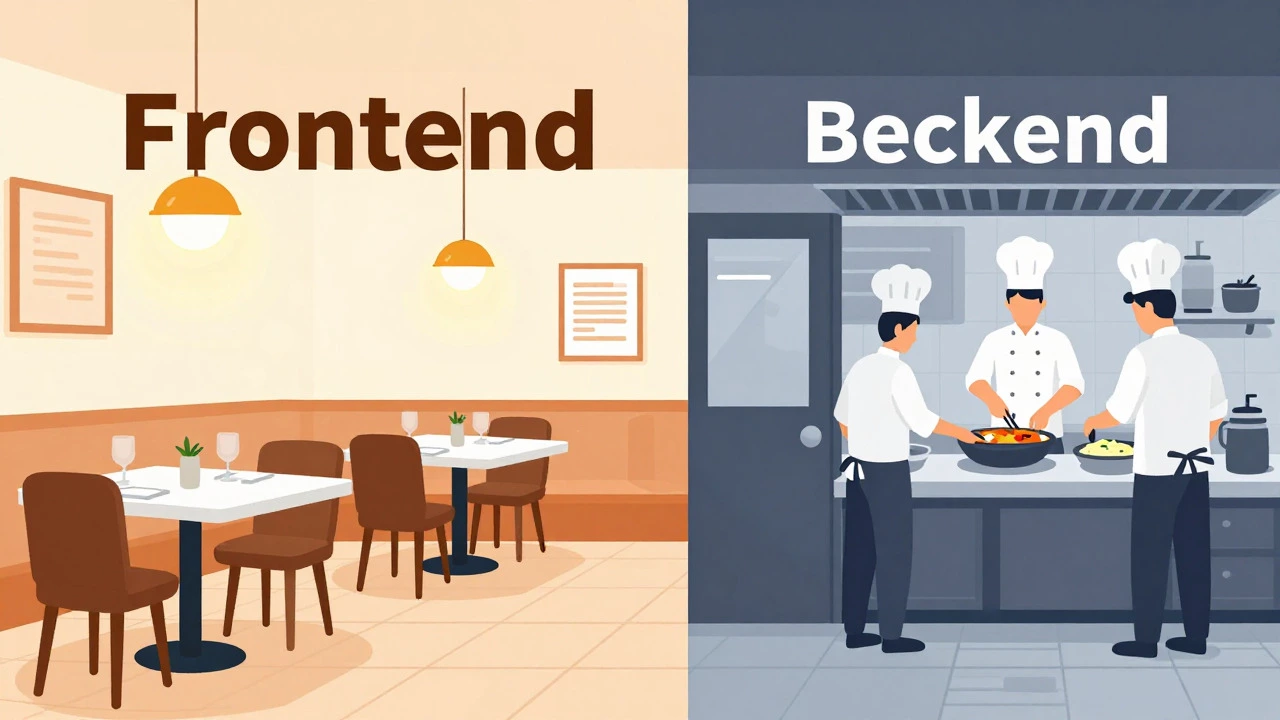
Think of the frontend as the interior design of a restaurant. It’s the tables, the chairs, the lighting, and the menu cards sitting on the table. You can touch them, move them, and read them. The frontend technologies responsible for this are primarily:
- HTML (HyperText Markup Language): Provides the skeletal structure and content.
- CSS (Cascading Style Sheets): Handles the visual presentation and styling.
- JavaScript: Adds interactivity and dynamic behavior.
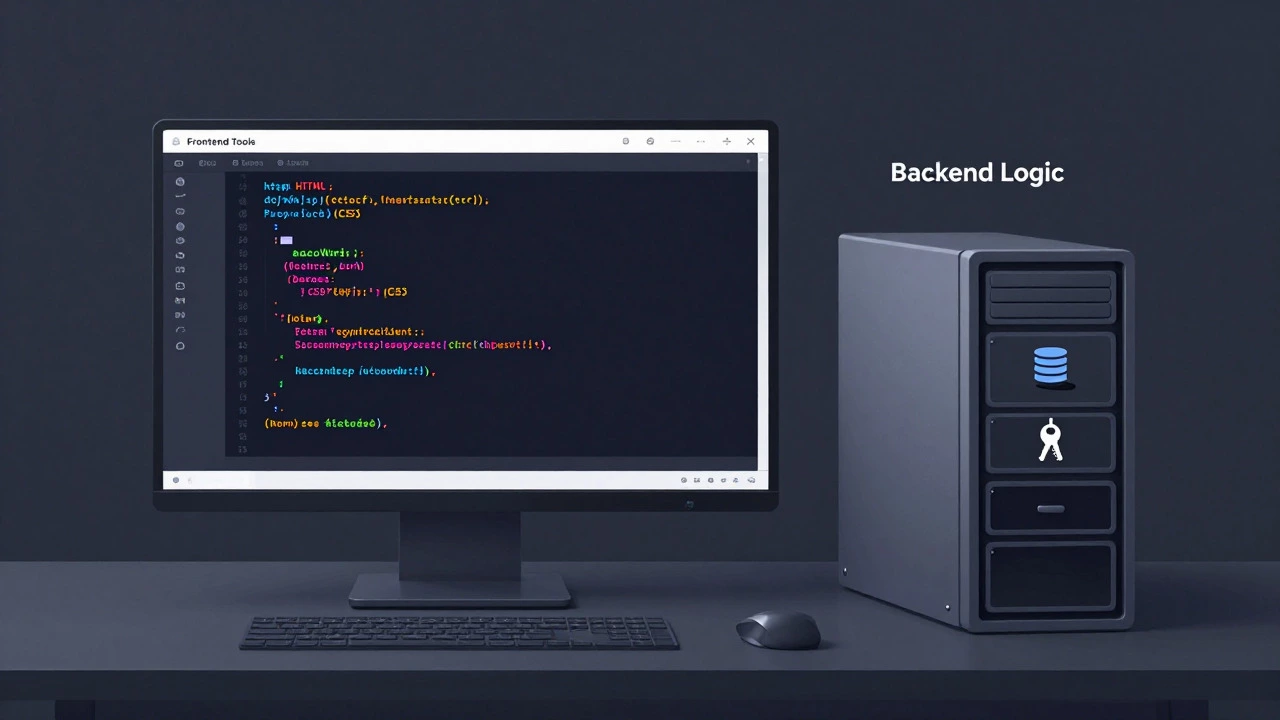
When you open a website, your browser downloads these files and renders them locally on your machine. The server doesn’t care what color your buttons are once the file is sent; that’s all frontend business.
What Exactly Is the Backend?
Now, let’s look at the other side. The backend, or server-side, is the engine room. It’s everything that happens behind the scenes that the user doesn’t see directly. This involves processing data, managing databases, handling user authentication, and generating the initial HTML response before sending it to the browser.
Using our restaurant analogy, the backend is the kitchen. The customers (users) don’t see the chefs chopping vegetables or the managers ordering supplies. They just see the finished dish arrive at their table. Common backend technologies include:
- Languages: Python, Ruby, PHP, Java, Node.js (JavaScript running on the server).
- Databases: MySQL, PostgreSQL, MongoDB.
- Servers: Apache, Nginx.
The backend processes requests. For example, when you log in, the backend checks your password against the database. When you click "Buy Now," the backend calculates the total, charges the credit card, and updates inventory. None of this logic exists in HTML.
Why HTML Is Purely Frontend
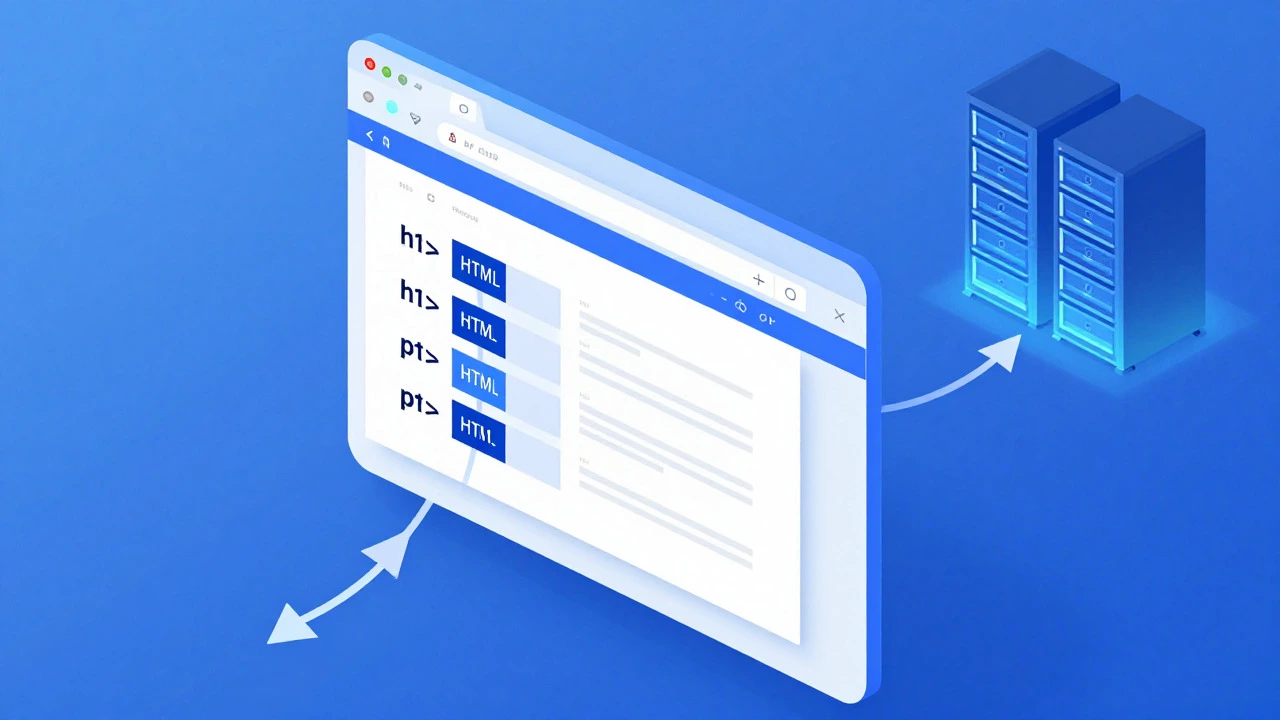
So, why is HTML firmly planted in the frontend camp? It comes down to execution environment. HTML code is interpreted by the Web Browser. It is not executed by a server processor to perform calculations or manage state.
Consider an HTML tag like <h1>Welcome</h1>. This tells the browser, "Display this text as a large heading." That instruction is carried out by Chrome, Firefox, Safari, or Edge on your computer. The server simply sends the text string "<h1>Welcome</h1>" over the network via HTTP. The server doesn’t know or care that it’s a heading; it just treats it as data bytes.
If HTML were a backend technology, it would need to be able to connect to databases, send emails, or process payments on its own. It can’t do any of that. To send an email, you need a backend language like Python or PHP. To save a comment to a database, you need a backend API. HTML merely displays the form field where you type the comment.
The Confusion: Server-Side Rendering vs. Client-Side Code
If HTML is frontend, why do backend developers write HTML? This is where most beginners get tripped up. Many backend frameworks (like Django, Rails, Laravel, or ASP.NET) generate HTML.
This process is called Server-Side Rendering (SSR). Here’s how it works:
- A user requests a page.
- The backend server runs its logic (checks database, fetches user profile).
- The backend takes that data and injects it into an HTML template.
- The server sends the completed HTML file to the browser.
In this scenario, the backend is producing HTML, but the HTML itself is still a frontend artifact. It’s like a chef (backend) plating a meal (HTML) and handing it to the waiter. The plate isn’t the kitchen; it’s the delivery mechanism for the food to the customer.
Even in modern JavaScript frameworks like React or Vue, which run in the browser, HTML (or JSX, which compiles to HTML-like structures) remains the final output rendered by the client. The line stays clear: HTML is the interface layer, not the logic layer.
Comparison: Frontend vs. Backend Technologies
| Feature | Frontend (Client-Side) | Backend (Server-Side) |
|---|---|---|
| Primary Role | User Interface & Experience | Data Processing & Logic |
| Execution Environment | Web Browser | Server / Cloud Infrastructure |
| Core Languages | HTML, CSS, JavaScript | Python, Java, PHP, Ruby, Go, Node.js |
| Data Access | Limited (via APIs, LocalStorage) | Direct Database Access |
| Security Concerns | XSS, CSRF, UI vulnerabilities | SQL Injection, Data Breaches, Authentication |
| Visibility | Visible to User | Hidden from User |
Does HTML Have Any Backend Capabilities?
Technically, no. But there are edge cases that blur the lines slightly, mostly due to misinterpretation of features.
Forms: An HTML <form> element allows users to submit data. However, the HTML only defines the input fields and the method (GET/POST). The actual transmission and processing happen via HTTP protocols handled by the browser and received by the backend. HTML doesn’t validate the data securely; it only provides basic client-side constraints (like "required" fields), which can be easily bypassed.
Local Storage: Modern browsers allow JavaScript to store small amounts of data locally using Web Storage APIs. While this feels like a database, it’s stored on the user’s device, not the server. It’s still frontend territory.
Web Components: These allow developers to create custom reusable elements. Again, these run in the browser. They encapsulate HTML, CSS, and JS, but they don’t reach back to the server to execute logic independently.
Why This Distinction Matters for Your Career
Understanding that HTML is frontend helps you choose the right learning path. If you want to build beautiful, responsive interfaces, master HTML, CSS, and JavaScript. If you want to build robust applications that handle data, security, and scalability, you’ll need to learn a backend language and database management.
Most professional developers today are expected to be Full Stack Developers, meaning they understand both sides. However, knowing the boundary prevents architectural mistakes. For instance, trying to hide sensitive API keys in HTML comments is a classic beginner error because anyone can "View Source" in the browser. Sensitive logic must stay on the backend.
Recruiters also use these terms to filter candidates. A job posting for "Frontend Engineer" will expect deep knowledge of HTML semantics, accessibility, and CSS frameworks. A "Backend Engineer" role will focus on API design, database optimization, and server infrastructure. Applying to the wrong bucket because you think HTML is backend can hurt your chances.
Common Misconceptions About HTML
Misconception 1: "HTML is a programming language."
It’s not. It’s a markup language. Programming languages have logic (loops, conditionals, variables). HTML has structure. You can’t write an algorithm in pure HTML.
Misconception 2: "If I write HTML in a PHP file, it’s backend."
The file extension might be .php, and the server processes the PHP tags, but the HTML parts are still static markup being passed through. The PHP generates the HTML; the HTML doesn’t execute the PHP.
Misconception 3: "HTML5 added backend features."
HTML5 introduced new semantic tags (<article>, <nav>) and multimedia support (<video>, <audio>). It did not add server-side processing capabilities. Those still require JavaScript or backend integration.
How HTML Interacts with the Backend
While HTML is frontend, it constantly communicates with the backend. This interaction usually happens through APIs (Application Programming Interfaces).
Here’s a typical flow:
- You fill out a contact form (HTML).
- You click "Submit".
- JavaScript captures the input and sends it to a backend endpoint (e.g.,
/api/contact). - The backend receives the data, validates it, saves it to a database, and returns a success message.
- JavaScript updates the HTML to show "Thank you!"
In this chain, HTML is the starting point and the ending point. It’s the face of the application. The backend is the brain. Both are essential, but they play distinct roles.
Conclusion: Mastering the Frontend Foundation
HTML is unequivocally a frontend technology. It is the structural foundation of every web page, rendered by the browser and visible to the user. While backend systems generate HTML, and frontend code often talks to backend services, HTML itself contains no server-side logic.
For aspiring developers, mastering HTML is the first step toward frontend proficiency. From there, adding CSS for style and JavaScript for interactivity completes the frontend triad. Only after understanding these client-side tools should you venture into backend languages to handle data and logic. Keeping these boundaries clear will make you a more effective, secure, and versatile developer.
Is HTML considered a programming language?
No, HTML is a markup language, not a programming language. It lacks logical constructs like loops, conditionals, and variables found in programming languages such as JavaScript or Python. Its sole purpose is to structure content on a webpage.
Can HTML interact with databases?
Not directly. HTML can display data retrieved from a database, but it cannot query or modify databases on its own. This interaction requires a backend language (like PHP, Python, or Node.js) or JavaScript communicating with a backend API.
Why do backend developers write HTML?
Backend developers often write HTML templates to structure the data they retrieve from databases. This process, known as Server-Side Rendering, allows the server to send fully formed pages to the browser. However, the HTML itself remains a frontend component.
Is JavaScript frontend or backend?
JavaScript is unique because it can be used for both. Traditionally, it is a frontend language for adding interactivity to HTML/CSS. However, with environments like Node.js, JavaScript can also run on the server, making it a full-stack language.
What is the difference between client-side and server-side?
Client-side refers to code executed in the user's web browser (frontend), including HTML, CSS, and JavaScript. Server-side refers to code executed on the web server (backend), handling data processing, authentication, and database interactions before sending results to the client.