
eCommerce Profitability Calculator
Enter your estimated monthly figures to see where your money goes and what your realistic net profit looks like.
Estimated Net Profit
Cost Breakdown
Think about the last time you bought a pair of shoes online. Did the retailer make a fortune on that single transaction, or did they barely break even after paying for shipping and ads? That question sits at the heart of every entrepreneur’s dream: eCommerce is often sold as a cash cow, but the reality is far more nuanced. It’s not just about selling stuff; it’s about how much of that sale actually stays in your pocket.
If you’re wondering whether starting an online store in 2026 is worth the headache, you need to look past the glossy revenue charts. Revenue is vanity; profit is sanity. A million-dollar year means nothing if your margins are negative. Let’s break down exactly where the money goes, what realistic numbers look like, and which models actually pay off.
The Myth of Passive Income vs. The Reality of Thin Margins
There’s a persistent myth that once you build a website, the money flows in automatically while you sleep. In truth, modern eCommerce is a high-velocity logistics and marketing operation. The barrier to entry is low, which means competition is fierce. This drives up customer acquisition costs (CAC) and squeezes margins.
Most successful stores operate with net profit margins between 10% and 30%. If you’re seeing reports of 50%+ margins, those businesses are likely either selling digital goods, have incredibly strong brand loyalty allowing for premium pricing, or are excluding certain operational costs from their calculations. For physical goods, especially in saturated niches like fashion or electronics, 15% is a healthy target. Anything below 5% is dangerous territory where one supply chain hiccup can wipe out your yearly gains.
Where Your Money Actually Goes: The Cost Breakdown
To understand profitability, you have to dissect the anatomy of a sale. It’s rarely as simple as "Buy for $10, Sell for $20." Here is the typical cost structure for a mid-sized online retailer selling physical products in the UK market:
- Cost of Goods Sold (COGS): Usually 30-40% of the retail price. This includes manufacturing, packaging, and inbound freight.
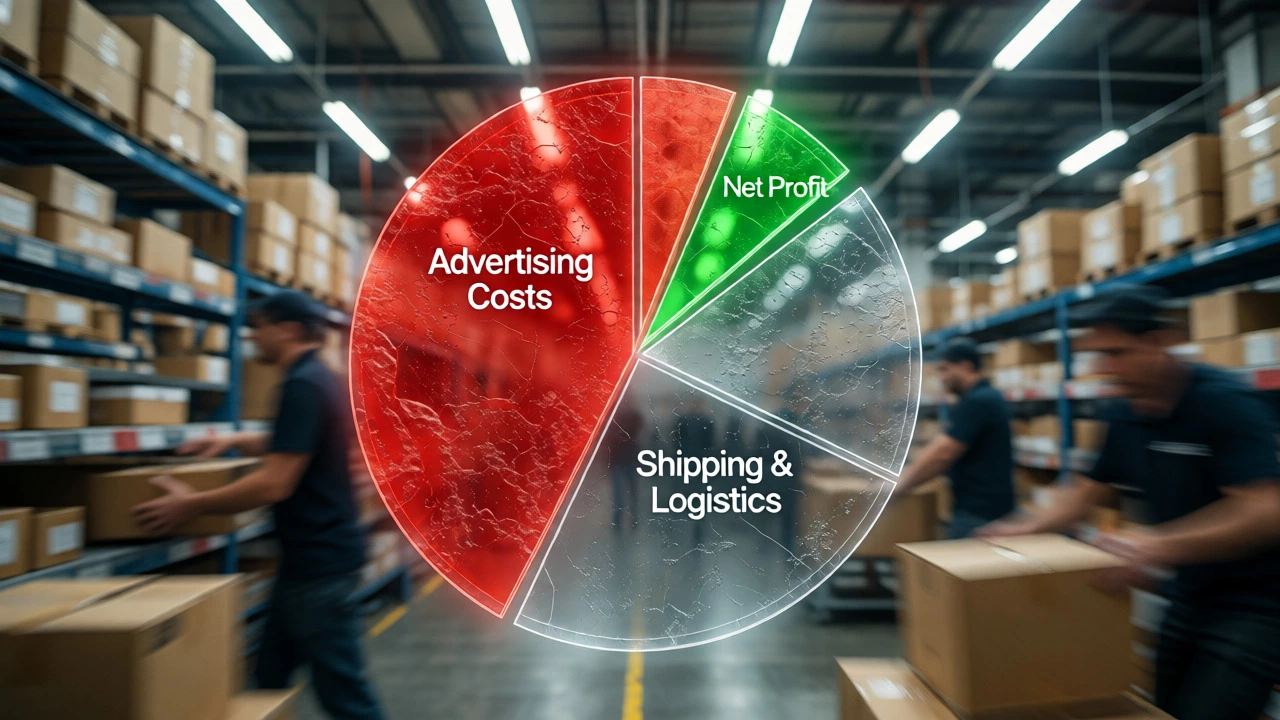
- Marketing & Advertising: Often the biggest killer. Expect to spend 15-25% of revenue on paid social, search ads, and influencer partnerships.
- Fulfillment & Shipping: Depending on your model, this ranges from 10-15%. Free shipping expectations mean you absorb these costs, eating directly into profit.
- Platform & Transaction Fees: Shopify, WooCommerce hosting, payment gateways (Stripe/PayPal), and apps typically take 3-5%.
- Returns & Refunds: In apparel, return rates can hit 30%. Each return costs you shipping both ways plus restocking labor. Budget 5-8% of revenue for this.
- Overhead: Staff, software subscriptions, office space, and taxes. This varies wildly but often consumes another 10-15%.
Add those up, and you’ll see why the remaining 10-20% is hard-won. If you’re using a dropshipping model, your COGS might be higher because you’re buying at retail-like prices, leaving less room for error.
Different Business Models, Different Profit Profiles
Not all eCommerce is created equal. The structure of your inventory and supply chain dictates your potential ceiling for profitability. Let’s compare the three most common approaches.
| Model | Average Gross Margin | Net Profit Potential | Risk Level | Best For |
|---|---|---|---|---|
| Dropshipping | 10-20% | Low (5-10%) | High (Low barriers, high competition) | Testing new products quickly |
| Private Label | 40-60% | Medium (15-25%) | Medium (Inventory risk) | Building a long-term brand |
| Direct-to-Consumer (DTC) | 60-80% | High (20-35%) | High (Manufacturing complexity) | Niche products with loyal audiences |
| Digital Products | 90-95% | Very High (70-90%) | Low (No inventory) | Courses, templates, software |
Notice the trend? The more control you have over production and distribution, the higher your margins. Dropshipping looks attractive because you don’t hold stock, but you’re essentially a middleman with thin margins. Private label-where you put your brand on generic or custom-manufactured goods-offers a sweet spot of control and scalability. DTC cuts out wholesalers entirely, but requires significant upfront capital for manufacturing.
The Hidden Profit Killers You Can’t Ignore
You’ve calculated your unit economics. You know your margin. So why aren’t you making money? Because hidden costs erode profits silently.
Customer Acquisition Cost (CAC) Creep: In 2026, ad platforms are smarter but more expensive. If your CAC rises from £20 to £30, but your Average Order Value (AOV) stays at £50, your profitability collapses. You must constantly optimize your conversion rate to keep CAC manageable relative to LTV (Lifetime Value).
Return Rates: This is the silent killer. Many retailers underestimate the true cost of returns. It’s not just refunding the money; it’s paying for reverse logistics, inspecting the item, repackaging it, and potentially discounting it as "open box." If your return rate is 25%, you need to price your products assuming 25% of them will never generate full-margin revenue.
Payment Fraud and Chargebacks: Even with good fraud detection tools, you’ll lose money to chargebacks. These fees add up, especially if you sell internationally. One fraudulent order can cost you the product, the shipping, and a £15-£20 penalty fee.
How to Boost Profitability Without Raising Prices
Raising prices scares customers. But there are other levers you can pull to improve your bottom line immediately.
- Increase Average Order Value (AOV): Use bundles, upsells, and cross-sells. If you sell yoga mats, offer a strap and block bundle. Getting a customer to spend £60 instead of £40 spreads your fixed marketing costs over more revenue.
- Optimize Subscription Models: If your product is consumable (coffee, skincare, supplements), push subscriptions. Recurring revenue reduces CAC because you don’t have to pay to acquire the same customer every month.
- Improve Email Marketing ROI: Email is still the highest ROI channel in eCommerce. Automating abandoned cart emails, post-purchase follow-ups, and win-back campaigns can recover 10-15% of lost sales at near-zero marginal cost.
- Negotiate with Suppliers: As you scale, your volume gives you leverage. Renegotiating COGS by just 5% can double your net profit if your margins are thin.

Realistic Expectations for New Store Owners
If you’re launching today, don’t expect instant riches. Most profitable stores take 12-24 months to reach consistent profitability. Why? Because you need to gather data. You need to test which ads work, which products convert, and which customers stick around.
Here’s a rough timeline based on current market trends:
- Months 1-6: Heavy losses. You’re testing products, burning cash on ads, and learning. Focus on finding product-market fit, not profit.
- Months 7-12: Break-even. You’ve identified winning products and optimized your funnel. Revenue grows, but reinvestment keeps profit low.
- Year 2+: Profitability kicks in. Brand recognition lowers CAC. Repeat purchases increase LTV. Now you start seeing real cash flow.
Remember, profitability isn’t just about the number in your bank account. It’s about sustainability. A store that makes £5,000 profit a month but requires 60 hours of work a week is less profitable than one making £3,000 with automated systems and minimal effort.
FAQs About eCommerce Profitability
What is a good profit margin for an online store?
For physical products, a healthy net profit margin is typically between 10% and 20%. Digital products can achieve 70-90% due to lack of inventory costs. If you're consistently below 5%, you're likely operating at a loss when accounting for owner salaries and growth reinvestments.
Is dropshipping more profitable than holding inventory?
Generally, no. While dropshipping has lower upfront costs, its gross margins are significantly thinner (10-20%) compared to private label or wholesale models (40-60%). Dropshipping is better for testing ideas, but holding inventory allows for better margins and faster shipping, which improves customer retention.
How much does advertising cost affect eCommerce profits?
Advertising is often the largest variable expense, consuming 15-25% of revenue. High customer acquisition costs (CAC) are the primary reason many stores fail to become profitable. Reducing CAC through organic traffic, email marketing, and brand loyalty is key to improving net profit.
Do I need to offer free shipping to be profitable?
You don't necessarily need to offer unconditional free shipping, but you must account for shipping expectations. Customers expect free shipping on orders above a certain threshold (e.g., £50). Incorporate shipping costs into your product pricing rather than charging them separately at checkout to reduce cart abandonment.
How long does it take to become profitable?
Most new eCommerce businesses take 12 to 24 months to reach consistent profitability. The first year is usually spent testing products, optimizing ads, and building brand awareness, often resulting in net losses. Sustainable profit usually emerges in the second year as repeat customers lower acquisition costs.