
Choosing between PHP and Python feels like picking between two reliable cars-one’s a workhorse that’s been on the road for 20 years, the other’s a sleek electric model with new tech. Both get you where you need to go, but which one fits your journey? If you’re starting out or switching paths, this isn’t about which language is "better." It’s about what you want to build, where you want to work, and how fast you want to start seeing results.
PHP Still Powers Half the Web
Don’t let anyone tell you PHP is dead. It’s not. Over 77% of websites that use a server-side language still run on PHP, according to W3Techs. That’s not a fluke. WordPress, Drupal, and Joomla-all used by millions of sites-are built on PHP. If you want to customize a WordPress theme, fix a WooCommerce plugin, or build a custom CMS for a small business, PHP is your fastest path there. You don’t need to learn a dozen tools. You write a PHP file, upload it to your hosting, and it works.
Companies like Facebook (in its early days), Wikipedia, and Etsy still rely on PHP. Even today, agencies building client websites hire PHP developers because the ecosystem is mature, cheap to host, and full of ready-made solutions. You can find a $5/month shared hosting plan that runs PHP out of the box. No complex setup. No Docker containers. Just upload and go.
Python Is Everywhere Else
Python doesn’t just do web apps. It does data analysis, AI, automation, scientific computing, and even game scripting. If you’re interested in anything beyond websites-like scraping data, training a model to predict sales, or writing a script to auto-fill forms-Python is the obvious pick. It’s the language of choice in tech startups, research labs, and Fortune 500 companies building internal tools.
Web frameworks like Django and Flask make Python competitive for web development. Django comes with authentication, admin panels, and database tools built in. You can build a secure, scalable web app faster than with most PHP setups. But here’s the catch: you’ll need a VPS or cloud server. Shared hosting often doesn’t support Python out of the box. You’ll need to learn about WSGI, virtual environments, and deployment pipelines. That’s not hard, but it’s more steps than PHP.
Job Market: PHP for Agencies, Python for Tech Companies
Look at job boards. If you search for "PHP developer," you’ll see mostly freelance gigs, small agencies, and local businesses looking for someone to maintain their WordPress site or fix an old e-commerce store. Pay ranges from $25 to $60/hour. It’s steady work, but rarely high-paying unless you’re managing large-scale legacy systems.
Search for "Python developer," and you’ll see roles at SaaS companies, fintech startups, and data teams. Salaries start at $70k-$90k in the U.S. and go up from there. Many of these jobs require Python plus a second skill: SQL, AWS, or machine learning libraries. But the ceiling is higher. You’re not just fixing websites-you’re building tools that scale to millions of users.
There’s no right or wrong here. If you want to work remotely for clients who need a website fixed next week, PHP gets you paid faster. If you want to work in a tech office, build AI tools, or land a job at a company like Netflix or Spotify, Python opens more doors.
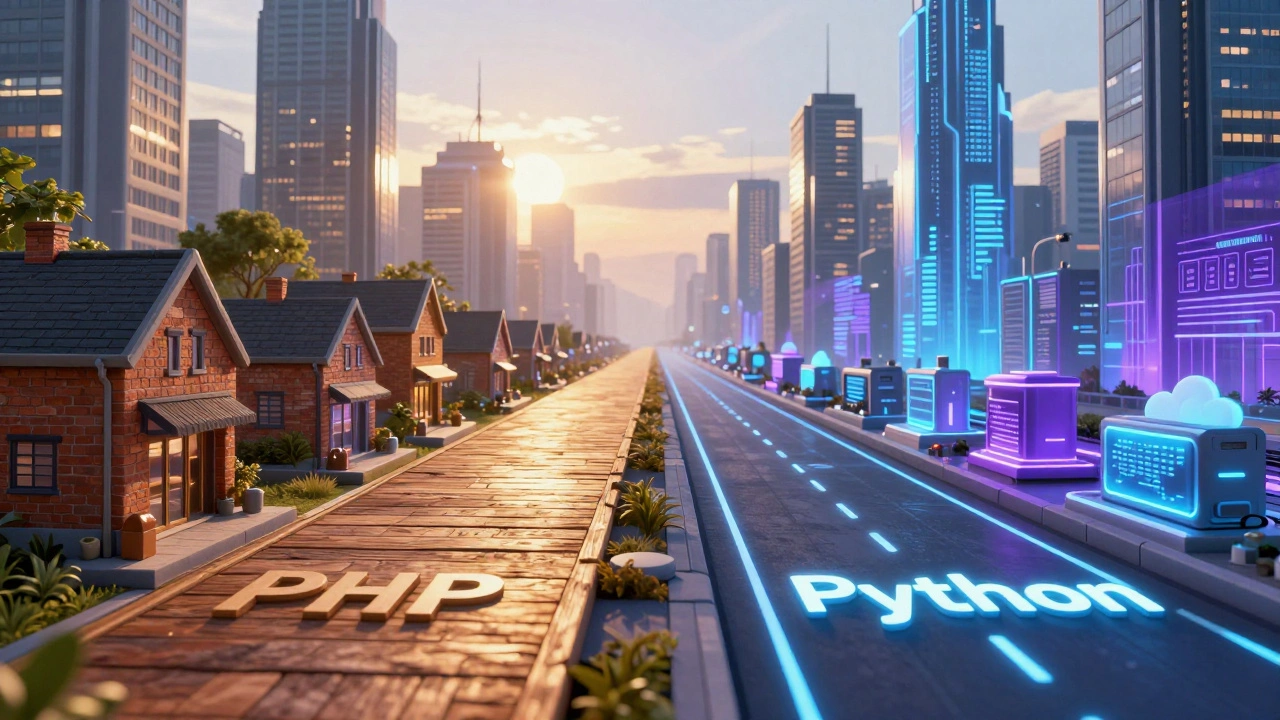
Learning Curve: PHP Is Simpler at First, Python Is Cleaner Long-Term
PHP’s syntax feels messy if you’re used to modern languages. You’ll write things like:
<?php
if ($_POST['email']) {
  $email = filter_var($_POST['email'], FILTER_VALIDATE_EMAIL);
  if ($email) {
    mail($email, "Welcome", "Thanks for signing up");
  }
}
?>
It’s functional, but it’s not elegant. You mix HTML and logic. You handle security manually. You’ll run into outdated tutorials that teach unsafe practices.
Python, by contrast, reads like plain English:
if email:
    if is_valid_email(email):
        send_email(email, "Welcome", "Thanks for signing up")
It’s consistent. Indentation matters. Variables don’t need dollar signs. You write less code to do more. Once you get past the initial setup (installing Python, setting up a virtual environment), the learning curve flattens out. You’ll write cleaner, more maintainable code faster.
What You Can Build
If you choose PHP: You can build a blog, a small online store with WooCommerce, a custom CRM for a local dentist, or a membership site. You’ll use tools like Composer for packages, Laravel for structure, and MySQL for data. Most of these projects take days, not weeks. You can launch something tangible by the end of your first weekend.
If you choose Python: You can build the same website-but you can also build a tool that analyzes customer behavior, predicts inventory needs, or auto-generates reports from spreadsheets. You can use Django for the website, Pandas for data, and Scikit-learn for predictions-all in the same project. You’re not limited to web pages. You’re building systems.
Future-Proofing: What’s Happening in 2025?
PHP is stable. It’s not growing, but it’s not dying. PHP 8.3 added performance boosts and better type handling. Laravel keeps it modern. But most innovation in web tech is happening elsewhere. New frameworks like Astro, Next.js, and Svelte are frontend-first. Backend APIs are increasingly built with Node.js or Python.
Python, on the other hand, is expanding. AI tools like ChatGPT are built on Python. Companies are automating everything from customer service to accounting with Python scripts. Universities teach Python as the first language. It’s the lingua franca of tech.
That doesn’t mean PHP is obsolete. But if you’re betting on where the industry is heading, Python has more momentum.
Which One Should You Learn?
Ask yourself these three questions:
- Do you want to fix websites fast and get paid quickly? → Learn PHP. Start with WordPress and Laravel. You’ll have your first client by week two.
- Do you want to build apps, automate tasks, or work in tech startups? → Learn Python. Focus on Django and basic data handling.
- Are you unsure and want maximum flexibility? → Learn Python. It’s more transferable. You can build websites with it, but you can also do data, AI, scripting, and more. PHP is mostly web.
If you’re 18 and just starting out, go with Python. It gives you options. If you’re 35 and need to make money fast helping local businesses, PHP is your shortcut. Neither choice locks you in forever. Many developers learn both. But you have to start somewhere.
Where to Start
For PHP: Install XAMPP (free), create a folder called "hello.php," and write:
<?php echo "Hello World"; ?>Open it in your browser. That’s it. Then follow a Laravel tutorial on YouTube. Build a simple blog. That’s your first project.
For Python: Download Python 3.12 from python.org. Open your terminal and type:
pip install djangoThen run:
django-admin startproject mysiteRun python manage.py runserver and visit http://127.0.0.1:8000. You’ve got a live web app. No hosting needed yet. That’s the power of Python.
Final Thought
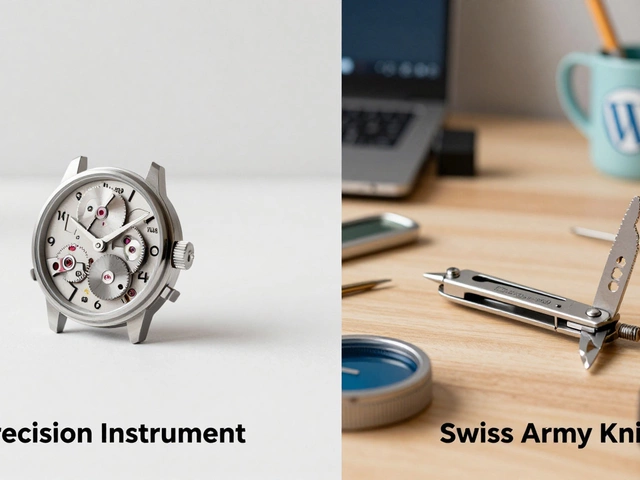
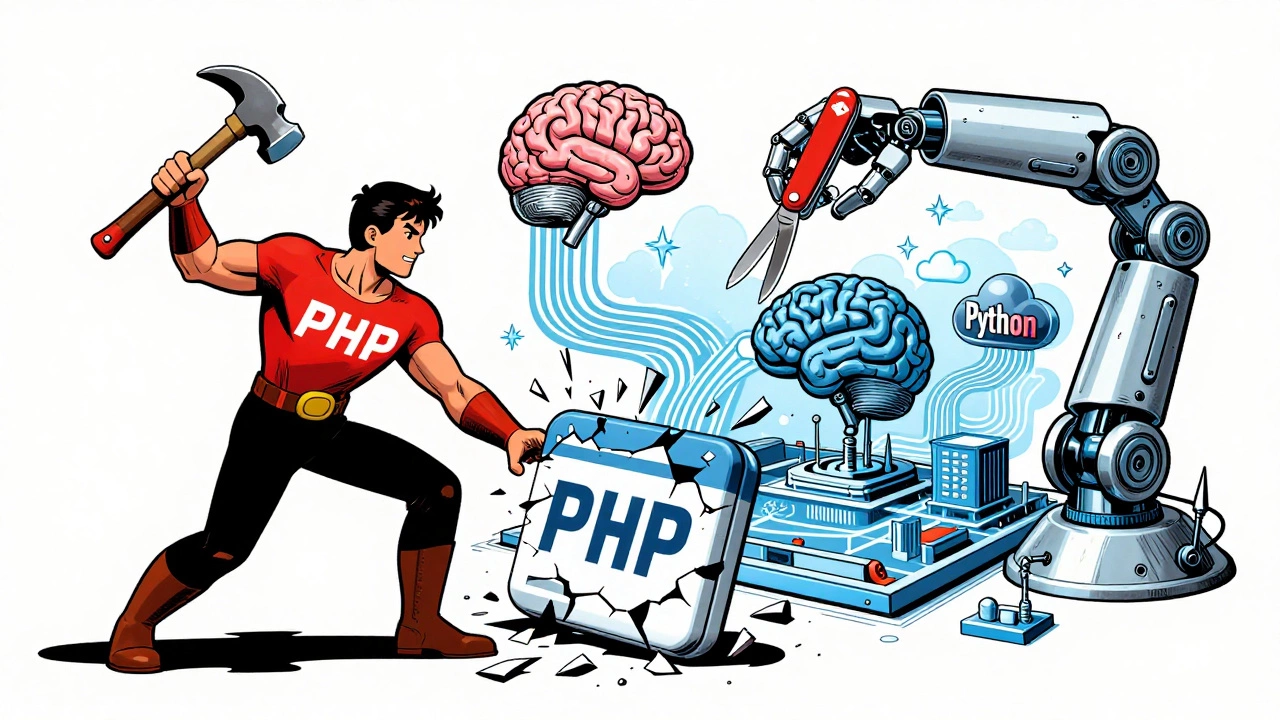
PHP is like a hammer. It’s blunt, heavy, and you can pound nails with it-even if it’s not the prettiest tool. Python is like a Swiss Army knife. It’s lighter, smarter, and does more things well. You don’t need both. But if you want to do more than fix websites, Python gives you the tools to grow.
Is PHP still worth learning in 2025?
Yes-if you want to work with WordPress, WooCommerce, or legacy business websites. PHP powers over 77% of websites using server-side code, and there’s steady demand for developers who can maintain and update these systems. Many small businesses still rely on PHP-based sites, and agencies hire PHP devs regularly. But it’s mostly limited to web development. If you want broader career options, PHP won’t take you far beyond websites.
Can I learn Python without any coding experience?
Absolutely. Python is one of the most beginner-friendly languages because its syntax is clean and close to plain English. You don’t need to memorize complex rules like semicolons or brackets. Many people start with Python to build simple scripts, automate tasks, or create websites with Django. Online courses like those on freeCodeCamp or Codecademy guide you step-by-step. Within a few weeks, you can build something useful-even if you’ve never coded before.
Which language pays more: PHP or Python?
On average, Python developers earn more. In the U.S., entry-level Python roles start around $70,000-$90,000, while PHP roles typically pay $50,000-$70,000. The difference comes from the types of jobs. Python is used in tech companies, AI, data science, and automation-fields with higher salary ceilings. PHP jobs are often freelance, agency-based, or focused on maintaining older systems, which pay less but offer more immediate gigs. Your earning potential depends more on your skills and the industry than the language itself.
Should I learn PHP first, then Python?
Only if you need quick income. Learning PHP first lets you land small web projects fast, which can fund your learning. But it’s not necessary. Many developers skip PHP entirely and go straight to Python. Python’s concepts-variables, loops, functions-are easier to transfer to other languages later. If you’re patient and want long-term flexibility, start with Python. If you’re in a hurry to earn, PHP gives you faster results.
Can I switch from PHP to Python later?
Yes, and many developers do. The core ideas of programming-logic, loops, data structures-are the same. Once you know how to solve problems in PHP, learning Python is mostly about learning new syntax and tools. You’ll find Python easier to read and write. The transition is smooth, especially if you’ve worked with modern PHP frameworks like Laravel. The bigger challenge isn’t the language-it’s shifting your mindset from fixing websites to building systems.
Is Python better for freelancing than PHP?
For traditional web freelancing-building WordPress sites or small business pages-PHP still dominates the market. Clients often ask for PHP or WordPress specifically. But Python freelancers are growing in number, especially those offering automation, data analysis, or custom SaaS tools. If you can show clients you can save them time with scripts or tools (like auto-generating invoices or pulling data from Google Sheets), you can charge more than a typical web dev. Python freelancing is less common but often higher-paying and more innovative.