
Backend vs. Frontend: PHP Task Classifier
Test your understanding of web architecture. Click on each task below to assign it to either the Backend (Server/PHP) or Frontend (Browser/JS). Then check your results.
You’ve probably heard the debate a thousand times. Someone asks, "Should I learn PHP or JavaScript?" and the conversation instantly spirals into confusion about where these languages actually live. The question isn't just academic; it dictates your career path, your tech stack, and how you debug errors at 2 AM. So, let’s cut through the noise. PHP is fundamentally a server-side scripting language designed to run on the backend of a website. It doesn’t render pixels in your browser. It doesn’t animate buttons when you hover over them. Instead, it talks to databases, processes forms, and hands HTML files to the user. If you’re trying to build the interface users see and touch, PHP is likely not your primary tool. But if you’re building the logic that powers what they see, PHP is a heavyweight champion.
The Core Distinction: Server-Side vs. Client-Side
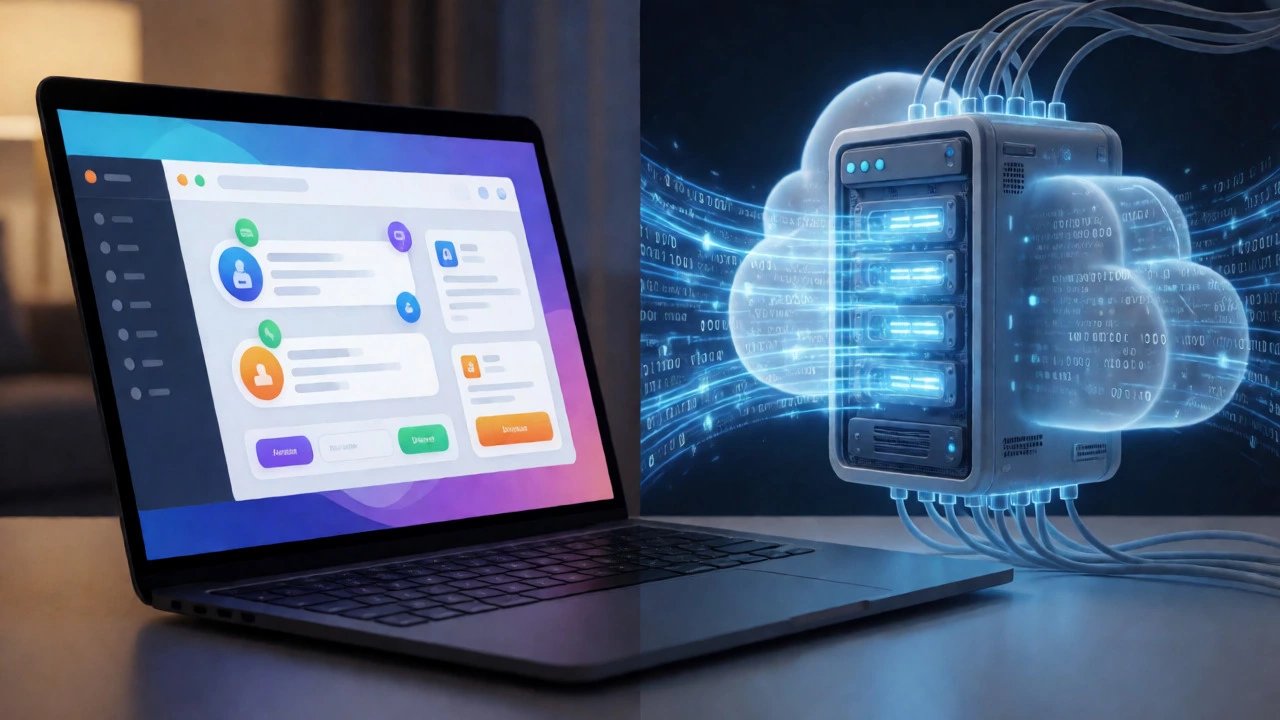
To understand why PHP is classified as backend, you need to visualize the journey of a web request. When you type a URL like `example.com` into your browser, two things happen immediately. First, your browser (the client) sends a request across the internet. Second, a server somewhere receives that request. This is where the divide happens. Client-side code, such as JavaScript, runs directly in your browser. It handles interactivity, animations, and immediate feedback without asking the server for help every time you click a button.
Server-side code, which includes PHP, runs on the remote machine hosting the website. It processes data, checks security permissions, queries databases, and generates the final HTML document. Once the PHP script finishes its job, it sends the completed HTML back to your browser. Your browser then reads that HTML, along with any CSS and JavaScript included, to paint the page on your screen. PHP never touches the rendering engine of your browser. It’s gone by the time the page loads. This separation of concerns is critical for performance and security.
Why PHP Is Strictly Backend
It might seem obvious once stated, but many beginners confuse the output of PHP with the execution environment of PHP. PHP outputs HTML, which *is* rendered in the frontend. But the execution itself? That’s strictly backend. Let’s look at what PHP actually does during that brief moment before your page loads.
- Database Interaction: PHP connects to databases like MySQL or PostgreSQL. It fetches product listings from an e-commerce store or user profiles from a social network. JavaScript can’t do this securely because exposing database credentials in the browser would be a disaster.
- Form Processing: When you submit a login form, PHP validates the username and password against hashed values stored in the database. It decides whether to grant access or throw an error.
- Session Management: PHP creates session cookies that remember who you are as you navigate between pages. Without backend logic, every page load would feel like you’d forgotten your login details.
- Dynamic Content Generation: PHP injects specific data into HTML templates. For example, it replaces a placeholder like `{username}` with "John Doe" based on who is logged in.
Notice none of these tasks involve drawing circles, changing colors, or animating transitions. They are all about data manipulation and decision-making. That’s the definition of backend work.
Can PHP Touch the Frontend?
Here’s where things get nuanced. While PHP is a backend language, it often interacts closely with frontend technologies. In traditional monolithic applications, like those built with Laravel or WordPress, PHP templates generate HTML that includes JavaScript and CSS. In this sense, PHP controls the structure of the frontend, even if it doesn’t execute within the browser.
Consider a WordPress site. The PHP theme files determine which articles appear on the homepage. They decide the layout classes applied to divs. However, once the page loads, JavaScript takes over for features like dropdown menus or lazy-loading images. PHP sets the stage; JavaScript performs the play. Trying to use PHP for frontend interactivity-like validating a form field as you type-is inefficient. Why make a round-trip to the server just to check if an email address has an "@" symbol? JavaScript handles that instantly on the client side.

Modern Architectures: Where Does PHP Fit Now?
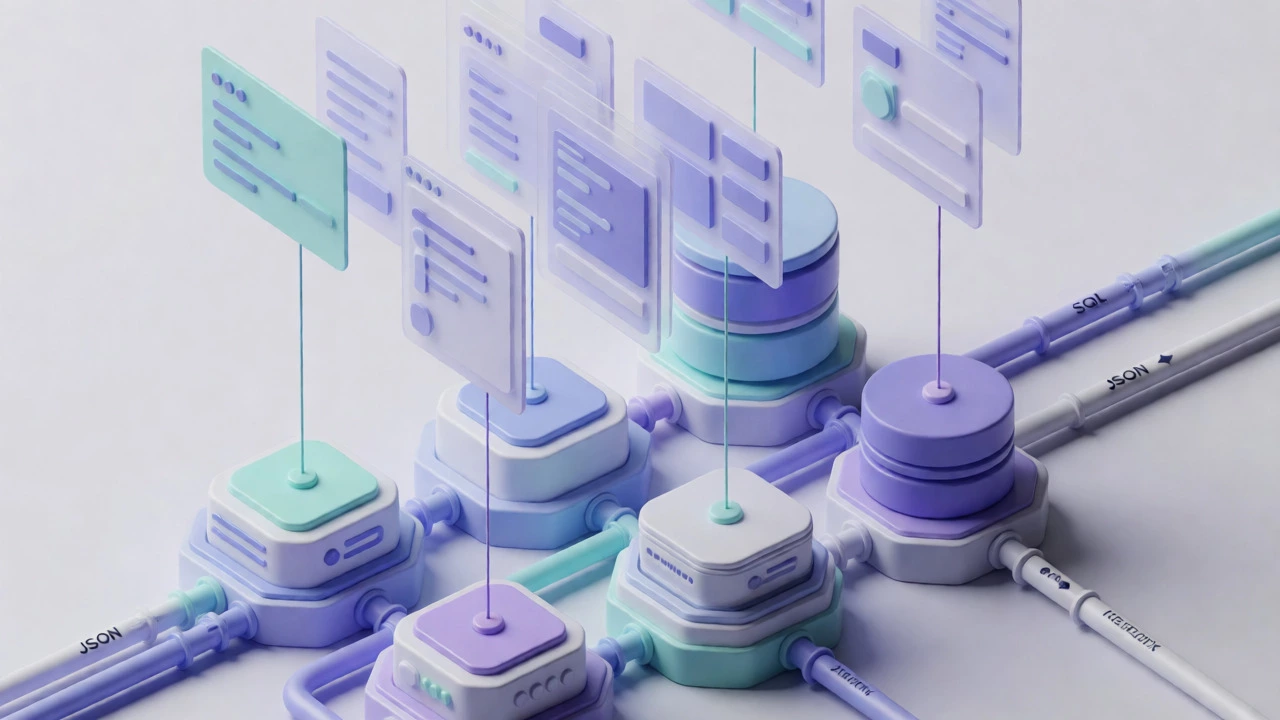
The rise of Single Page Applications (SPAs) using frameworks like React, Vue, or Angular has shifted some responsibilities. In an SPA, the initial HTML shell is loaded, and then JavaScript handles almost everything else. In this model, PHP often retreats entirely to being an API provider. It exposes JSON endpoints that the frontend consumes.
| Feature | Traditional Monolith (e.g., Laravel Blade) | Headless / API-First (e.g., Laravel Sanctum + React) |
|---|---|---|
| HTML Generation | Generated by PHP on the server | Generated by JavaScript in the browser |
| Data Format | HTML mixed with PHP variables | JSON responses via REST or GraphQL |
| Interactivity | Minimal; relies on full page reloads or small JS snippets | High; handled entirely by frontend framework |
| Developer Focus | Full-stack (writes both HTML/CSS/JS and PHP) | Backend-focused (writes APIs); separate frontend team |
In headless setups, PHP doesn’t care what the frontend looks like. It just serves data. This decoupling proves PHP’s strength as a pure backend engine. You could swap the React frontend for a mobile app written in Swift or Kotlin, and the PHP backend remains unchanged. That flexibility is why companies like Slack and Etsy still rely heavily on PHP infrastructure.
Common Misconceptions About PHP
One persistent myth is that PHP is "dead" or outdated because it’s older than Node.js or Python. Reality check: PHP powers nearly 77% of all websites whose server-side programming language is known, according to W3Techs data as of 2026. Its longevity comes from stability, ease of deployment, and a massive ecosystem. Another misconception is that you can’t build modern apps with it. Frameworks like Symfony offer robust tools for handling HTTP requests, dependency injection, and testing, rivaling anything in other ecosystems.
Some developers argue that since PHP outputs HTML, it must be frontend. This confuses the *output format* with the *execution context*. A printer produces paper documents, but the software driving the printer runs on your computer’s operating system. Similarly, PHP produces HTML, but it runs on the server’s operating system. The location of execution defines the category, not the file extension of the result.
When Should You Use PHP?
If you’re starting a new project, ask yourself these questions to decide if PHP belongs in your stack:
- Do you need rapid prototyping? PHP’s setup is famously simple. Install XAMPP or MAMP, drop files in a folder, and you’re running. No complex build steps required initially.
- Are you working with relational data? PHP’s integration with SQL databases is seamless. ORMs like Eloquent (in Laravel) or Doctrine (in Symfony) abstract away much of the boilerplate.
- Do you value cost-effective hosting? Shared hosting plans support PHP out of the box. Deploying a PHP app is often cheaper and easier than configuring a Node.js server with PM2 or Docker containers.
- Is SEO critical? Server-rendered HTML from PHP is inherently SEO-friendly. Search engines crawl static HTML easily, whereas SPAs sometimes require additional configuration for optimal indexing.
Conversely, if you’re building a real-time chat application with heavy WebSocket usage, or a highly interactive dashboard where state management is complex, you might lean toward JavaScript on the backend (Node.js). But for content-heavy sites, e-commerce platforms, and administrative panels, PHP remains a top-tier choice.
Bridging the Gap: Full Stack Reality
While we categorize PHP as backend, most professional developers today are expected to have some frontend literacy. You don’t need to be a CSS wizard, but understanding how your PHP-generated HTML interacts with CSS grids and flexbox is essential. Likewise, knowing basic JavaScript helps you troubleshoot why a feature isn’t working. Is the data missing because PHP didn’t send it? Or did the JavaScript fail to parse it correctly?
Tools like Vite or Webpack now integrate smoothly with PHP projects, allowing you to bundle assets efficiently. This blurs the line slightly in terms of workflow, but the architectural boundary remains firm. PHP builds the data layer; the frontend stack builds the presentation layer. Respecting this boundary keeps your codebase maintainable. Mixing business logic directly into view templates without abstraction leads to spaghetti code that’s hard to test and refactor.
Can PHP run in the browser?
No, standard PHP cannot run directly in a web browser. Browsers interpret HTML, CSS, and JavaScript. PHP requires a server environment (like Apache or Nginx with PHP-FPM) to execute. There are experimental projects like PHP-Wasm that attempt to compile PHP to WebAssembly, allowing it to run in browsers, but these are niche and not used in production mainstream web development.
Is PHP harder to learn than JavaScript?
This depends on your background. Many beginners find PHP easier to start with because it involves less setup complexity than modern JavaScript frameworks. You can write a simple "Hello World" script in PHP with just a few lines and no build tools. JavaScript, especially when combined with React or Angular, requires understanding asynchronous operations, bundlers, and component lifecycles, which can be steeper initially.
Does PHP replace HTML?
No, PHP complements HTML. PHP scripts often contain embedded HTML tags. The PHP engine processes the dynamic parts (variables, loops, conditions) and leaves the HTML intact. The final output sent to the browser is pure HTML. You still need to know HTML structure to create meaningful pages, regardless of whether you use PHP, Python, or Ruby on the backend.
What is the difference between PHP and JavaScript?
The primary difference is execution location. PHP runs on the server (backend), handling database interactions, authentication, and business logic. JavaScript runs primarily in the browser (frontend), handling user interactions, DOM manipulation, and visual updates. While Node.js allows JavaScript to run on servers too, PHP was designed exclusively for server-side web development from its inception.
Is PHP good for large-scale applications?
Yes. Companies like Facebook (Meta), Wikipedia, and Slack use PHP at massive scale. With proper architecture, caching mechanisms (like Redis or Memcached), and optimized frameworks (Laravel/Symfony), PHP handles millions of requests per day efficiently. Performance bottlenecks are usually due to poor database queries or lack of caching, not the language itself.