

JavaScript Relevance Calculator
Assess Your Development Context
Select which JavaScript domains you're interested in to see how relevant JavaScript remains in 2026.
Key JavaScript Insights
98% of websites rely on JavaScript
According to the article, JavaScript remains the backbone of modern web development.
64% of developers use JavaScript regularly
Stack Overflow's 2024 survey confirms JavaScript's dominance in the developer community.
2M+ packages in npm registry
The JavaScript ecosystem has over 2 million libraries and tools available.
35% server cost reduction
PayPal saw significant savings after adopting Node.js for backend services.
98% of websites rely on JavaScript. Yet every year, someone asks if JavaScript is outdated. Let's cut through the noise.
Why People Think JavaScript is Outdated
The confusion often starts with new languages like TypeScript. Many see TypeScript's growing popularity and assume JavaScript is being replaced. But TypeScript isn't a replacement-it's a superset. You can't have TypeScript without JavaScript. It's like saying English is outdated because of British English. TypeScript adds static typing and compiles down to plain JavaScript, which browsers still run. The JavaScript engine in your browser handles both.
Some developers point to emerging languages like Rust or WebAssembly as "replacements," but that's a misunderstanding. These tools work alongside JavaScript, not instead of it. For example, WebAssembly handles performance-heavy tasks like video editing, while JavaScript manages the user interface. They complement each other.
How JavaScript Has Evolved
JavaScript hasn't stayed the same. The ECMAScript standard updates every year, adding features that make development faster and cleaner. Arrow functions, template literals, async/await, and modules are just a few examples. These features solve real problems developers face. For instance, async/await makes handling asynchronous code as simple as writing synchronous code. Before, you had to deal with callback hell-now it's much easier.
Modern JavaScript is also more modular. Instead of loading one massive script, you can import only what you need. This speeds up page loading and reduces errors. Companies like Netflix and PayPal have seen performance improvements by adopting these modern features.
ECMAScript is the standardized version of JavaScript, with annual updates defining new features. The 2023 update introduced features like Array.prototype.findLast() and Object.hasOwn(), making code more intuitive. This constant evolution keeps JavaScript relevant and powerful.
JavaScript Beyond the Browser
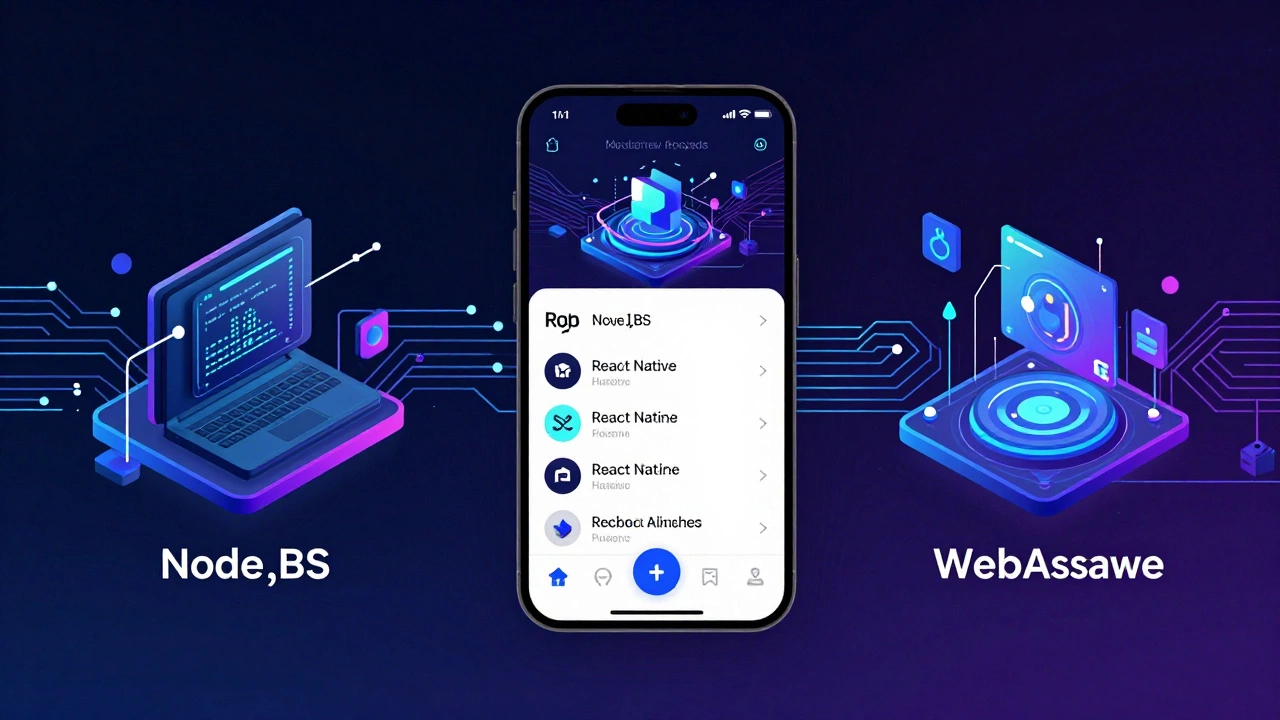
JavaScript isn't just for web pages anymore. With Node.js, it runs on servers, handling backend tasks. Think of it as the Swiss Army knife for developers. Companies like LinkedIn, Uber, and Netflix use Node.js for their backend systems. Node.js handles millions of requests per second, proving JavaScript's scalability.
Node.js is a runtime environment that allows JavaScript to run on servers. It powers everything from APIs to real-time chat apps. For example, PayPal reduced server costs by 35% after switching to Node.js.
For mobile apps, React Native lets you build iOS and Android apps using JavaScript. Slack and Facebook use React Native for parts of their mobile apps. Even desktop apps like Visual Studio Code and Discord are built with JavaScript using Electron. This versatility makes JavaScript a full-stack language.
React is a JavaScript library for building user interfaces, widely used in frontend development. It's the backbone of many modern web apps, from Instagram to Airbnb. React's component-based architecture makes code reusable and maintainable.
Why JavaScript Is Still Relevant
According to Stack Overflow's 2024 survey, 64% of professional developers use JavaScript regularly. That's more than any other language. Job listings for JavaScript developers are consistently high, especially for roles involving React, Node.js, or TypeScript. The demand isn't slowing down.
npm is the largest package registry for JavaScript, hosting over 2 million libraries. This ecosystem makes it easy to find tools for almost any task. Whether you need a payment processor or a UI component, npm has it covered.
Even with new technologies like WebAssembly, JavaScript remains the glue that holds everything together. Browsers don't support WebAssembly natively-they rely on JavaScript to load and interact with it. So while WebAssembly handles heavy lifting, JavaScript does the coordination.
WebAssembly is a binary instruction format that runs at near-native speed, designed to complement JavaScript. It's perfect for graphics-intensive apps like Figma or games, but JavaScript still manages the overall app structure.
FAQs About JavaScript in 2026
Is JavaScript dying because of new languages?
No. New languages like TypeScript enhance JavaScript but don't replace it. TypeScript compiles to JavaScript, so it's still JavaScript running in browsers. The ecosystem evolves around JavaScript, not away from it.
Should I learn JavaScript before TypeScript?
Yes. Understanding JavaScript fundamentals makes learning TypeScript easier. TypeScript adds static typing but builds on JavaScript. Without JS knowledge, TypeScript can be confusing.
Is JavaScript slow compared to WebAssembly?
WebAssembly is faster for specific tasks like complex math or graphics, but JavaScript handles most web app needs efficiently. They work together-JavaScript manages the UI, while WebAssembly tackles heavy computations. For example, Figma uses both for its design tools.
What's replacing JavaScript?
Nothing. JavaScript is the only language natively supported by all browsers. Alternatives like WebAssembly or Dart complement it but don't replace it. Even when other languages compile to JS, they depend on JavaScript's infrastructure.
Is JavaScript only for frontend development?
No. With Node.js, JavaScript powers backend servers, databases, and server-side logic. Companies like Netflix and LinkedIn use Node.js for their backend systems. It's a full-stack language used everywhere.