

Full Stack Learning Timeline Calculator
How long will it take to become job-ready?
Calculate your personalized timeline based on your weekly study hours. This tool uses the realistic timeline from the article.
Why this works
"If you spend 15 hours a week (about 2 hours a day, 5 days a week), you can go from zero to job-ready in about 8 to 12 months." - From the article
Your Estimated Timeline
Enter your weekly hours to see your timeline
Learn HTML, CSS, JavaScript. Build 3-5 static sites.
Learn a frontend framework (React or Vue). Build a todo app with local storage.
Learn backend basics with Node.js. Connect to a database. Build a simple API.
Combine front and back end. Build a full app and deploy it.
Is full stack hard to learn? If you’ve ever stared at a screen wondering whether you need to be a genius to become a full stack developer, you’re not alone. The truth? It’s not about being smart. It’s about being consistent. You don’t need a computer science degree. You don’t need to memorize every framework. You just need to show up every day and build something - even if it’s small.
What does a full stack developer actually do?
A full stack developer works on both the front end and the back end of a website or app. That means you’ll handle everything from the buttons users click to the servers that store their data. On the front end, you’ll use HTML, CSS, and JavaScript to build what people see in their browser. On the back end, you’ll write code that runs on a server - often using Node.js, Python, or PHP - and connect to databases like PostgreSQL or MongoDB. You’ll also manage APIs, deploy apps, and sometimes handle basic DevOps tasks like setting up a server on AWS or DigitalOcean.
It sounds like a lot. And it is. But you don’t learn all of it at once. Most people start with one area and slowly expand. One developer I know began by building simple websites with HTML and CSS. Six months later, she added JavaScript. A year after that, she learned how to connect a database with Node.js. Now she’s building full apps for clients. Progress isn’t linear. It’s layered.
The real challenge isn’t the tech - it’s the overwhelm
The biggest reason people think full stack is hard? They try to learn everything at once. You see a list of 20 tools - React, Express, MongoDB, Docker, GitHub, REST APIs, authentication, testing, CI/CD - and panic. You think, "I need to master all of this before I can call myself a developer." That’s not how it works.
Think of it like learning to drive. You don’t start by fixing the engine. You learn to start the car, steer, brake, and shift. Then you learn parking. Then traffic rules. Then highway driving. Full stack is the same. Start with:
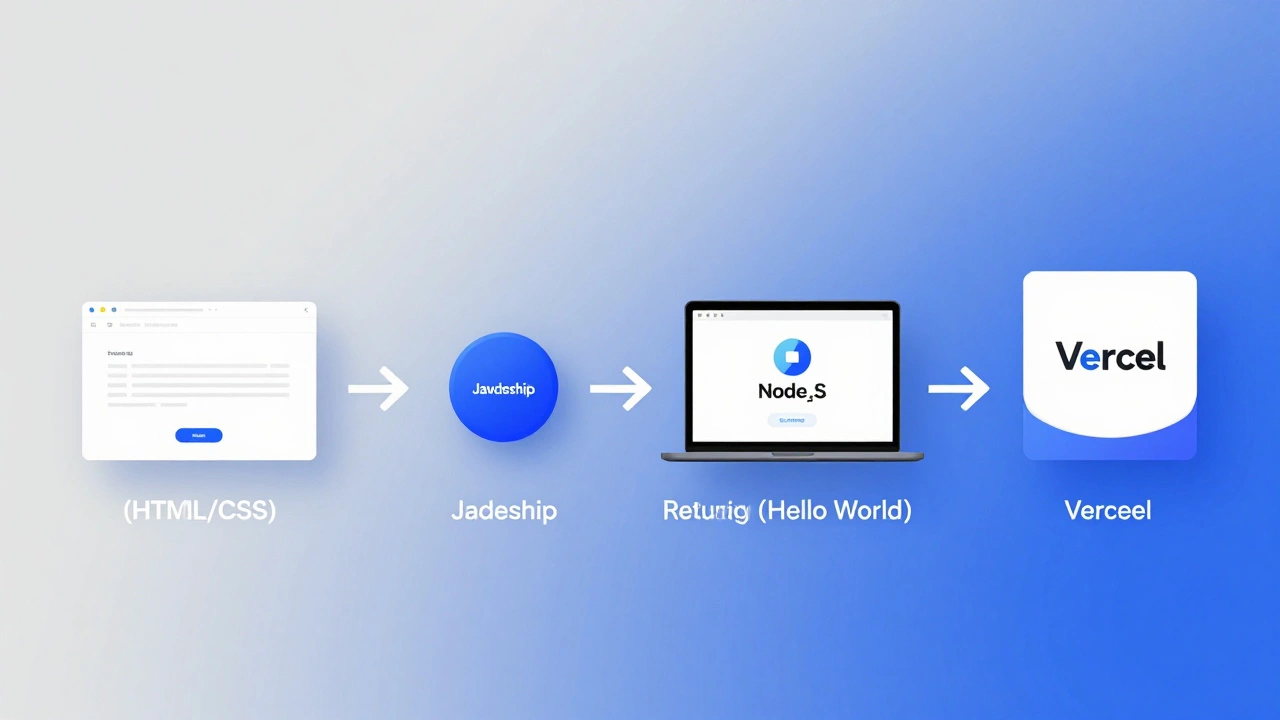
- HTML and CSS - make a static page
- JavaScript - add a button that changes color
- Node.js - create a server that returns "Hello World"
- SQLite or MongoDB - save a user’s name in a database
- Deploy your app on Render or Vercel - see it live online
That’s your first full stack app. It’s tiny. But it’s real. And it proves you can do this. After that, you add one new skill every few weeks. No need to rush. No need to compare yourself to someone who’s been coding for five years.
How long does it actually take?
There’s no magic number. Some people land their first job in 6 months. Others take 2 years. It depends on how much time you put in - not how smart you are.
If you spend 15 hours a week (about 2 hours a day, 5 days a week), you can go from zero to job-ready in about 8 to 12 months. That’s not a guess. It’s what I’ve seen from dozens of students in online bootcamps and self-taught developers in Leeds who’ve made the switch from retail, teaching, or admin jobs.
Here’s a realistic timeline:
- Months 1-3: Learn HTML, CSS, JavaScript. Build 3-5 static sites.
- Months 4-6: Learn a frontend framework (React or Vue). Build a todo app with local storage.
- Months 7-9: Learn backend basics with Node.js. Connect to a database. Build a simple API.
- Months 10-12: Combine front and back end. Build a full app - maybe a blog, a job board, or a weather app. Deploy it. Put it on your portfolio.
By month 12, you’re not a guru. But you’re qualified. You can apply for junior roles. You can freelance. You can build tools for your own business.
What skills do you actually need?
You don’t need to know every tool. You need to know the core ones well enough to get the job done. Here’s what most employers expect from a junior full stack developer in 2026:
| Area | Must-Know Tools | Why It Matters |
|---|---|---|
| Frontend | HTML, CSS, JavaScript, React | Users interact with this. If it’s slow or broken, they leave. |
| Backend | Node.js or Python (Django/Flask) | Handles data, logic, and user requests behind the scenes. |
| Database | MongoDB or PostgreSQL | Stores user data, posts, products - your app’s memory. |
| APIs | REST, basic GraphQL | Connects front and back end. Lets apps talk to each other. |
| Deployment | Vercel, Render, Netlify | You need to show your work. Hosting it yourself is a must. |
| Git & GitHub | Commits, branches, pull requests | Every team uses this. Not knowing it is a red flag. |
Notice what’s missing? No Java. No C++. No complex algorithms. No 10-hour coding interviews. Most junior roles care about whether you can build a working app - not whether you can solve a puzzle on a whiteboard.
What trips people up the most?
Here’s what I’ve seen go wrong for beginners:
- Switching frameworks every week. You start with React, try Svelte, then Vue, then Angular. You don’t master any. Stick with one for at least 6 months.
- Waiting to "feel ready." You’ll never feel ready. The only way to get there is by doing. Build something ugly. Launch it. Fix it later.
- Ignoring the basics. If you don’t understand how HTTP requests work, or how CSS positioning works, you’ll hit walls later. Don’t skip ahead.
- Not building a portfolio. No one cares about your certificate. They care about what you’ve built. Even 3 small projects are better than 10 courses.
Can you do this if you’re not a "tech person"?
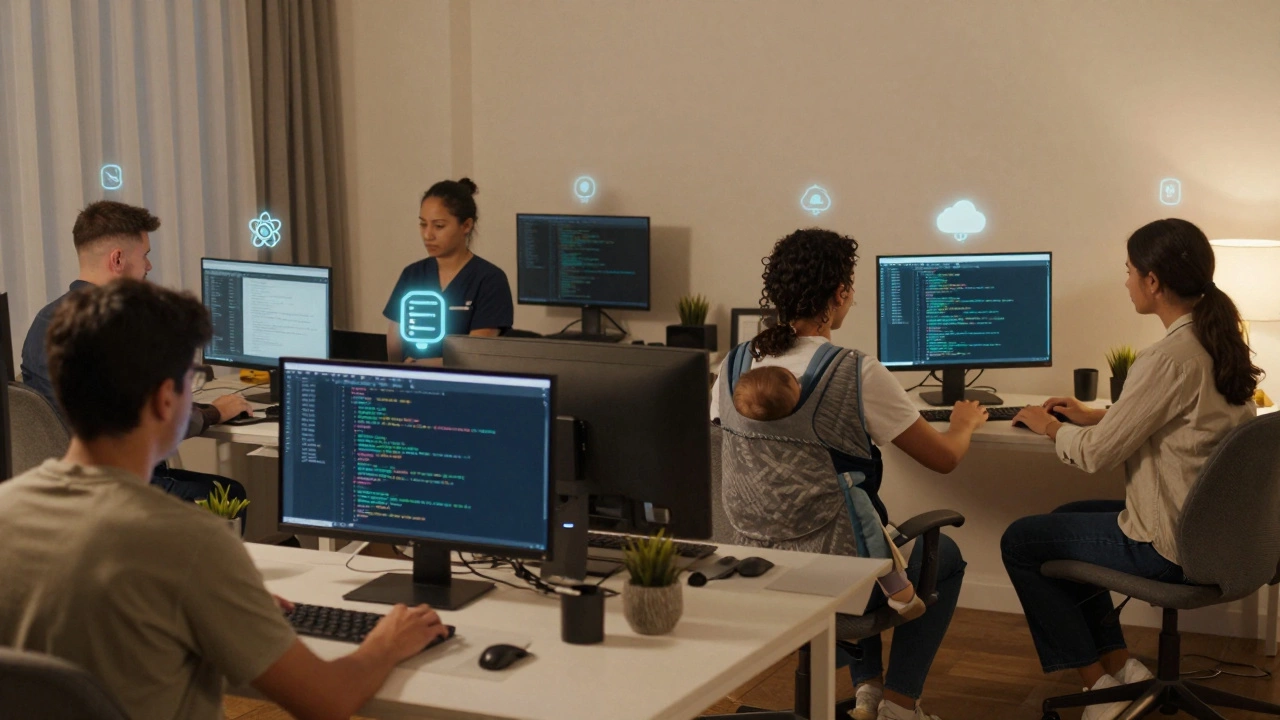
Yes. I’ve seen teachers, baristas, nurses, and stay-at-home parents become full stack developers. One woman I know started learning while caring for her newborn. She coded for 30 minutes a night. After 10 months, she built a simple booking app for local massage therapists. She now works freelance, earning £25/hour. She didn’t have a degree. She didn’t have a mentor. She just kept going.
You don’t need to be a genius. You need to be stubborn. You need to finish one thing before starting another. You need to accept that you’ll be bad at first - and that’s okay.
Where to start today
If you’re serious, here’s your 24-hour plan:
- Go to freeCodeCamp.org and complete the Responsive Web Design certification (takes about 6 hours).
- Watch one tutorial on YouTube: "Build a simple todo app with React and Node.js" (30 minutes).
- Install Node.js and VS Code on your computer (15 minutes).
- Copy the code from the tutorial. Don’t just watch - type it out. Even if you don’t understand everything yet.
- Run it. See it work. Take a screenshot.
- Post that screenshot on Reddit or Twitter with: "First full stack app. Took me 24 hours. Next step: add user login."
You just took your first step. That’s more than most people do.
Final thought: It’s not hard - it’s just different
Full stack isn’t hard because the tech is complex. It’s hard because it asks you to learn like a child again - slowly, messily, and without knowing the outcome. But every expert was once a beginner who didn’t quit. You don’t need to be the smartest. You just need to be the one who keeps going.
Is full stack developer still in demand in 2026?
Yes. Companies still need people who can build and maintain full apps without hiring separate frontend and backend teams. Smaller businesses, startups, and agencies especially value full stack developers because they’re more flexible and cost-effective. Job postings for "full stack" roles in the UK increased by 22% in 2025 compared to 2024, according to LinkedIn data.
Do I need a degree to become a full stack developer?
No. Most hiring managers in the UK now prioritize portfolios and practical skills over degrees. In fact, 68% of tech hiring managers in a 2025 survey said they’d hire a self-taught candidate over a graduate with no project experience. What matters is what you can build - not where you studied.
How much can a junior full stack developer earn in the UK?
In 2026, entry-level full stack developers in the UK earn between £30,000 and £42,000 per year, depending on location. In London, salaries are closer to £40,000-£48,000. Outside major cities, like Leeds or Manchester, you can expect £32,000-£38,000. Freelancers often charge £25-£50/hour.
Can I learn full stack while working a full-time job?
Absolutely. Most people do. You don’t need to quit your job. Even 10-15 hours a week - like watching tutorials on your commute or coding after dinner - adds up. One developer I know learned while working night shifts at a hospital. He built his portfolio over 14 months and landed a remote job without quitting his job until he was hired.
What’s the easiest way to start learning?
Start with freeCodeCamp’s Responsive Web Design course. It’s free, structured, and teaches you the foundation: HTML, CSS, and basic JavaScript. After that, build a personal website. Then, add a contact form that sends an email. Then, make it responsive on mobile. Each small win builds confidence. You don’t need a course. You need a project.
What if I get stuck and can’t solve a problem?
You will get stuck. Every developer does. The key isn’t avoiding it - it’s learning how to fix it. Use Google. Search the exact error message. Check Stack Overflow. Read the documentation. Ask in free coding communities like Dev.to or Reddit’s r/learnprogramming. Most problems you’ll face have already been solved. You just need to know where to look.
Next steps
If you’re ready to start, pick one thing: build a simple website. Add a button that changes color. Host it on Vercel. Share it with a friend. That’s your first win. Tomorrow, add one more thing. Maybe a form. Maybe a database. Keep going. You don’t need to be perfect. You just need to be persistent.