
Amazon Seller Profit Calculator
Product Details
Estimated Financials
Breakdown:
- Enter values to see breakdown
When you hear the word "Amazon," what comes to mind? Is it just that massive warehouse in your local town? Or is it the app on your phone where you order everything from toilet paper to televisions? The short answer is yes, Amazon is absolutely an e-commerce giant. But calling it simply "e-commerce" is like calling a Swiss Army knife a "blade." It’s technically true, but it misses the whole point of why the thing is so powerful.
To understand if Amazon fits the definition of e-commerce, we have to look at how it actually makes money and how it operates. It’s not just a store; it’s a complex ecosystem that has redefined how people shop online. Let’s break down exactly what Amazon is, how its different parts work together, and why it stands alone in the world of digital retail.
The Core Definition: What Makes Amazon E-commerce?
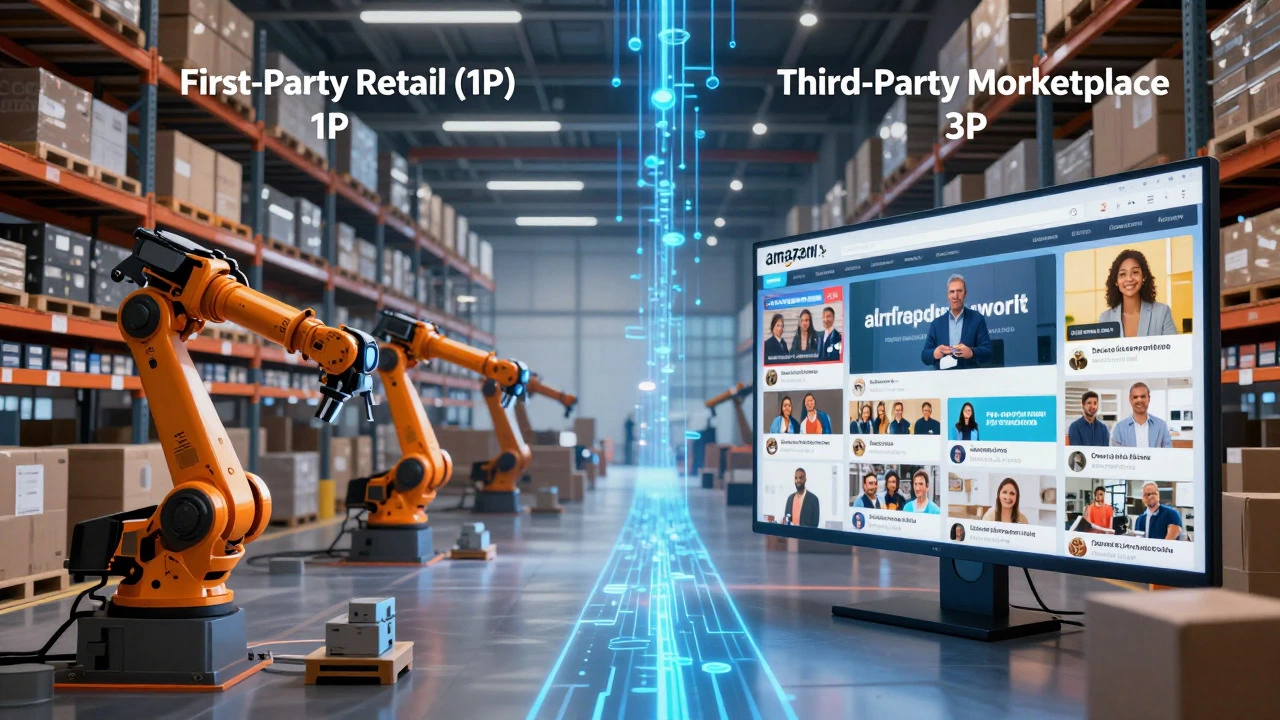
At its heart, e-commerce (electronic commerce) is the buying and selling of goods or services using the internet. By this definition, Amazon is the poster child for the industry. Founded by Jeff Bezos in 1994 as an online bookstore, it grew into the largest retailer in the world. But Amazon doesn’t just sell things directly to consumers. It operates on two main models that define modern e-commerce: First-Party Retail (1P) and Third-Party Marketplace (3P).
In the First-Party Retail model, Amazon acts like a traditional department store. They buy inventory from manufacturers, store it in their warehouses, and sell it directly to you. When you see "Ships from and sold by Amazon.com," you are dealing with this side of the business. This is classic B2C (Business-to-Consumer) e-commerce.
However, the bigger piece of the puzzle is the Third-Party Marketplace. Today, more than 60% of all units sold on Amazon come from independent sellers. These are small businesses, brands, and individuals who use Amazon’s platform to reach customers. Amazon takes a cut of each sale, plus fees for storage and shipping if they use their logistics network. This turns Amazon into a digital landlord, collecting rent from thousands of virtual storefronts under one roof.
Beyond Retail: The Service Layer
If Amazon were only about selling physical products, it would still be the biggest e-commerce player on Earth. But it went further. It realized that trust and speed are the biggest barriers in online shopping. So, it built infrastructure to solve those problems, creating new categories of e-commerce services.
Amazon Prime changed the game. Before Prime, free shipping was a perk. After Prime launched, it became an expectation. For a yearly fee, members get fast, free delivery, access to streaming video, music, and reading. This subscription model locks users into the ecosystem. You don’t just buy from Amazon because it’s cheap; you buy from them because you’ve already paid for the privilege of convenience. This is a brilliant example of service-based e-commerce driving product sales.
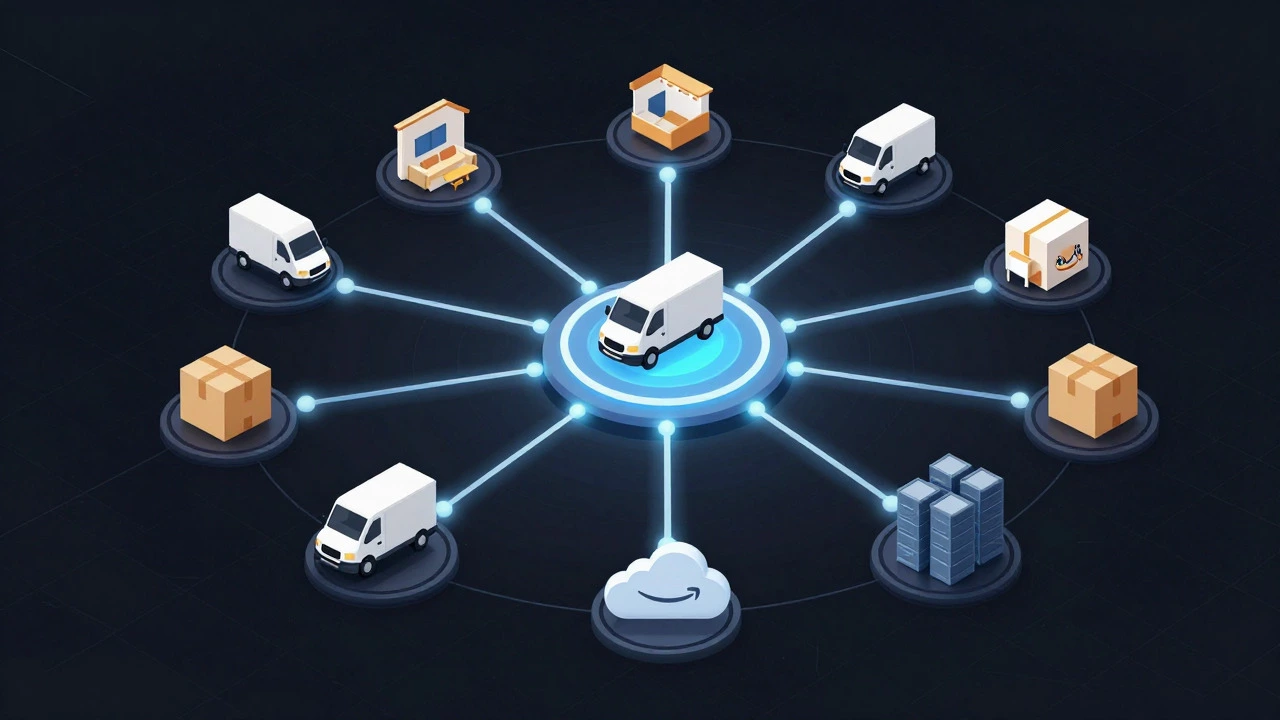
Then there’s Fulfillment by Amazon (FBA). This is where Amazon sells its logistical prowess to other businesses. Sellers send their products to Amazon’s warehouses. When a customer buys the item, Amazon picks, packs, and ships it. This allows small businesses to offer same-day or next-day delivery without owning a single truck or warehouse. FBA blurs the line between being a retailer and being a logistics provider, making Amazon essential to the supply chain of millions of other e-commerce companies.
Digital Goods and Content
E-commerce isn’t limited to boxes arriving at your door. A huge part of Amazon’s revenue comes from digital products. This includes eBooks through Kindle Direct Publishing, audiobooks via Audible, and software subscriptions.
Consider Amazon Web Services (AWS). While AWS is often categorized under technology or cloud computing, it is fundamentally an e-commerce transaction. Companies pay Amazon for server space, database management, and computing power on a usage basis. AWS powers a significant portion of the internet, including Netflix, Airbnb, and even parts of the US government. It proves that Amazon’s e-commerce engine can scale to serve other businesses (B2B) just as effectively as it serves individual shoppers (B2C).
How Amazon Compares to Other E-commerce Models
To really grasp Amazon’s position, it helps to compare it to other types of e-commerce platforms. Not all online stores are built the same way.
| Model Type | Example | Inventory Control | Primary Revenue Source |
|---|---|---|---|
| Direct-to-Consumer (DTC) | Glossier, Warby Parker | Brand owns inventory | Product margins |
| Marketplace | Amazon, eBay, Etsy | Sellers own inventory | Commissions & Fees |
| Hybrid | Walmart Online, Target | Mixed (Own + Seller) | Product margins + Fees |
| Subscription Box | Blue Apron, Birchbox | Curated inventory | Recurring subscriptions |
Amazon is unique because it dominates both the Marketplace and Hybrid columns. Most competitors pick one lane. eBay started as a pure marketplace but struggled to compete with Amazon’s logistics. Traditional retailers like Walmart tried to build marketplaces later but lacked the tech infrastructure. Amazon built the road, the cars, and the gas stations, then invited everyone else to drive on it.
The Impact on Small Businesses
Is Amazon good for e-commerce? That depends on who you ask. For consumers, it offers unparalleled choice and speed. For large brands, it provides instant global reach. But for small businesses, the relationship is complicated.
On one hand, Amazon gives small sellers access to millions of potential customers instantly. You don’t need to spend years building brand awareness or running expensive ad campaigns. If your product ranks well in Amazon’s search results, you can make sales from day one. Many entrepreneurs have launched successful careers solely through Amazon FBA.
On the other hand, the fees add up. Referral fees, closing fees, and storage costs can eat into profit margins significantly. Plus, you’re playing by Amazon’s rules. If your account gets suspended due to a policy violation, your entire business can stop overnight. This lack of control is a major concern for many e-commerce experts who advise diversifying sales channels.

Future Trends in Amazon’s E-commerce Strategy
As we move through 2026, Amazon continues to evolve. The rise of social commerce is pushing them to integrate shopping experiences into social media-like interfaces. Features like Live Shopping allow influencers to demonstrate products in real-time, bridging the gap between entertainment and purchasing.
Another big shift is sustainability. Consumers are increasingly conscious of the environmental impact of packaging and shipping. Amazon has invested heavily in electric delivery vans and plastic-free packaging initiatives. Whether these efforts keep pace with their growth remains to be seen, but it’s a critical area for future e-commerce credibility.
Artificial intelligence also plays a huge role. Amazon’s recommendation engine is legendary. It suggests products based on your browsing history, purchase behavior, and even how long you hover over an item. This personalization drives a significant portion of their sales, making AI a core component of their e-commerce strategy.
Key Takeaways for Online Shoppers and Sellers
Understanding that Amazon is more than just an online store changes how you interact with it. If you’re a shopper, recognize that you’re often buying from a third-party seller, not Amazon itself. Check seller ratings and return policies carefully. If you’re a seller, view Amazon as a powerful channel, not your entire business. Use it to generate cash flow, but build your brand elsewhere too.
Amazon’s dominance in e-commerce is built on a foundation of convenience, trust, and technological innovation. It’s not just a participant in the digital economy; it’s the infrastructure upon which much of it runs. From the moment you click "Buy Now" to the moment the package arrives, every step is optimized for efficiency. That’s why, when people ask if Amazon is e-commerce, the answer is a resounding yes-it’s the blueprint for the entire industry.
Is Amazon considered a B2C or B2B company?
Amazon is both. Its primary consumer-facing site is a B2C (Business-to-Consumer) operation. However, Amazon Business serves B2B clients, and AWS provides cloud services to other businesses, making it a major B2B player as well.
What percentage of Amazon sales come from third-party sellers?
As of recent reports, over 60% of all units sold on Amazon come from third-party sellers. This highlights the importance of the marketplace model in Amazon's overall success.
Does Amazon own the products it sells?
For first-party sales, yes, Amazon buys and owns the inventory. For third-party sales, the seller owns the inventory until it is sold. If the seller uses FBA, Amazon holds the inventory but does not own it.
How does Amazon make money from third-party sellers?
Amazon charges referral fees (a percentage of the sale price), closing fees for certain categories, and fulfillment fees if sellers use FBA. They also charge monthly subscription fees for professional seller accounts.
Is Amazon the only e-commerce platform?
No. There are many other platforms like Shopify, WooCommerce, eBay, Etsy, and Walmart Marketplace. Each serves different needs, such as niche markets or specific business models.