


Backend Technology Suitability Calculator
Select the options that best describe your project or career goals to find the most suitable technology.
Technology Match Analysis
PHP
Web StandardNode.js
Real-TimePython
AI / DataGo
PerformanceRecommended Technology:
----
It is July 2026, and if you are still hearing that PHP is dead, you are likely listening to people who stopped looking at the server logs five years ago. The narrative that PHP was dying peaked around 2015-2017, fueled by the rise of JavaScript on the backend and the hype surrounding Go and Rust. But here we are, nearly a decade later, and PHP powers roughly 75% of all websites with a known server-side programming language. That includes giants like Facebook (Meta), Wikipedia, Slack, and Etsy.
The question isn't whether PHP will survive-it already has. The real question is whether it remains relevant for new projects, modern enterprise architectures, and career growth in 2026 and beyond. To answer this, we need to look past the memes and examine the actual technical trajectory of the language, its ecosystem, and where it fits in the current web landscape.
The Technical Renaissance: What PHP 8.4 Brings to the Table
For years, PHP's reputation suffered because updates were slow and often introduced breaking changes that terrified legacy maintainers. That changed dramatically with the release of PHP 8.0 in late 2020, which introduced Just-In-Time (JIT) compilation, named arguments, and union types. Since then, the pace has accelerated, and by mid-2026, we are seeing the maturity of the PHP 8.x line.
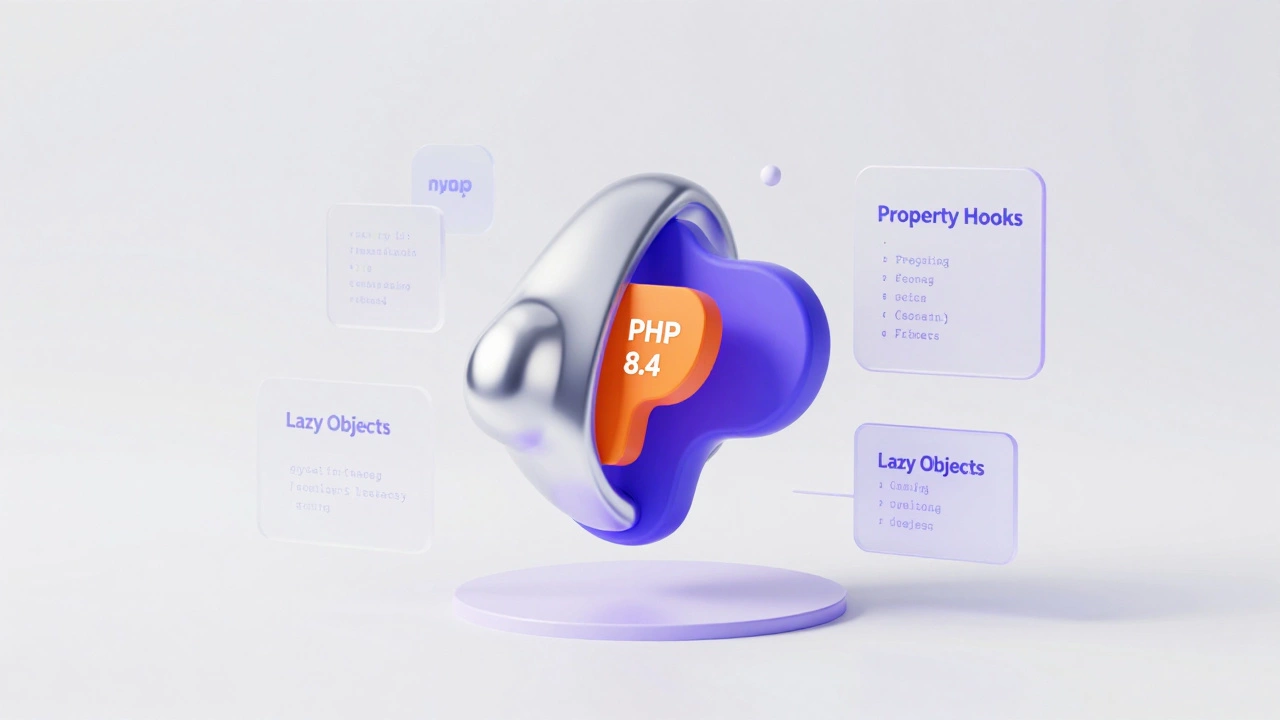
PHP 8.4, released earlier this year, focuses heavily on developer experience and performance stability rather than radical syntax shifts. Key improvements include:
- Property Hooks: This feature allows developers to define custom behavior when getting or setting object properties, similar to getters/setters but with cleaner syntax. It reduces boilerplate code significantly.
- Lazy Objects: Enhanced support for lazy loading objects improves memory efficiency in large applications, particularly those using dependency injection containers.
- Performance Gains: The Zend Engine continues to optimize opcode caching and memory management. In benchmarks, PHP 8.4 shows a 15-20% improvement in request throughput compared to PHP 8.2 for typical CRUD operations.
These aren't just incremental tweaks; they address long-standing pain points. Property hooks, for example, make data validation and transformation within models much more intuitive, reducing the need for external service layers in simple cases. For developers coming from languages like C# or Java, these features feel familiar, lowering the barrier to entry for enterprise teams.
The Ecosystem Maturity: Laravel, Symfony, and Beyond
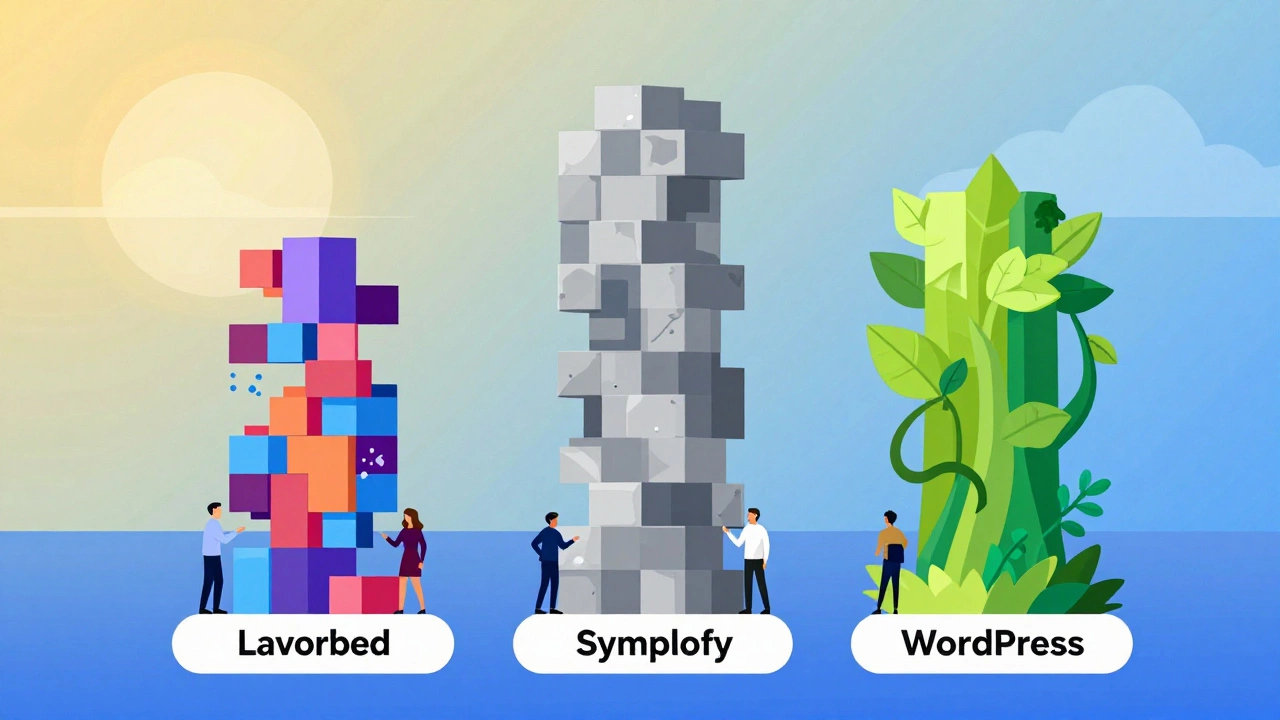
A language is only as good as its tools. PHP’s ecosystem has matured into one of the most robust in the web development world. Two frameworks dominate the conversation: Laravel and a PHP web framework following the model-view-controller architectural pattern and Symfony and a collection of reusable PHP components and a web application framework.
Laravel has become the de facto standard for rapid application development. Its expressive syntax, built-in authentication scaffolding, and powerful ORM (Eloquent) allow small teams to build complex SaaS products quickly. In 2026, Laravel 12 integrates even deeper with modern frontend tooling via Blade components and Livewire, allowing full-stack development without leaving the PHP environment.
Symfony, on the other hand, remains the backbone of enterprise applications. Many large-scale systems, including parts of WordPress core and Drupal, rely on Symfony components. Its modular architecture makes it ideal for microservices and long-term maintainability. Companies choose Symfony when they need strict standards, extensive testing libraries, and a component-based approach that can be reused across different projects.
Then there is WordPress. Often dismissed by hardcore developers, WordPress runs over 40% of the web. While it is not a pure PHP framework, its plugin architecture and theme system drive massive demand for PHP skills. Customizing WordPress themes, building plugins, and optimizing database queries for high-traffic sites requires deep PHP knowledge. Ignoring WordPress is ignoring a huge segment of the market.
Performance and Scalability: Debunking the Myths
Critics often argue that PHP is slower than Node.js, Go, or Python. In raw benchmark tests for CPU-intensive tasks, this might hold true. However, web development is rarely about pure CPU power; it is about I/O operations, database queries, and caching strategies.
Modern PHP applications leverage OPcache extensively, meaning scripts are compiled once and stored in memory. Subsequent requests execute near-native speed. When combined with technologies like Redis for session storage and Memcached for object caching, PHP applications can handle tens of thousands of requests per second.
Consider Meta (Facebook). They started with PHP, moved to Hack (a dialect of PHP), and continue to use HHVM (HipHop Virtual Machine) for execution. Their scale proves that PHP, when optimized correctly, can handle billions of daily active users. For most businesses, the bottleneck is not PHP itself but inefficient database design or lack of proper caching.
| Technology | Learning Curve | Development Speed | Scalability | Ecosystem Maturity |
|---|---|---|---|---|
| PHP | Low to Medium | High | High (with caching) | Very High |
| Node.js | Medium | Medium | Very High | High |
| Python | Low | Medium | Medium | High |
| Go | High | Low | Very High | Medium |
This table highlights that PHP offers a unique balance. It may not be the fastest in raw concurrency like Go, nor does it have the unified language advantage of Node.js. But it provides the highest development speed for traditional web applications due to its rich standard library and mature frameworks.
The Job Market and Career Prospects
If you are considering learning PHP or transitioning your team, job availability is a critical factor. As of 2026, PHP jobs remain abundant, particularly in three areas:
- Legacy Maintenance: Millions of lines of PHP code exist in production. Companies need developers to refactor, secure, and update these systems. This work pays well because it requires patience and deep understanding of older versions (PHP 7.x).
- New Laravel/Symfony Projects: Startups and agencies continue to choose PHP for MVPs and medium-complexity applications due to cost-effectiveness and speed. Junior to mid-level roles are plentiful here.
- WordPress Specialist Roles: Agencies specializing in WordPress need developers who can go beyond basic theme editing. Building custom plugins, integrating headless CMS architectures, and optimizing performance are high-demand skills.
Salaries for senior PHP developers in major tech hubs remain competitive, often matching or exceeding those of junior Node.js or React developers. The key is specialization. A generalist "web developer" earns less than a specialist in "Laravel API development" or "Symfony Microservices."
Challenges and Limitations
No technology is perfect. PHP faces genuine challenges that developers must acknowledge.
Inconsistent Standard Library: While improved, PHP’s standard library still feels disjointed compared to languages like Python or Ruby. Function naming conventions vary, and some utilities require third-party packages. This can lead to "dependency hell" if not managed carefully with Composer.
Concurrency Model: PHP is inherently synchronous and request-based. Each request spawns a new process or thread. This makes it less suitable for real-time applications like chat servers or live bidding systems, where WebSockets and event-driven architectures (common in Node.js) shine. However, solutions like Swoole and ReactPHP bring asynchronous capabilities to PHP, though they add complexity.
Perception Bias: Despite its technical merits, PHP suffers from image issues. Some hiring managers and clients associate it with outdated, insecure websites. Developers must be prepared to justify their choice with data, focusing on security practices (prepared statements, CSRF protection) and modern tooling.
Future Outlook: Where Is PHP Heading?
Looking ahead to 2027 and beyond, PHP is likely to evolve into a specialized tool rather than a universal solution. It will remain dominant in content management, e-commerce (via WooCommerce and Magento), and traditional server-rendered web applications.
We expect continued integration with modern frontend frameworks. The trend toward "Full-Stack PHP" using tools like Livewire, Alpine.js, and HTMX allows developers to build interactive interfaces without managing a separate JavaScript build pipeline. This hybrid approach appeals to teams wanting simplicity without sacrificing user experience.
Additionally, AI-assisted coding tools are becoming proficient in PHP. GitHub Copilot and similar assistants provide excellent autocomplete and refactoring suggestions for PHP, boosting productivity further. This means PHP developers can write cleaner, more secure code faster, narrowing the gap with newer languages.
Conclusion: Should You Use PHP?
Yes, but with intention. If you are building a high-frequency trading platform or a real-time multiplayer game, PHP is not the right choice. Look at Go, Rust, or Node.js instead. But if you are building a blog, an e-commerce store, a SaaS dashboard, or a corporate website, PHP remains one of the best options available.
Its future is secure because it adapts. It embraces modern standards (PSR), improves performance continuously, and maintains a vast community. The "death of PHP" was never a reality; it was a correction of hype. Today, PHP is a stable, productive, and powerful tool for web development. Embrace it, learn its modern idioms, and leverage its ecosystem to build better software.
Is PHP still used in 2026?
Yes, absolutely. PHP powers approximately 75% of all websites with a known server-side language. Major platforms like Facebook, Wikipedia, and Slack rely on PHP or its derivatives. It remains a top choice for content management systems, e-commerce platforms, and custom web applications due to its ease of deployment and rich ecosystem.
What is the latest version of PHP in 2026?
As of mid-2026, the latest stable version is PHP 8.4. It introduces significant improvements such as property hooks, enhanced lazy objects, and further performance optimizations in the Zend Engine. PHP 8.3 is also widely supported and receives security updates.
Is PHP faster than Node.js?
It depends on the workload. For traditional request-response web applications involving database queries and HTML rendering, PHP with OPcache is extremely fast and efficient. Node.js excels in I/O-bound, real-time applications requiring high concurrency and WebSocket connections. For most business applications, PHP's performance is more than sufficient and often easier to optimize through caching.
Should I learn PHP in 2026 if I'm a beginner?
Yes, especially if you want to get hired quickly or build freelance projects. PHP has a low barrier to entry, abundant learning resources, and high demand in the job market for both legacy maintenance and new Laravel/Symfony projects. It teaches fundamental web development concepts effectively before moving to more complex architectures.
What frameworks should I learn for modern PHP development?
Focus on Laravel for rapid application development, startups, and agencies. Learn Symfony if you are interested in enterprise-level applications, microservices, or contributing to larger open-source projects. Additionally, familiarity with WordPress development is highly valuable for freelance opportunities and content-heavy websites.
Can PHP handle real-time applications?
Traditionally, no, as PHP is request-based. However, extensions like Swoole and frameworks like ReactPHP enable asynchronous, event-driven programming in PHP. These allow for real-time features like chat and notifications, though they add complexity. For dedicated real-time services, many developers still prefer Node.js or Go, but PHP is capable with the right tools.