

Web Developer Salary Calculator
Specialization and location significantly impact your earning potential. According to the article:
These skills provide the highest salary premiums. Developers with these skills earn 22-35% more than generalists.
Location also matters: London developers earn 20% more than other UK cities, while remote work allows you to earn international rates.
Estimated Annual Salary
£X,XXX - £X,XXX
This is based on your current profile and industry data from 2026. Keep in mind that:
- Freelancers typically earn more but require additional administrative work
- Specialized skills increase your value by up to 35%
- Location impacts your earning potential by 20-30%
Let’s cut through the noise: yes, web developers make good money-but not everyone does. The difference isn’t just about skill. It’s about specialization, location, and how you position yourself in the market. If you’re thinking about learning to code, you’re not just signing up for a job. You’re signing up for a career that can pay anywhere from £25,000 to over £100,000 a year. And that gap? It’s wider than most people admit.
What web developers actually earn in 2026
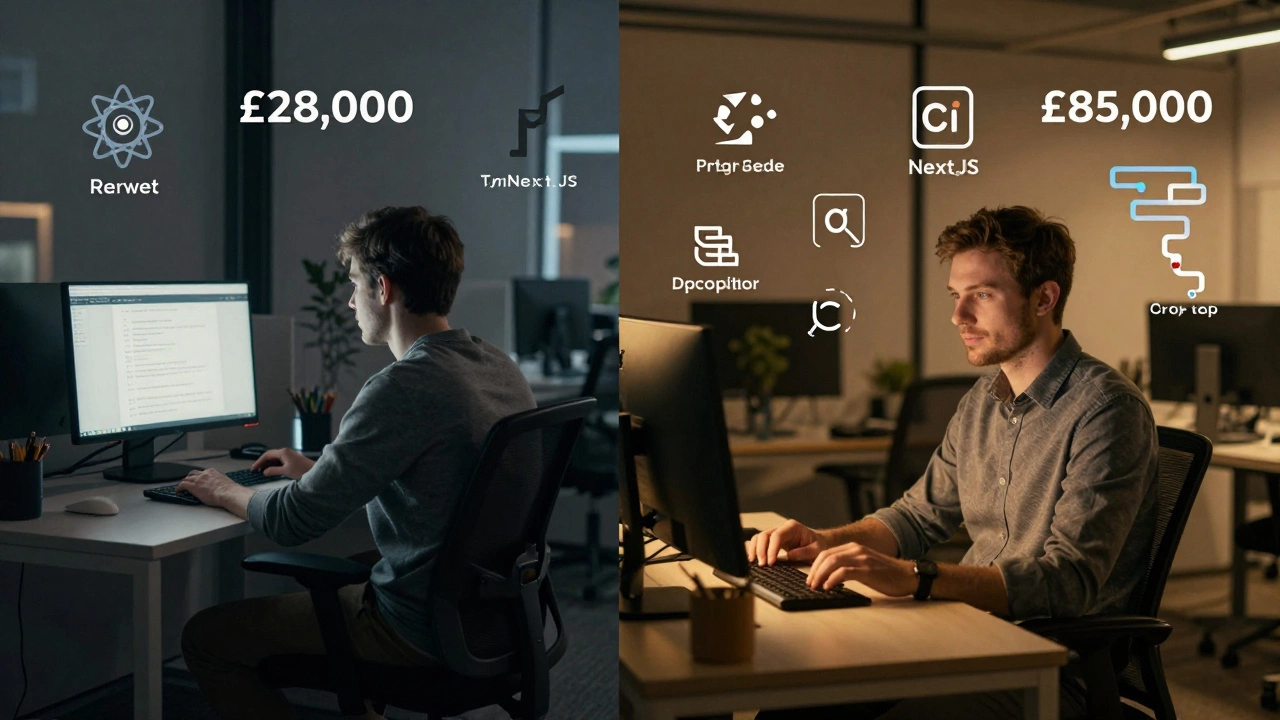
In the UK, entry-level web developers earn between £25,000 and £35,000. That’s not bad for someone just out of a bootcamp or a degree. But if you’ve got two years of experience and can build responsive, accessible websites with React or Vue, you’re looking at £40,000-£55,000. Senior developers in London or Manchester with full-stack skills-handling both frontend and backend-are routinely hitting £65,000. Specialize in performance optimization, security, or complex state management, and you can push past £80,000.
Freelancers have a different path. Top-tier freelancers charge £50-£120 an hour. That’s not rare. It’s routine for those who build custom Shopify stores, SaaS dashboards, or high-traffic WordPress sites. One developer in Leeds I spoke with last year made £92,000 working 3 days a week. How? He didn’t take every job. He focused on clients who needed bulletproof, scalable code-and he priced himself accordingly.
Why some web devs earn less-and how to avoid it
Not all web developers are paid well. And the reason isn’t always the economy. Too many developers stick to basic HTML, CSS, and a little JavaScript. They build landing pages. They tweak WordPress themes. They work for agencies that treat them like disposable labor. These roles pay £28,000-£32,000. They’re stable, sure. But they’re also dead ends.
The real money goes to those who solve hard problems. Who understand APIs. Who can debug performance bottlenecks in production. Who know how to structure data for scalability. Who can explain why a component renders slowly and fix it in under an hour. If you’re still learning how to center a div with Flexbox, you’re not ready for the top tier. And that’s okay-but don’t stop there.
Specialization is the key to higher pay
Generalists are getting squeezed. The market doesn’t need another person who can build a basic portfolio site. It needs experts.
- Frontend specialists who master accessibility, animations, and complex state (React, Svelte, SolidJS) earn 20-30% more than generalists.
- Backend developers who work with Node.js, Python (Django), or Go, and understand databases like PostgreSQL or MongoDB, are in high demand.
- Full-stack developers who can ship end-to-end features-from database schema to UI-command premium rates. They’re the glue between teams.
- DevOps engineers with CI/CD pipeline experience and cloud deployment (AWS, Vercel, Netlify) are seeing salaries jump past £70,000 even at mid-level.
One developer I know started as a junior front-end dev. After six months of focused learning, he built a custom animation library and open-sourced it. Within a year, he was hired by a fintech startup for £68,000. He didn’t just code. He created value others couldn’t ignore.

Location matters-more than you think
London still leads in salary, with average roles paying £55,000-£75,000. But remote work has changed the game. Companies in the US and Germany now hire UK-based developers at rates that beat local averages. A developer in Leeds can earn £60,000 working for a Berlin-based startup, while living half the cost of London.
Smaller cities like Leeds, Bristol, or Edinburgh offer lower living costs and solid opportunities. Many startups there pay £45,000-£55,000 for experienced devs. And because they’re not competing with London’s hype, they often offer better work-life balance.
Freelancing vs. full-time: which pays more?
Freelancers have higher earning potential-but more risk. You need clients, invoices, taxes, and insurance. But if you’re disciplined, the math works.
A full-time senior dev in Leeds might earn £58,000. A freelancer charging £70/hour and working 25 hours a week makes £91,000 annually. That’s 57% more. But that freelancer also spends 10 hours a week on admin, pitching, and unpaid revisions. So net? More like £70,000-£75,000 after expenses.
Here’s the catch: freelancers who build systems-like automated workflows, reusable components, or productized services (e.g., “I’ll build your Shopify store in 7 days for £3,500”)-can scale beyond time-for-money. They stop trading hours for cash and start building assets. That’s where real wealth happens.
What skills pay the most right now?
Here’s what companies are actually paying for in 2026:
| Skill | Average Salary Premium | Why It Matters |
|---|---|---|
| React + TypeScript | +28% | TypeScript catches bugs before runtime. Companies trust devs who write safer code. |
| Next.js | +35% | It’s the default framework for SEO-heavy sites. Every e-commerce brand wants it. |
| GraphQL | +22% | Reduces API calls, speeds up apps. Used by 67% of mid-sized SaaS products. |
| PostgreSQL + Prisma | +25% | Reliable, scalable data layer. Still beats MySQL in enterprise apps. |
| CI/CD Pipelines (GitHub Actions, Vercel) | +30% | Deploying code automatically is now expected. Not a bonus. A requirement. |
These aren’t buzzwords. They’re tools that save companies time, money, and headaches. Learn them, and you’re not just another coder. You’re a problem-solver.
How to get started without wasting time
You don’t need a four-year degree. You don’t need to learn every framework. You need focus.
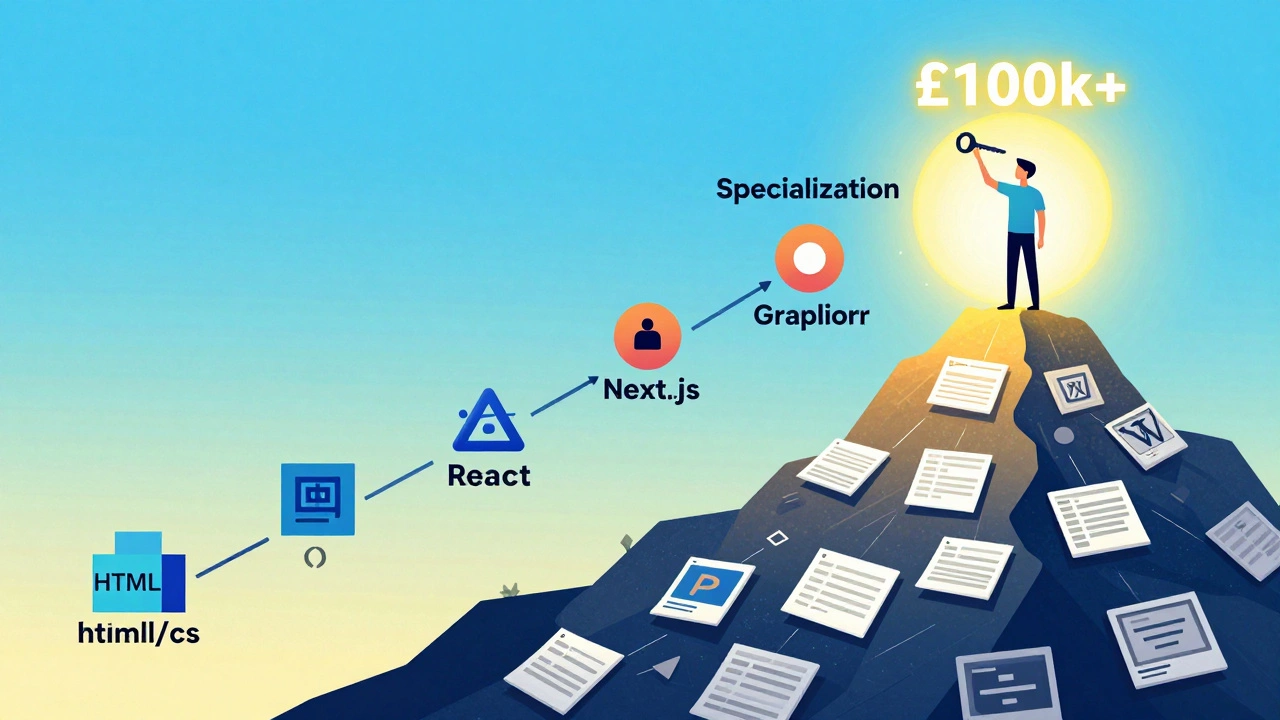
- Start with HTML, CSS, and JavaScript. Build 3 real projects: a personal site, a weather app, and a todo list with local storage.
- Learn React and TypeScript. Build one app that fetches data from a public API (like GitHub or OpenWeather).
- Learn Next.js. Deploy it on Vercel. Make sure it loads fast and works on mobile.
- Learn how databases work. Use PostgreSQL and Prisma to build a simple blog with user comments.
- Learn CI/CD. Set up GitHub Actions to auto-deploy your site on every push.
That’s it. Five steps. Six months of consistent work. You’ll have more skills than 80% of applicants.
Is web development still worth it in 2026?
Yes-but only if you treat it like a craft, not a job. The days of “learn HTML, get hired, coast for 10 years” are over. The market rewards those who keep learning, who ship real things, and who solve hard problems.
Web development isn’t a guaranteed path to riches. But it’s one of the few tech fields where someone with no connections, no degree, and no background can still build a six-figure career. All it takes is the willingness to go deeper than the surface.
Do web developers make more than software engineers?
It depends on the role. A senior web developer with full-stack skills often earns the same as a mid-level software engineer. But engineers working on embedded systems, AI, or infrastructure typically earn more. Web developers focus on user-facing applications, while software engineers often work on core systems. If you’re good at web dev, you can match or exceed engineer salaries-especially in startups or agencies.
Can I become a web developer without a degree?
Absolutely. Most hiring managers now care more about your portfolio than your diploma. Companies like Google, Apple, and Shopify hire developers without degrees. What matters is whether you can build something real, explain how it works, and fix bugs under pressure. Build 3 strong projects, contribute to open source, and you’ll compete with any graduate.
Is freelance web development stable?
Stability comes from systems, not clients. If you rely on one-off gigs, it’s unpredictable. But if you create productized services-like a fixed-price Shopify store package or a monthly maintenance retainer-you can build recurring income. Many successful freelancers have 3-5 retainer clients who pay them every month. That’s more stable than most full-time jobs.
Which programming languages pay the most for web devs?
TypeScript is king for frontend. JavaScript is still everywhere, but TypeScript is now the standard in professional teams. For backend, Node.js (JavaScript/TypeScript) and Python (Django, FastAPI) lead. Go is rising fast in high-performance systems. Rust is rare in web dev but commands premium rates when used in performance-critical apps. Learn TypeScript first. Then pick one backend language and master it.
How long does it take to start earning good money as a web developer?
With focused effort, you can land your first job in 6-9 months. But “good money” means £45,000+. That usually takes 18-24 months of consistent work, learning, and building. The fastest earners are those who don’t wait to be “ready.” They build, ship, get feedback, and repeat. Speed matters more than perfection.
Web development isn’t about luck. It’s about choices. Choose depth over breadth. Choose projects over tutorials. Choose solving problems over memorizing syntax. The money follows.