
Career Timeline Calculator
Your Coding Timeline Estimate
Calculate how long it will take you to become job-ready in full stack development based on your available study hours per week. The article suggests 6-9 months with 10-15 hours/week.
Your Timeline Estimate
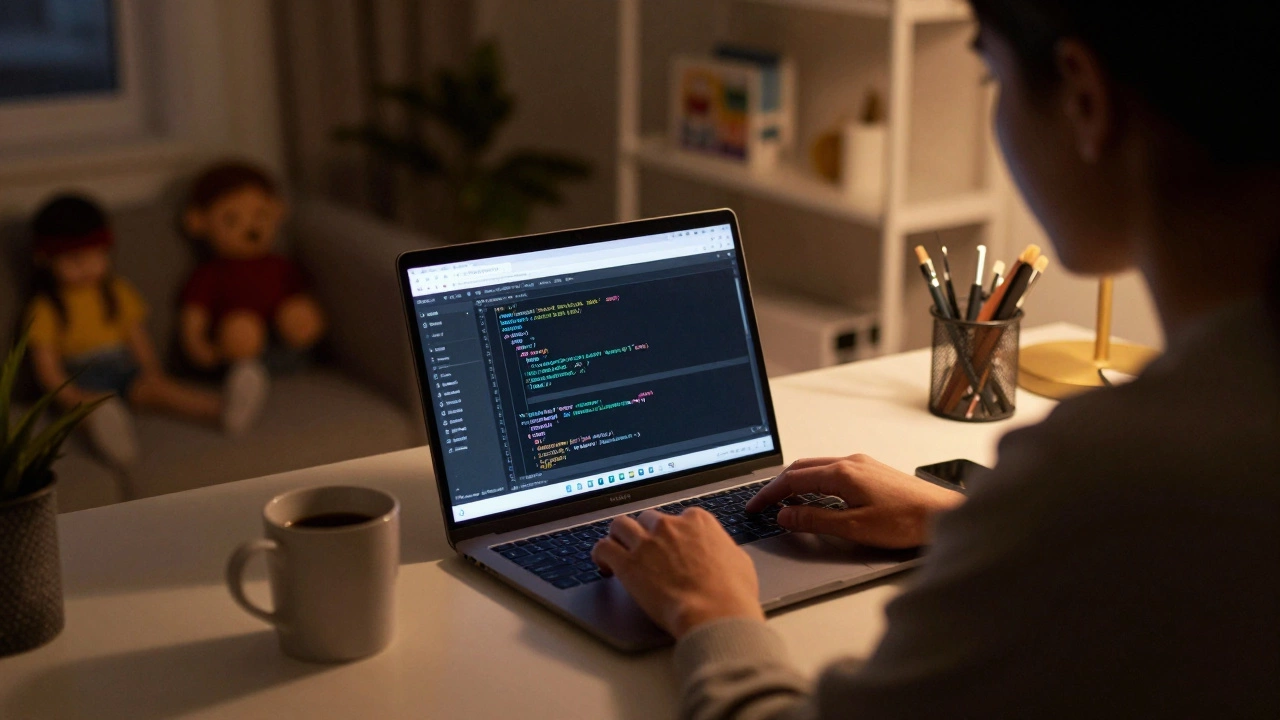
You’re 30. You’ve got a steady job, maybe a mortgage, kids, or a routine that feels locked in. Then you think: can you start coding at 30? The answer isn’t yes or no-it’s yes, and here’s how it actually works.
It’s not about age. It’s about momentum.
People say you need to start coding in your teens to succeed. That’s a myth built by Silicon Valley influencers who had free time, no bills, and parents who paid for their rent. The truth? Most full stack developers who switched careers after 30 didn’t start with a computer science degree. They started with a free Codecademy lesson at 11 p.m. after putting the kids to bed.
Take Maria, 32, former office manager. She spent three months learning HTML and CSS on weekends. By month four, she built a simple portfolio site for a local bakery. That got her a freelance gig. Six months later, she landed a junior full stack role at a startup. She didn’t know what a REST API was at 30. Now she deploys Node.js apps on AWS.
Age doesn’t block you. Lack of consistent action does.
What you actually need to learn (and what you can skip)
You don’t need to memorize every algorithm from a 500-page textbook. You don’t need to learn every framework. Full stack development in 2026 is about solving real problems with tools that work.
Here’s the real roadmap for someone starting at 30:
- HTML and CSS - Build static pages. Make them look good on mobile. This is your foundation.
- JavaScript - Learn how to make things interactive. Focus on modern ES6+ syntax. Skip jQuery.
- React - The most common frontend library today. Learn components, state, and props. Don’t get stuck in tutorial hell-build one real app.
- Node.js and Express - This is your backend. Learn how to create an API that talks to your frontend.
- Database basics - Use PostgreSQL or MongoDB. Learn how to store and retrieve data. You don’t need to be a DBA.
- Git and deployment - Push code to GitHub. Deploy a simple app to Vercel or Render. This is non-negotiable.
That’s it. No Python, no Ruby on Rails, no Java. Just these six things. You can learn them in 6-9 months with 10-15 hours a week. That’s less time than most people spend scrolling TikTok.
Why you have advantages over 20-year-olds
You think being older means you’re behind. Actually, you’re ahead in ways you don’t realize.
At 30, you’ve probably:
- Worked in a team and know how to communicate
- Managed deadlines and priorities
- Dealt with frustrated clients or bosses
- Learned how to learn something hard (like taxes, parenting, or car repairs)
Twenty-year-olds are often brilliant at syntax but clueless about scope, deadlines, or client feedback. You’re not. You’ve already mastered the soft skills that make developers valuable.
Companies hiring full stack developers after 30 aren’t looking for prodigies. They’re looking for people who can ship code, fix bugs, and talk to designers without eye rolls. You already have that.
The biggest mistake people make after 30
They wait for the perfect course. They buy every Udemy bundle. They join 12 Discord servers. They watch YouTube tutorials for six months without writing a single line of code.
Here’s the brutal truth: you learn to code by coding. Not by watching. Not by reading. By doing.
Build something dumb. A to-do list that saves to a database. A weather app that pulls data from an API. A blog where you can post and delete entries. Doesn’t matter if it’s ugly. It matters that it works.
That first project? It’s your proof. It’s your portfolio. It’s your ticket to your first interview.
Don’t wait for confidence. Build until you have it.
How to get hired without experience
You don’t need a degree. You don’t need to have worked at Google. You need three things:
- A GitHub profile with 3-5 real projects
- A simple website that shows your work (even if it’s just a single page)
- A LinkedIn profile that says “Full Stack Developer” and lists your skills
Apply to junior roles. Apply to startups. Apply to companies that don’t care about your resume-they care about your code. Use filters like “entry level,” “remote,” “no degree required.”
One person I know, 34, got hired at a health tech startup after sending a cold email with a link to his GitHub. He’d built a medication tracker app. The founder tested it. Liked it. Hired him on the spot.
You don’t need to be the best coder. You just need to be the one who actually shipped something.
What your first job will really look like
Your first full stack role won’t be building AI models or scaling to millions of users. It’ll be:
- Fixing broken buttons on a WordPress site
- Updating a contact form that stopped sending emails
- Adding a new page to a client’s Shopify store
- Writing a simple API endpoint for a mobile app
That’s okay. That’s how everyone starts. The people who become senior developers didn’t begin with complex systems. They began with fixing typos.
Don’t look down on small tasks. They’re your training ground.

What happens after you land the job
Once you’re in, you’ll learn faster than you ever thought possible. You’ll sit next to developers who’ve been coding for 15 years. You’ll ask questions. You’ll make mistakes. You’ll feel like an imposter.
That’s normal.
Here’s what changes after six months: you stop thinking about your age. You stop comparing yourself to 22-year-olds. You start thinking about how to solve problems better. You start writing cleaner code. You start mentoring interns.
At 35, you won’t be the youngest on the team. But you’ll be one of the most reliable.
Real stories, real results
James, 31, was a high school teacher. He spent evenings learning React and Node.js. After 10 months, he built a classroom attendance tracker. He showed it to a local tech nonprofit. They hired him part-time. A year later, he’s full-time as a full stack developer.
Lisa, 36, left her job in accounting to code. She took a $20/hour freelance gig fixing WordPress sites. She did 20 of them. Then she built a custom CRM for a small law firm. They paid her $5,000. She quit her job three months later.
These aren’t outliers. They’re people who decided to act instead of wait.
Final question: What’s stopping you?
Is it time? You have more time than you think. Even 10 hours a week adds up to 520 hours a year. That’s enough to go from zero to job-ready.
Is it fear? Everyone’s afraid. The difference is, some people do it anyway.
Is it money? Free resources exist: freeCodeCamp, The Odin Project, YouTube tutorials from Traversy Media and Web Dev Simplified. You don’t need to spend a dime.
You don’t need permission. You don’t need to be young. You don’t need a degree.
You just need to open your editor, type your first line of code, and keep going.
Start today. Not tomorrow. Not next month. Today.
Is it too late to become a full stack developer at 30?
No. Many full stack developers started in their 30s, 40s, and even 50s. What matters is consistent practice, building real projects, and showing what you can do-not your age. Companies care about results, not birth certificates.
How long does it take to get a job after starting at 30?
Most people land their first job in 6 to 12 months if they study 10-15 hours per week and build at least 3 solid projects. The key isn’t speed-it’s showing you can ship working code. Many get hired faster if they start freelancing or contributing to open source early.
Do I need a computer science degree?
No. Less than 20% of full stack developers in 2026 have a CS degree. Employers care about your portfolio, problem-solving skills, and ability to work in a team. A GitHub profile with clean, functional code matters more than a diploma.
What’s the easiest way to start learning?
Start with freeCodeCamp’s Responsive Web Design and JavaScript Algorithms certifications. Then move to The Odin Project’s full stack path. Build one small project every week. Don’t wait until you feel ready. Build while you learn.
Can I do this while working full-time?
Yes. Most people who switch careers after 30 do it while working. It takes discipline, but 1-2 hours a night and 4-6 hours on weekends is enough. Focus on consistency, not intensity. Progress adds up faster than you think.
Will I earn less as a beginner over 30?
Initially, yes-junior roles pay less regardless of age. But because you bring life experience, communication skills, and reliability, you often get promoted faster than younger peers. Many people in their mid-30s reach mid-level salaries within 2-3 years.