

PHP used to be the backbone of the web. Back in the early 2000s, if you wanted a website, you used PHP. WordPress, Facebook, Wikipedia, and Yahoo all ran on it. But somewhere between 2015 and 2020, something changed. Developers started walking away. Not because PHP broke - it didn’t. But because the world around it moved faster than it could keep up.
PHP Was Never Designed for Modern Web Apps
PHP started in 1994 as a simple tool to count website visitors. It was never meant to power complex applications. That’s why early PHP code looked like a mess - functions scattered everywhere, global variables everywhere, no clear structure. Developers learned to work around it, not because they wanted to, but because they had to.
Compare that to modern frameworks like Laravel, Ruby on Rails, or Node.js. They enforce structure. They have clear patterns for handling data, authentication, routing, and APIs. PHP didn’t offer that until much later. Even then, it felt like retrofitting a horse-drawn cart with a jet engine.
The Rise of Better Tools Made PHP Look Outdated
By 2012, JavaScript wasn’t just for buttons anymore. Node.js let developers use the same language on the server and the client. That meant less context switching. Less learning. Less overhead. Companies started hiring full-stack JavaScript devs instead of PHP specialists.
Meanwhile, Python’s Django and Flask offered clean syntax, strong documentation, and built-in security features. Go came in with speed and simplicity for APIs. Even Java, once seen as bloated, got leaner with Spring Boot. PHP didn’t evolve fast enough to compete on developer experience.
It wasn’t just about performance - though PHP 7 did make big leaps in speed - it was about how easy it was to build and maintain apps over time. Teams grew. Projects got complex. PHP’s loose typing and inconsistent function names became liabilities, not features.
Security Was a Constant Headache
Remember when every PHP site got hacked? SQL injection, cross-site scripting, file uploads gone wrong - it was common. Why? Because PHP made it too easy to write insecure code. Functions like mysql_query() were built-in, and beginners didn’t know better.
Even after MySQLi and PDO came along, the damage was done. Developers learned to fear PHP. Clients asked, “Is this secure?” with skepticism. Other languages had security baked in - Rails had CSRF protection by default, Django had template escaping, Express had middleware guards. PHP? You had to remember to turn it on yourself.
By 2020, security audits became a standard part of hiring. PHP projects often needed a full rewrite just to pass basic checks. That’s expensive. That’s risky. That’s why many companies chose to rebuild in safer languages instead of patching PHP.
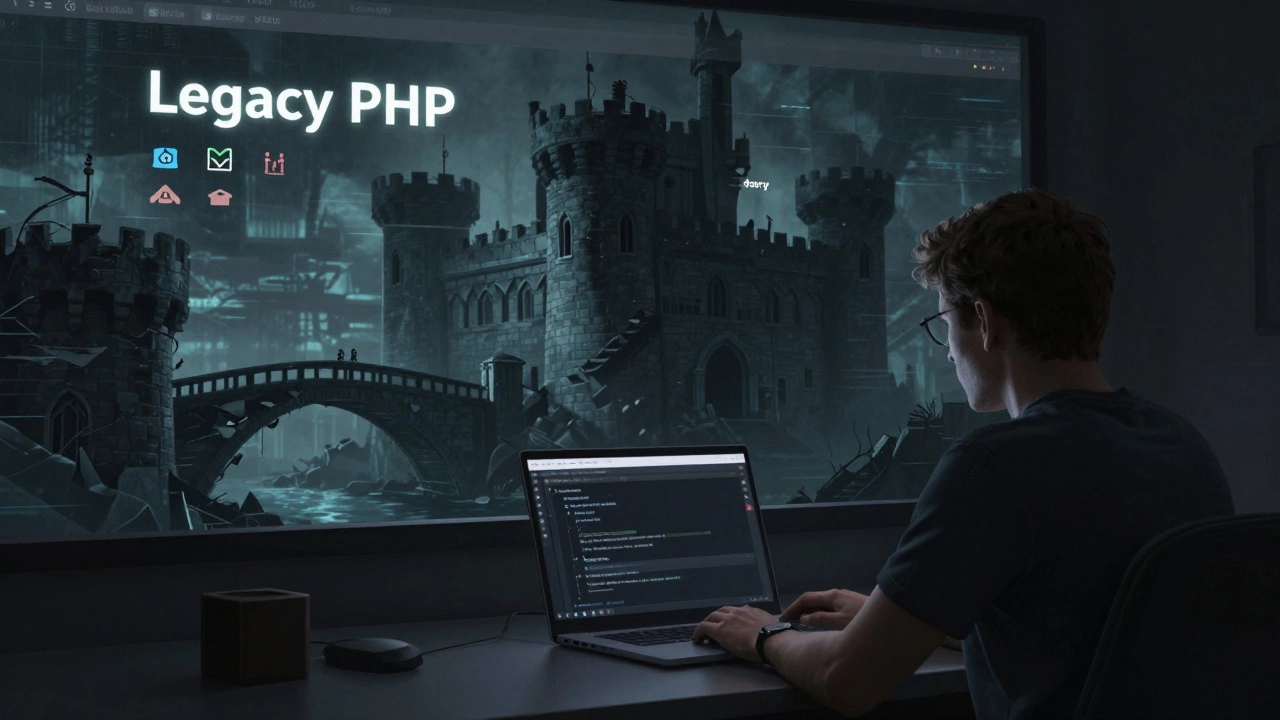
PHP’s Ecosystem Fragmented
There were too many ways to do the same thing. Need a database connection? Use mysqli, PDO, or a custom wrapper. Need routing? Roll your own, use Symfony, use Laravel, use CodeIgniter. Need templating? Smarty, Twig, or raw PHP? The choices weren’t empowering - they were paralyzing.
Compare that to React + Node.js. You install React, you install Express, you install a database driver. The ecosystem is opinionated but consistent. You learn one way, and you can apply it everywhere. PHP’s “there’s more than one way to do it” philosophy turned into “which way is the right way?”
Laravel fixed a lot of this. It brought structure, artisanship, and a community that cared about clean code. But by the time Laravel became popular, many teams had already moved on. And Laravel still runs on PHP - which means it inherits PHP’s legacy baggage.
PHP Got Left Behind in the API and Cloud Era
Today, apps aren’t just pages. They’re APIs. Microservices. Serverless functions. Mobile backends. PHP was never great at this. While Node.js and Python thrived in cloud environments, PHP needed extra configuration to run efficiently on AWS Lambda or Google Cloud Functions.
PHP-FPM and Apache were designed for monolithic sites, not containers. Dockerizing a PHP app? Possible. But it’s heavier than a Node.js or Go container. Startup time? Slower. Memory usage? Higher. In a world where cold starts cost money, that matters.
Even WordPress - the most popular PHP app - now pushes developers toward headless setups using REST or GraphQL APIs. That’s not PHP’s strength. That’s a workaround.
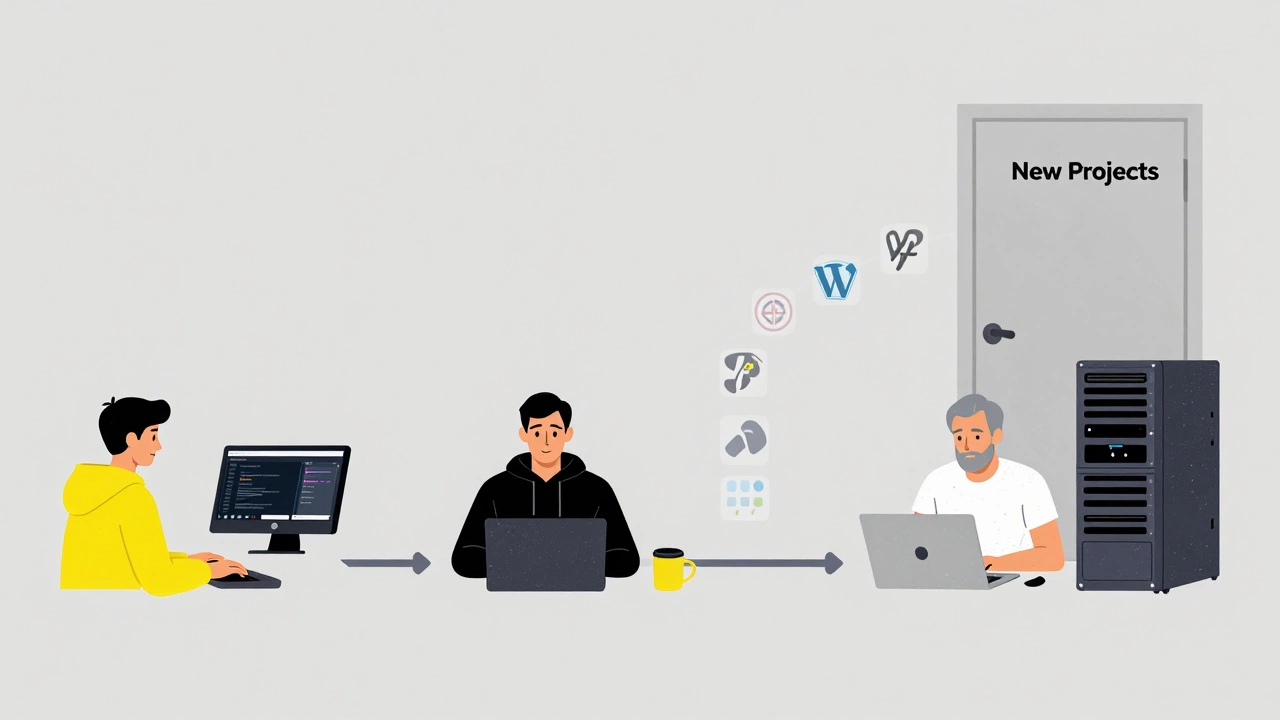
Young Developers Don’t Learn PHP Anymore
Look at coding bootcamps in 2025. What languages do they teach? JavaScript, Python, TypeScript. Maybe Rust or Go. PHP? Rarely. University courses? Almost never. YouTube tutorials? Mostly React, Vue, Next.js.
When new devs start out, they don’t see PHP as a gateway. They see it as something their dad used. They want to build apps that work on phones, respond instantly, and connect to real-time services. PHP can do that - but it’s not the obvious first choice.
That’s a vicious cycle. No new devs = fewer contributors to open-source PHP projects = slower innovation = less appeal to new devs.
PHP Isn’t Dead - It’s Just Not the Star Anymore
Let’s be clear: PHP isn’t gone. WordPress still runs over 43% of all websites. Shopify uses PHP under the hood for many of its backend services. Wikipedia still runs on MediaWiki, which is PHP. Thousands of legacy apps still depend on it.
But the tide has turned. New projects? Most teams pick JavaScript, Python, or Go. Why? Because they’re faster to develop with, easier to scale, and more aligned with modern infrastructure. PHP’s strengths - simple deployment, easy hosting, quick prototyping - don’t matter as much anymore.
Hosting providers now offer one-click installs for Node.js, Python, and Ruby apps. PHP? Still there, but it’s the default option, not the recommended one.
When Should You Still Use PHP?
If you’re maintaining an existing WordPress site? Stick with PHP. It’s fine. It’s stable. It’s supported.
If you’re building a simple brochure site or a small business tool with a tight budget? PHP with Laravel can still work. It’s cheaper to hire PHP devs in Eastern Europe and Latin America than Node.js specialists in the US or UK.
But if you’re starting from scratch? Think about what you’re building. Need real-time features? Go with Node.js. Need data-heavy apps? Python. Need speed and reliability? Go. Need to scale to millions of users? You’ll thank yourself later for picking something built for that.
PHP isn’t broken. It’s just no longer the best tool for most jobs. And that’s okay. Tools evolve. So should we.
Is PHP still used in 2025?
Yes, but mostly in legacy systems. WordPress powers over 43% of websites globally, and many enterprise platforms still rely on PHP. However, new projects rarely start with PHP unless there’s a specific reason - like maintaining an existing codebase or working with a team that already has PHP expertise.
Why did Laravel not save PHP?
Laravel made PHP much better. It brought structure, modern patterns, and a great ecosystem. But it couldn’t fix PHP’s core issues: inconsistent syntax, slow startup times, and poor native support for APIs and microservices. Developers still had to work around PHP’s limitations, even when using Laravel. Meanwhile, alternatives like Node.js and Python offered cleaner, more consistent experiences from the ground up.
Is PHP slower than modern languages?
PHP 8.2 and 8.3 are significantly faster than PHP 5.x - up to 3x faster in some benchmarks. But compared to Go or Node.js, it still lags in startup time and memory efficiency, especially under high concurrency. For simple websites, it’s fine. For high-traffic APIs or real-time apps, other languages are more efficient.
Can I still get a job as a PHP developer?
Absolutely. There are still thousands of companies maintaining WordPress sites, e-commerce platforms, and legacy enterprise apps. Many of them need skilled PHP developers - especially those who know Laravel, Symfony, or modern PHP practices. But the demand is shrinking. Most new roles now require knowledge of JavaScript, cloud tools, or APIs alongside PHP.
Should I learn PHP in 2025?
Only if you need to maintain existing systems or work in markets where PHP is still dominant - like small business web development in Eastern Europe or parts of Asia. For beginners, learning JavaScript (Node.js), Python, or TypeScript will open more doors and future-proof your career. PHP is a niche skill now, not a foundation.