

When you hear coding for UI UX, the process of turning design mockups into interactive, functional web experiences using programming languages and tools. Also known as front-end development, it's not about making things look pretty—that's the designer's job. It's about making those designs work across every device, browser, and screen size. Most people think UI/UX designers code, but the truth is, they rarely do. Instead, they hand off their work to developers who translate Figma files into real websites using HTML, CSS, and JavaScript.
JavaScript, the only language that runs natively in every web browser. Also known as JS, it's the backbone of interactive interfaces—from dropdown menus to smooth animations and real-time form validation. You won’t build a modern UI without it. But here’s the thing: you don’t need to be a full-stack expert. Most UI/UX-focused coders stick to the frontend—HTML for structure, CSS for layout and styling, and JavaScript for behavior. Tools like Figma, a cloud-based design tool used by teams to create clickable prototypes and design systems. Also known as design collaboration platform, it’s become the standard because it lets designers and developers work from the same file. Developers open Figma designs, check spacing, colors, and font sizes, then rebuild them in code. No guesswork. No back-and-forth emails.
Some think Python or PHP are involved in UI/UX, but those are backend languages. They handle server logic, databases, and user authentication—not buttons that animate or forms that validate. The real overlap happens when developers use JavaScript frameworks like React or Vue to build dynamic interfaces, or when they write small scripts to automate design exports or test accessibility. That’s where coding meets design—not by replacing it, but by supporting it.
You don’t need a computer science degree to do this. Many people start by learning HTML and CSS, then move into JavaScript. VS Code is enough to get started. You can even build simple prototypes on your phone. The key isn’t knowing every language—it’s understanding how design and code connect. What does a 16-pixel margin mean in code? How do you make a button respond to a tap on a phone? Those are the questions that matter.
And while AI tools are getting better at generating code from designs, they still can’t replace human judgment. They don’t know if a color contrast is accessible, or if a button feels too small on a thumb-sized screen. That’s where you come in. Coding for UI UX isn’t about writing perfect syntax—it’s about solving real problems for real people.
Below, you’ll find real answers to the questions developers and designers actually ask: Is JavaScript still worth learning? Can you skip coding and use WordPress instead? Does Figma replace the need to code? Is VS Code enough? You’ll see what’s changed, what hasn’t, and what you actually need to know to make digital products that work—not just look good.
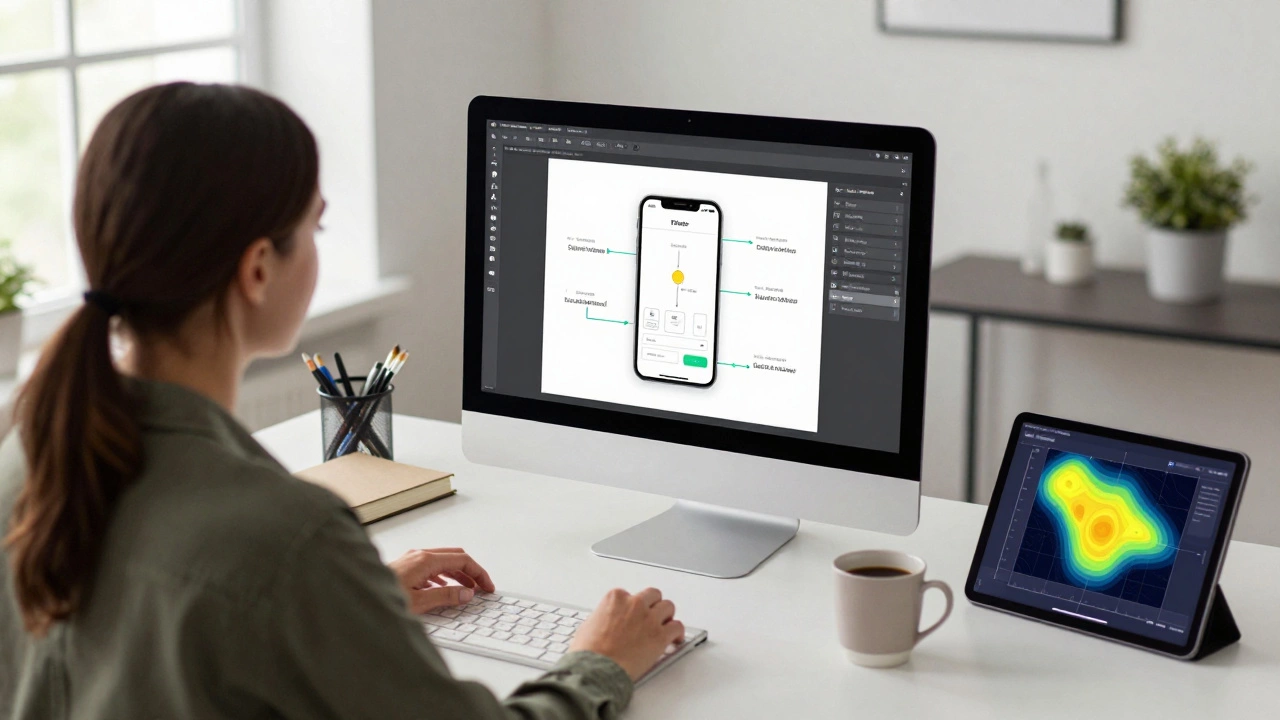
UI/UX design isn't a coding job, but knowing basic HTML and CSS makes you a better designer. Learn what skills actually matter and how to bridge the gap between design and development.
Read More