
React Ecosystem Builder
Build Your React Stack
React is a library, not a framework. To build a complete application, you need to add other tools to your React project.
Routing
State Management
Build Tools
Styling
Next.js
Your React Ecosystem
People ask if React is a framework or a library all the time. And honestly? The confusion makes sense. You see React used like a framework - it handles routing, state, data flow, even component architecture. But then you hear developers say it’s just a library. So which is it?
React is a library - and here’s why
React, created by Facebook (now Meta), was released in 2013. Its original purpose? To make it easier to build user interfaces. Specifically, it gives you a way to create reusable UI components using JavaScript and JSX. That’s it. No built-in router. No state management engine. No HTTP client. No form validation. Just the tools to render UIs efficiently.
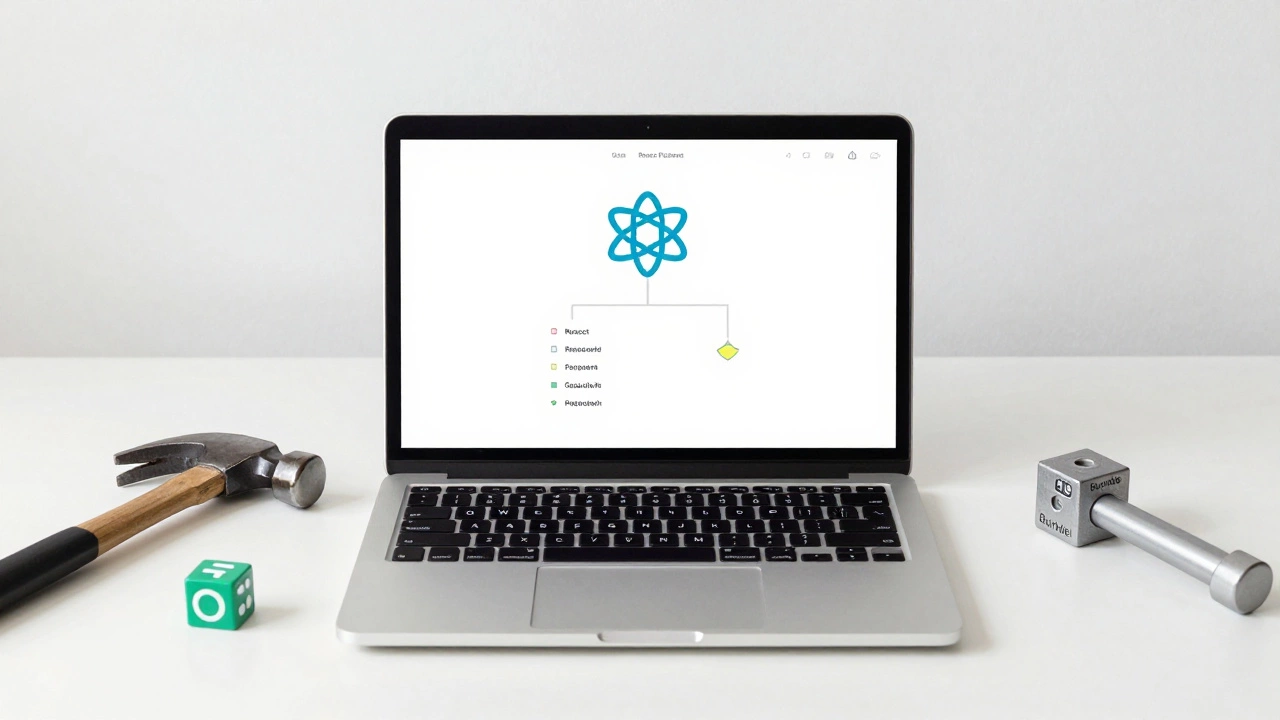
Think of it like a hammer. A hammer is a tool. You don’t need a whole construction site to use it. You use it to drive nails. React does the same: it takes your data and turns it into DOM elements. Then it updates them quickly when things change. That’s the whole job.
That’s why the React team calls it a library. The official documentation never says "framework." And if you look at the source code on GitHub, you’ll find a single package: react. No sub-packages for routing, no state management modules. Just core rendering logic.
Why do people think it’s a framework?
Because in real projects, you rarely use React alone.
Most teams combine React with other tools - React Router for navigation, Redux or Zustand for state, Axios for API calls, Vite or Webpack for bundling. When you glue all these together, you get something that feels like a full framework. It handles everything from the UI to data flow to routing. It’s a complete system.
That’s the trap. People confuse the ecosystem with the tool itself. React + React Router + Redux + Vite = framework. But React? Still just a library.
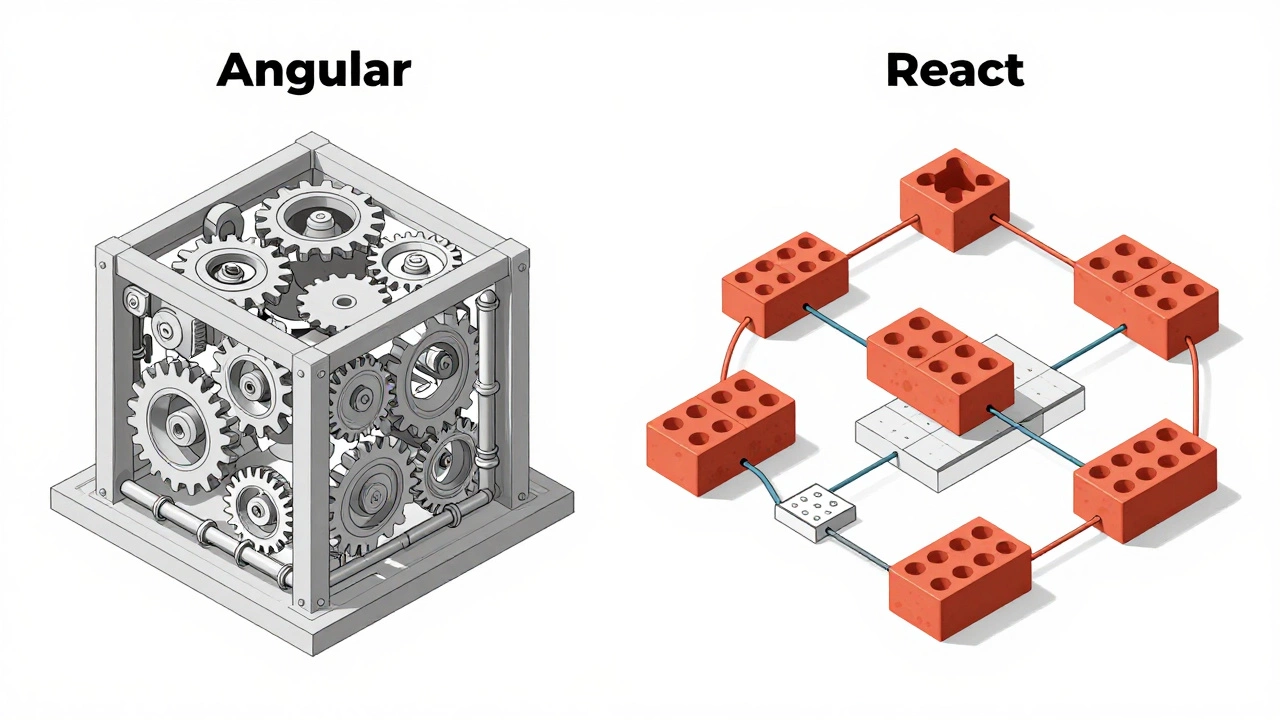
Compare it to something like Angular. Angular includes routing, HTTP client, dependency injection, forms, animations - all in one package. It’s a framework. You install Angular, and you get everything. React? You pick what you need.
Framework vs Library: The Real Difference
Here’s the simple way to tell them apart:
- A framework tells you how to do things. It has opinions. It has structure. You work inside its rules.
- A library lets you do things. You call it when you need it. You control the flow.
Angular says: "Here’s how your app should be structured. Use our service injector. Use our template syntax. Use our CLI."
React says: "Here’s how to build components. Use this function to update the UI. Here’s how to handle events." Then it gets out of your way.
That’s why React is flexible. You can use it with a full-stack framework like Next.js, or just drop it into a static HTML page. You can pair it with MobX instead of Redux. You can write your own router if you want. No one forces you.
What about Next.js? Is that a framework?
Yes. Next.js is a framework built on top of React.
It adds server-side rendering, static site generation, API routes, file-based routing, and built-in CSS support. It gives you structure. It tells you where to put files. It handles the backend parts. React doesn’t do any of that.
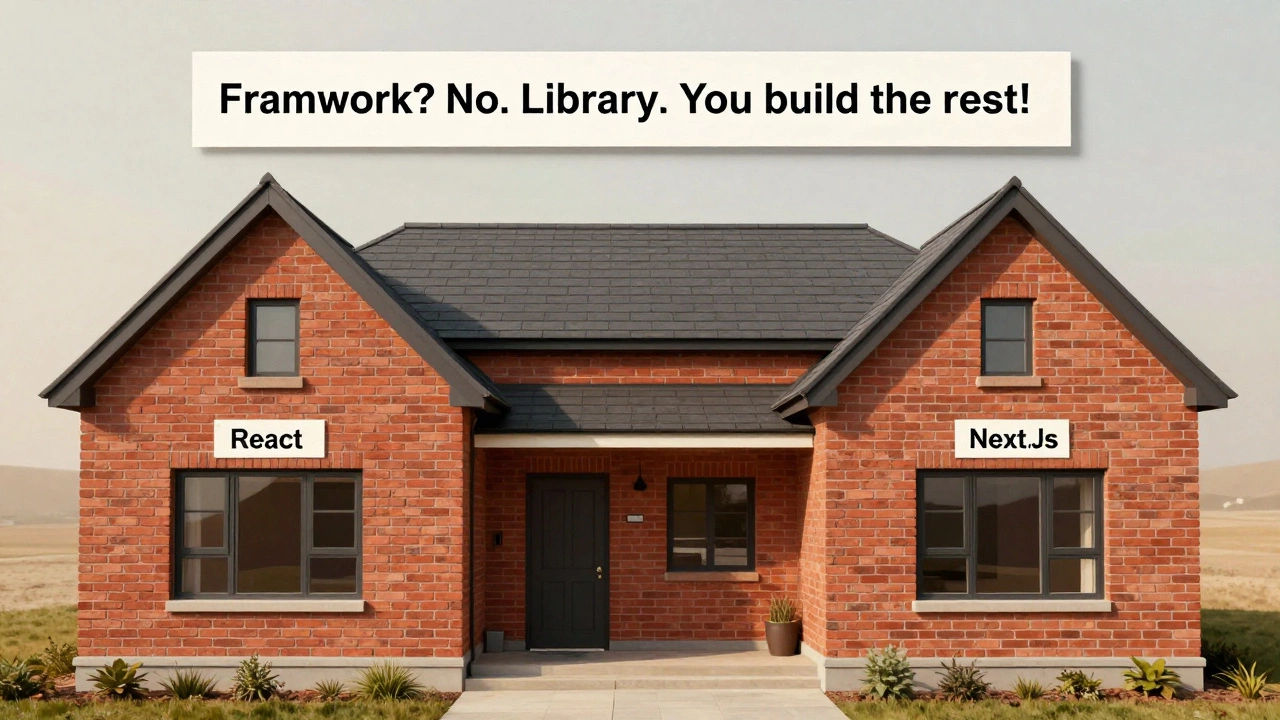
So if you’re using Next.js? You’re using a framework. But React is still the library powering the UI layer. Think of Next.js as the house, and React as the bricks.
Does it even matter?
Technically? Yes. Understanding this helps you make better decisions.
If you think React is a framework, you might assume it should handle everything - and get frustrated when it doesn’t. You might waste time looking for a "React routing solution" inside React itself, when the real answer is React Router - a separate library.
But if you know React is a library, you understand you’re building a system. You’ll look for the right tools for routing, state, and data fetching. You’ll choose what fits your project, not what you think React "should" include.
It also helps when you switch tools. Maybe you start with React and later move to Svelte or Vue. If you treat React as a library, you’ll see that the concepts - components, state, props - still apply. You’re not tied to a rigid structure.
What does the industry say?
The React team has been clear for over a decade. The official docs say: "React is a JavaScript library for building user interfaces." That’s not a marketing line - it’s the technical truth.
And the data backs it up. According to the 2024 State of JavaScript survey, 91% of developers use React. Of those, 78% use it with a routing library (mostly React Router), 62% use a state management tool (Redux, Zustand, or Context API), and 54% use a framework like Next.js.
That means almost everyone uses React as part of a bigger system. But only 9% say they use React without any other tools. So while you rarely use React alone, you’re still using it as a library - not a framework.
Bottom line: React is a library
It’s not a framework. It doesn’t claim to be. It doesn’t act like one. It’s a tool for building UIs - and a damn good one.
But here’s the thing: calling it a library doesn’t make it less powerful. In fact, it’s why React is everywhere. Because it’s flexible. Because you can build anything on top of it. Because you’re not locked in.
So next time someone asks if React is a framework, you can say: "It’s a library. But with the right tools around it, it can do everything a framework does."
Is React a frontend framework?
No, React is not a frontend framework. It’s a JavaScript library for building user interfaces. Frameworks like Angular or Vue provide complete solutions with built-in routing, state management, and tooling. React only handles the view layer. You add other libraries (like React Router or Redux) to build a full frontend system.
Why do some people call React a framework?
People call React a framework because it’s often used alongside other tools like React Router, Redux, and Next.js. Together, these create a full application structure that behaves like a framework. But React itself doesn’t include those features - it’s the ecosystem around it that gives that impression.
Can I use React without any other tools?
Yes, you can. React works in a simple HTML file with just a script tag. Many beginners start that way. You can build interactive UIs using only React and ReactDOM. But in real-world apps, you’ll almost always add routing, state management, and build tools to make development easier and scalable.
Is Next.js a framework or a library?
Next.js is a framework. It’s built on top of React and adds structure, server-side rendering, API routes, file-based routing, and optimized builds. Unlike React, it tells you how to organize your project and includes many features out of the box. So while React is a library, Next.js is a full-stack framework.
Should I learn React as a beginner?
Yes - but understand it’s just one piece. Start with React basics: components, props, state, and hooks. Then learn React Router for navigation and Context API or Zustand for state. Don’t try to learn everything at once. Focus on React first, then add tools as you need them. Most job listings expect React + one routing tool + one state solution - so that’s your roadmap.