

Full-Stack Developer Learning Path Estimator
Estimate how long it will take you to build a job-ready full-stack portfolio based on your consistent weekly learning hours.
6 months
Build a portfolio of 2-3 complete projects: personal website, weather app with API, and a database-connected app.
Key Insight from the Article
"Most people who say they want to switch careers never achieve this. Building one full-stack project end-to-end is worth more than ten half-finished tutorials."
You’re 32. You’ve been in sales for seven years. You’ve seen friends get promoted, buy houses, and talk about their side projects-while you’re stuck in meetings that could’ve been emails. You scroll through LinkedIn and see someone your age posting about launching their SaaS app built with React, Node.js, and PostgreSQL. You think: Is it too late to be a full-stack developer?
The short answer? No. Not even close.
The real question isn’t whether you’re old enough. It’s whether you’re willing to learn differently than you did ten years ago. The path isn’t the same. The tools aren’t the same. But the opportunity? It’s bigger than ever.
Full-stack development isn’t what it used to be
Ten years ago, being a full-stack developer meant you could build a website from scratch-HTML, CSS, JavaScript on the front end, PHP or Ruby on the back end, and maybe even set up a MySQL database. You had to know everything. And if you didn’t, you were stuck.
Today? You don’t need to know everything. You need to know how to connect the right pieces.
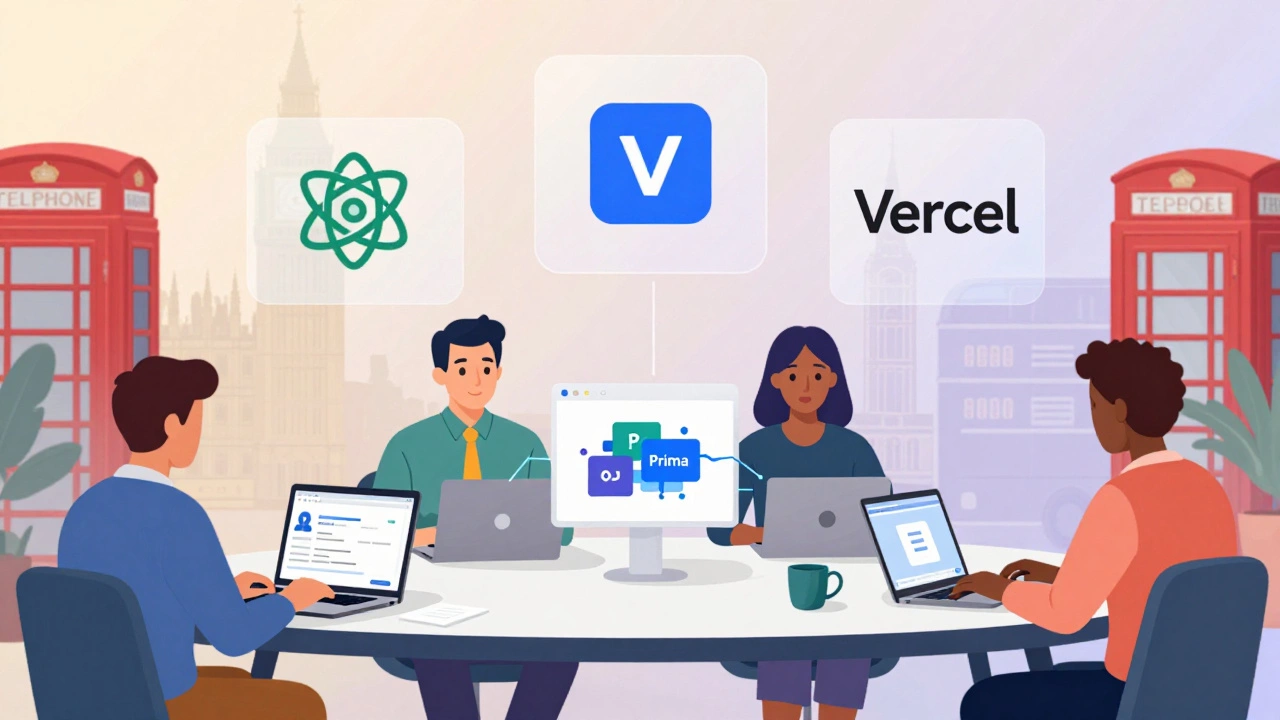
Modern full-stack development is less about building every wheel from scratch and more about assembling systems. You use frameworks like Next.js or Remix for the frontend, Express or NestJS for the backend, and tools like Prisma or Supabase to handle databases without writing raw SQL. You deploy with Vercel or Netlify. You use AI tools to generate boilerplate code, debug errors, and even write documentation.
You’re not expected to be a wizard. You’re expected to be a problem-solver who can move between layers. That’s a skill anyone can learn-even if you’re starting at 35, 45, or 55.
Age doesn’t slow you down-mindset does
Here’s what actually holds people back: thinking they need to be like the 22-year-old who dropped out of college to build a startup.
That person has one advantage: time. You have others.
You know how to communicate. You understand business goals. You’ve dealt with clients, deadlines, and stress. You don’t waste hours on tutorials that don’t apply to real work. You learn faster because you know what matters.
A 2024 study from Stack Overflow found that developers over 35 were more likely to land senior roles because they had better soft skills and system-level thinking. They weren’t the fastest coders-but they were the ones teams trusted to lead projects.
At 40, you don’t need to out-code a 20-year-old. You need to out-think them.
What you actually need to learn (and what you can skip)
You don’t need to master every framework. You don’t need to memorize every command-line tool. You need a clear, practical path.
Here’s what works in 2025:
- Frontend basics: HTML, CSS, JavaScript. Not React yet-start with vanilla JS. Understand how the DOM works. Build a simple to-do app without libraries.
- One frontend framework: Pick React or Vue. React is more popular, but Vue is easier to learn. Build a small app with state management and API calls.
- One backend language: JavaScript (Node.js) is the easiest if you’re already learning frontend JS. Python (FastAPI) or C# (.NET) are solid too. Build a simple API that returns user data.
- One database: Start with PostgreSQL or SQLite. Learn how to write basic queries. Use Prisma or Sequelize to connect it to your backend.
- Deployment: Deploy your full app to Vercel or Netlify. Learn how to connect a frontend to a backend API.
That’s it. Five steps. No need to learn Docker, Kubernetes, or Terraform yet. Those come later-if you need them.
Most people fail because they try to learn everything at once. You don’t need to be a full-stack developer on day one. You just need to build something that works end-to-end. One time. Then do it again.
Real examples: People who started late
There’s a developer in Manchester named Linda, 48. She was a school librarian. She started learning JavaScript in 2021 because she wanted to automate her book inventory. She built a simple web app to track overdue books. Then she added user logins. Then she connected it to a database.
By 2024, she was freelancing part-time for small nonprofits. In 2025, she got hired as a junior full-stack developer at a health tech startup. Her age? A non-issue. Her ability to solve real problems? That’s what got her hired.
Then there’s Marcus, 52. He was a mechanic. He learned Python during lockdown. Built a script to track car repair costs. Turned it into a web app. Now he’s building tools for local garages. He doesn’t work for a tech giant. He doesn’t need to. He’s making more than he did fixing engines.
You don’t need to be the next Mark Zuckerberg. You just need to build something useful-and keep building.
The job market isn’t shrinking-it’s shifting
Yes, there’s more competition. Yes, some companies are cutting tech teams. But the demand for full-stack developers hasn’t disappeared. It’s changed.
Startups still need people who can build and ship fast. Small businesses need websites that actually work. Local services need booking systems, inventory trackers, and customer portals. These aren’t glamorous jobs-but they pay well, and they’re everywhere.
LinkedIn data from Q3 2025 shows that 68% of full-stack job postings in the UK asked for experience with React and Node.js. Only 22% asked for a computer science degree. Over 40% said “experience preferred, not required.”
Companies don’t care if you went to university. They care if you can fix their website, add a login system, and make it load faster.
How to start without quitting your job
You don’t need to quit. You don’t need to go back to school. You just need 10 hours a week.
Here’s a realistic 6-month plan:
- Month 1-2: Learn HTML, CSS, JavaScript. Build a personal portfolio page. Use freeCodeCamp or The Odin Project.
- Month 3: Learn React. Build a weather app that pulls data from a public API.
- Month 4: Learn Node.js. Build a simple API that returns a list of books.
- Month 5: Connect your React app to your Node.js API. Deploy both.
- Month 6: Add a database. Let users save their favorite books. Deploy the full stack.
By the end of six months, you’ll have a working full-stack app. You’ll have a portfolio. You’ll have proof you can do this.
That’s more than 90% of people who say they want to switch careers ever achieve.

What to avoid
Don’t:
- Buy $2,000 courses that promise “full-stack mastery in 30 days.”
- Compare yourself to 20-year-olds on TikTok.
- Wait for the “perfect time.”
- Try to learn Python, Java, Ruby, React, Vue, Angular, Docker, AWS, and Kubernetes all at once.
Do:
- Build one small project. Then another.
- Join local dev meetups. Leeds has a growing tech community-free events every month.
- Ask for feedback on your code. Post on Reddit’s r/learnprogramming or Dev.to.
- Apply for junior roles-even if you don’t feel ready. Most won’t hire you based on your resume. They’ll hire you based on your project.
You’re not behind. You’re ahead of the curve
Most people who start coding in their 20s burn out by 30. They chase trends. They switch frameworks every year. They get lost in the noise.
You? You’re coming in with clarity. You know what you want: a better job. More control. A skill that lasts.
The tech industry doesn’t need more kids with flashy portfolios. It needs people who can ship real solutions. People who show up. People who don’t quit when it gets hard.
You’ve already survived real life. Learning to code is the easy part.
Is it really possible to become a full-stack developer after 40?
Yes. Many developers over 40 are working in tech right now. They didn’t start with a computer science degree. They started by building one working app. Then another. Companies care more about what you can do than how old you are.
Do I need a degree to get hired as a full-stack developer?
No. In the UK, over 60% of full-stack job postings in 2025 didn’t require a degree. Employers are focused on your portfolio, problem-solving skills, and ability to ship code. A GitHub repo with a live app matters more than a diploma.
How long does it take to become job-ready?
With 10-15 hours a week, most people can build a portfolio strong enough to apply for junior roles in 6-8 months. The key isn’t speed-it’s consistency. Building one full-stack project end-to-end is worth more than ten half-finished tutorials.
What’s the easiest tech stack to learn for beginners?
JavaScript-based stacks are the easiest because you use the same language on the front end and back end. Start with React for the frontend, Node.js with Express for the backend, and PostgreSQL with Prisma for the database. Deploy on Vercel or Netlify. That’s a complete stack you can learn in under six months.
Will AI replace full-stack developers?
AI won’t replace developers-it will replace developers who don’t use AI. Tools like GitHub Copilot, ChatGPT, and Cursor help you write code faster, debug errors, and understand documentation. The best developers today aren’t the ones who code the most. They’re the ones who use AI to solve problems faster. Learning to work with AI is part of the job now.
Next steps: Start today, not tomorrow
Open your laptop. Go to freeCodeCamp.org. Click “Responsive Web Design.” Spend 30 minutes on the first lesson.
That’s it. No grand plan. No big announcement. Just one small step.
Tomorrow, do it again. And the next day. In six months, you won’t be asking if it’s too late. You’ll be wondering why you waited so long.