
WordPress Developer Salary Estimator 2026
Select Your Profile
Estimated Annual Income
Based on current market data
Hourly Rate Equivalent:
You’ve spent the last six months mastering PHP, getting comfortable with React for the block editor, and building custom themes. You can build a site that looks great and runs fast. Now comes the question that keeps you up at night: does WordPress pay well? The short answer is yes, but the long answer depends entirely on how you position yourself in a market that is shifting faster than ever.
In 2026, the landscape has changed. It’s no longer just about installing plugins and tweaking CSS. Clients expect headless architectures, seamless e-commerce integrations, and rock-solid security. If you’re still offering basic template customization, your income will stagnate. But if you treat WordPress as a robust content management system (CMS) capable of powering enterprise-grade applications, the earning potential is substantial.
The Reality of WordPress Developer Salaries in 2026
Let’s look at the numbers. According to recent data from major employment platforms like Indeed and Glassdoor, the average base salary for a dedicated WordPress developer in the United States hovers around $75,000 to $85,000 annually. In the United Kingdom, where I’m based, the range is typically between £45,000 and £65,000 for mid-level roles. However, these averages hide a massive disparity between generalist web designers and specialized engineers.
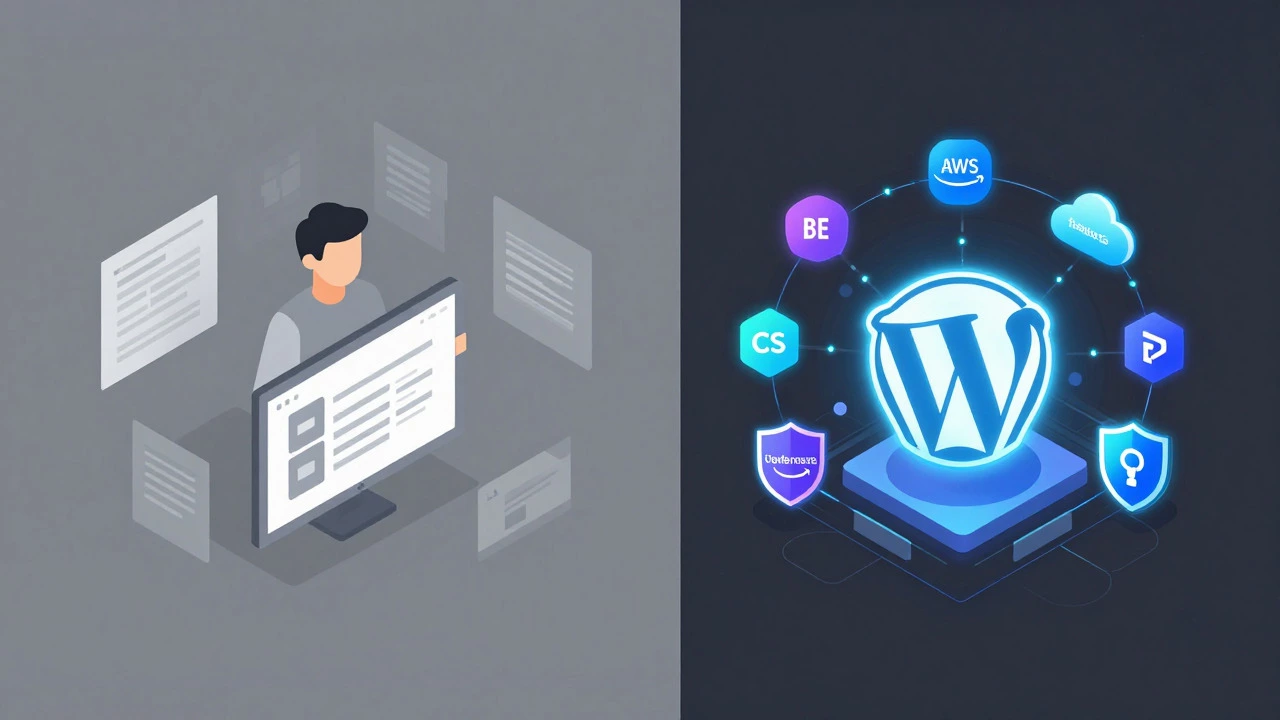
A junior developer who primarily uses page builders like Elementor or Divi might start at the lower end, often below $50,000. These roles are becoming increasingly commoditized because AI tools can now generate simple landing pages in seconds. On the flip side, senior developers who understand server-side rendering, REST API integration, and custom plugin architecture can command salaries exceeding $120,000. The gap isn’t just about experience; it’s about technical depth.
| Role Level | Typical Skills Required | Salary Range (USD) | Job Market Demand |
|---|---|---|---|
| Junior / Page Builder Specialist | CSS, HTML, Basic PHP, Elementor/Divi | $40,000 - $55,000 | High volume, low barrier to entry |
| Mid-Level WordPress Developer | Custom Themes, Plugin Dev, JavaScript, MySQL | $65,000 - $85,000 | Steady demand |
| Senior Full-Stack WP Engineer | Headless WP, React/Gutenberg, AWS, Security | $95,000 - $130,000+ | High value, scarce talent |
| Freelance Consultant (Expert) | Architecture, Migration, Performance Optimization | $100 - $250+ per hour | Niche, project-based |
Why Specialization Drives Higher Income
The reason some WordPress developers struggle while others thrive comes down to specialization. Generalists are vulnerable. When a client needs a simple brochure site, they might hire someone on Upwork for $500. But when a large retailer needs a complex WooCommerce setup with custom inventory logic and multi-currency support, they aren’t looking for a cheap option. They’re looking for an expert who won’t break their business.
WooCommerce is the most popular e-commerce plugin for WordPress, powering millions of online stores worldwide. Developers who specialize in WooCommerce often earn significantly more than those who stick to corporate blogs. E-commerce directly impacts revenue, so clients are willing to pay a premium for stability and conversion optimization. Similarly, expertise in the Gutenberg block editor using React has become a high-value skill. Companies migrating from legacy page builders need developers who can create custom blocks that are performant and accessible.
Another lucrative niche is performance optimization. With Core Web Vitals being a critical ranking factor for SEO, sites that load slowly lose money. A developer who can audit a slow WordPress site, optimize database queries, implement proper caching strategies, and reduce Time to First Byte (TTFB) is providing tangible ROI. This isn’t just coding; it’s engineering.
Freelancing vs. Employment: Where Is the Money?
If you’re wondering whether to stay employed or go freelance, consider the trade-offs. Employment offers stability, benefits, and a predictable paycheck. In 2026, many tech companies offer remote-first policies, allowing you to work for US-based firms from anywhere in the world. This geographic arbitrage can boost your effective salary significantly if you live in a region with a lower cost of living.
Freelancing, however, offers higher ceiling earnings. As a freelancer, you charge by the hour or by the project. Senior WordPress freelancers often charge between $100 and $200 per hour. If you have a steady stream of clients, this can translate to a much higher annual income than a salaried position. But there’s a catch: you’re responsible for finding clients, handling taxes, managing invoices, and dealing with scope creep. The "pay" is higher, but the overhead is too.
Hybrid models are also emerging. Many developers keep a part-time contract role while taking on smaller freelance projects. This diversifies income streams and reduces risk. For example, you might have a retainer agreement with one agency for maintenance work, which covers your bills, while larger projects provide the profit margin.
The Impact of AI on WordPress Development Jobs
Can’t AI just write the code? That’s a common fear. Tools like GitHub Copilot and other AI assistants have undoubtedly changed how we code. They can generate boilerplate functions, suggest CSS fixes, and even debug errors. But AI doesn’t replace the architect. It replaces the typist.
In 2026, AI handles the repetitive tasks. It generates the initial structure of a custom post type or writes the SQL query for a complex filter. The value shifts from writing syntax to defining logic, ensuring security, and integrating systems. A developer who relies solely on AI to patch together plugins will find their skills devalued. A developer who uses AI to accelerate their workflow while focusing on complex problem-solving will see their productivity-and income-rise.
Think of it this way: AI makes good developers better, but it makes bad developers obsolete. To command top dollar, you need to understand what the AI is generating. You need to know why a certain hook fires before another, or how to secure a REST API endpoint against brute force attacks. That deep understanding is what clients pay for.
How to Increase Your WordPress Earning Potential
If you want to move from the median salary to the top tier, here are actionable steps you can take right now:
- Master Headless WordPress: Learn how to decouple the frontend from the backend using frameworks like Next.js or Nuxt.js. This opens doors to enterprise clients who need dynamic, app-like experiences.
- Get Certified: While not always mandatory, certifications from organizations like WordCamp or specific platform partners (like WooCommerce Experts) add credibility and justify higher rates.
- Focus on Security: WordPress powers over 40% of the web, making it a target. Learning hardening techniques, firewall configuration, and regular security audits makes you indispensable.
- Build a Portfolio of Complex Projects: Don’t just show pretty designs. Show case studies where you solved difficult technical problems. Did you migrate a 10GB database without downtime? Did you integrate a third-party CRM seamlessly? Highlight that.
- Improve Soft Skills: Communication matters. Clients pay for peace of mind. Being able to explain technical issues in plain English builds trust and leads to repeat business.

Regional Differences and Remote Work Opportunities
Where you live still matters, though less so than before. In major tech hubs like San Francisco, New York, or London, salaries are higher to match the cost of living. But remote work has flattened this curve. A developer in Leeds, UK, can work for a company in Seattle, WA, and negotiate a salary that reflects the US market, even if it’s slightly adjusted for location. This is known as geo-arbitrage.
However, be cautious. Some companies use remote work to pay global workers local rates, which might be lower than what you could earn locally. Always research market rates for your specific skill set in the region where the client is based, not just where you sit. Platforms like Levels.fyi and Glassdoor help benchmark these salaries accurately.
Conclusion: The Future Looks Bright for Skilled Developers
So, does WordPress pay well? Yes, absolutely-but only if you evolve with the platform. The days of easy money for basic installations are gone. The future belongs to developers who combine traditional WordPress knowledge with modern web technologies. If you’re willing to learn, specialize, and deliver real value, your income will reflect that effort.
What is the average hourly rate for a WordPress freelancer in 2026?
Rates vary widely by experience and location. Junior freelancers may charge $25-$50 per hour, mid-level developers typically charge $60-$100 per hour, and senior specialists or agencies can charge $120-$250+ per hour. US-based clients generally pay higher rates than European or Asian clients.
Is it worth learning WordPress in 2026 given AI advancements?
Yes. While AI can handle basic coding tasks, WordPress remains the dominant CMS globally. The demand for experts who can manage complex integrations, security, and performance optimization is higher than ever. AI is a tool, not a replacement for strategic thinking and architectural design.
Which WordPress specializations pay the most?
The highest-paying niches include Headless WordPress development (using React/Next.js), WooCommerce customization for large-scale e-commerce, enterprise-level security and compliance, and performance optimization for high-traffic sites. These areas require deeper technical knowledge beyond basic theme editing.
Do I need a degree to become a high-paid WordPress developer?
No. The tech industry, including WordPress development, values skills and portfolio over formal degrees. Demonstrating competence through real-world projects, contributions to open source, and certifications is often more impactful than a computer science degree.
How can I transition from a low-paying WordPress job to a higher salary?
Focus on upskilling in high-demand areas like JavaScript (React for Gutenberg), server management (AWS, Docker), and advanced PHP. Build a strong portfolio showcasing complex problem-solving. Network with other developers and potential clients, and don’t be afraid to negotiate your worth based on the value you deliver.